


Indonesian Politician Criticizes Free Meal Program, Urges School Canteen Empowerment
Translated from Indonesian, summarized and contextualized by DistantNews.
At a glance
News
Sources not specified
Context piece
- Indonesian politician Adian Napitupulu criticized the government's Free Nutritious Meal program's SPPG management, advocating for school canteens instead.
- Napitupulu argued that empowering existing school canteens would benefit local small businesses and reduce construction costs for new SPPG facilities.
- The government's agency (BGN) is evaluating the program, considering the involvement of school canteens to improve efficiency and reach, especially in remote areas.
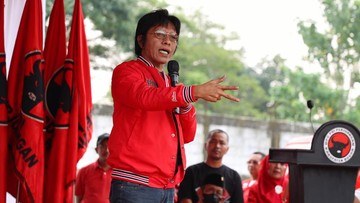
A prominent Indonesian politician has voiced strong criticism against the current management of the government's Free Nutritious Meal (MBG) program, proposing a significant shift in its implementation. Adian Napitupulu, a politician from the PDIP party, questioned the necessity of establishing the costly Satuan Pelayanan Pemenuhan Gizi (SPPG) facilities.
From the beginning, we have said, why create SPPG? Just utilize the school canteens.
"Why create SPPG? Just utilize the school canteens," Napitupulu stated during a CNN Indonesia TV program. He argued that empowering existing school canteens would not only positively impact the income of local canteen vendors but also significantly reduce the substantial costs associated with building new SPPG infrastructure, which he described as potentially costing billions.
Napitupulu highlighted the potential economic benefits for micro, small, and medium enterprises (UMKM) if canteen vendors were entrusted with managing the meal program. He also suggested that this approach could help mitigate cases of food poisoning, a concern that has arisen with the current SPPG-managed system. The government's agency for food fulfillment (BGN) has reported over 27,000 SPPG kitchens serving the MBG program since its launch in January 2025.
They (UMKM) will be impacted. Why don't they just cook? No need to build large buildings worth billions.
In response to past issues, including corruption allegations within BGN, the agency is undergoing an evaluation. This review includes considering the involvement of school canteens and reassessing the distribution of meals. BGN Head Nanik S Deyang indicated that using existing school canteens is a strategy for budget efficiency and expanding the program's reach, particularly in Indonesia's 3T regions (underdeveloped, frontier, and outermost areas), as it avoids the need for new construction. The Ministry of Education, Culture, Research, and Technology also confirmed adjustments to MBG provision, including the potential inclusion of school canteens.
We also don't have to build new kitchens. That's the principle. We can use kitchens, for example, school canteens because in the 3T regions, there are only 200, 81, or 47 people in those areas.
DistantNews Editorial
Originally published by CNN Indonesia in Indonesian. Translated, summarized, and contextualized by our editorial team with added local perspective. Read our editorial standards.
More Stories


From Our Blog

What Gets Lost (and Found) When News Is Translated

The Critical Role of Diaspora Media in Global News

What Travellers Should Know About Countries with Restricted Press

A Digital Nomad's Guide to Following Local News

How the Same Story Looks Different in Different Countries
