


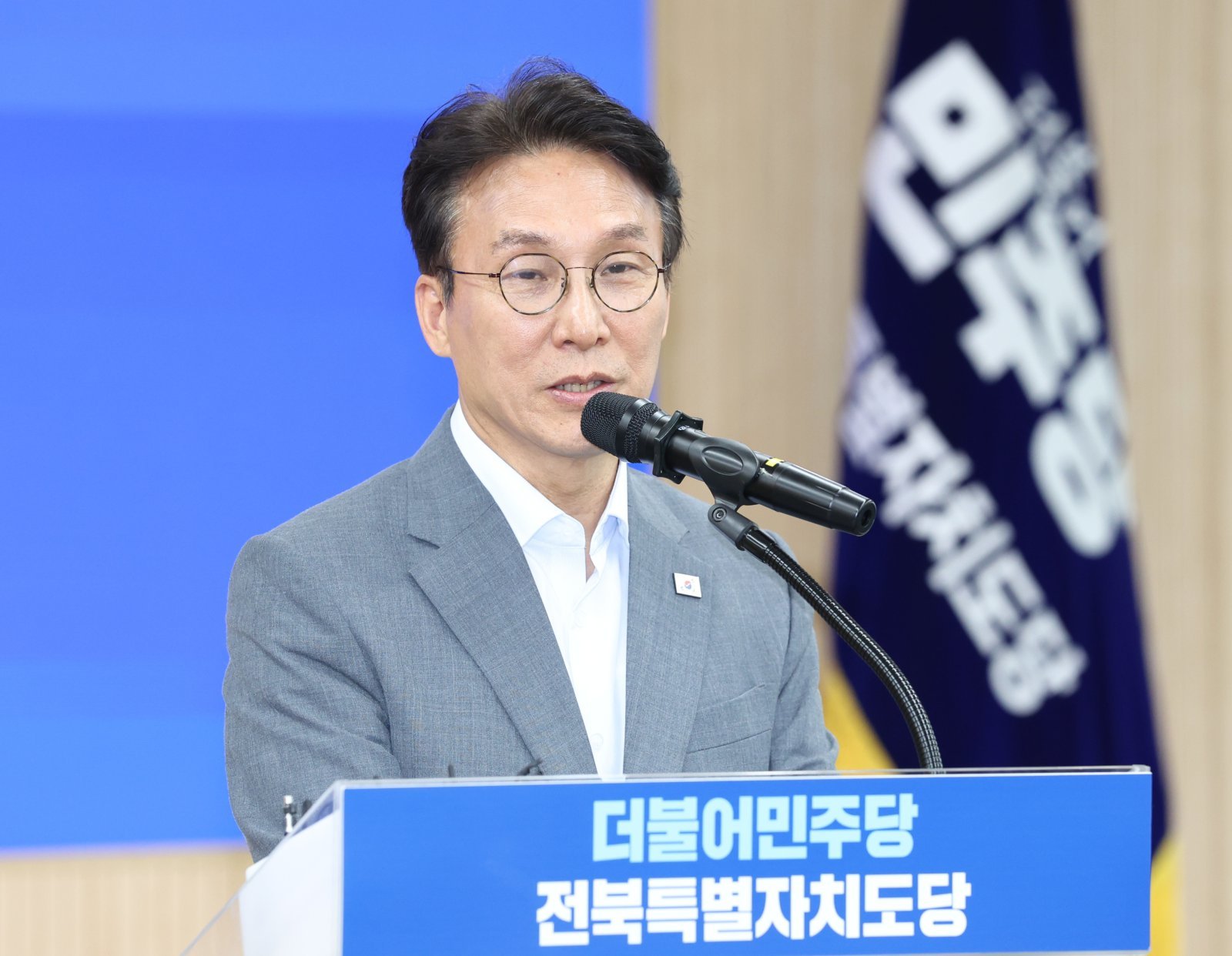
Innovation Party Criticizes Kim Min-seok's Merger Stance, Cites Local Election Sentiment
Translated from Korean, summarized and contextualized by DistantNews.
At a glance
News
Sources not specified
Context piece
- South Korea's Cho Kuk Innovation Party criticized former Prime Minister Kim Min-seok's proposal for absorption-based merger with the Democratic Party.
- The party's acting leader stated that Kim's remarks were hurtful to party members and urged a broader coalition for the pan-democratic bloc.
- The party also expressed concern over the politicization of abolishing prosecutors' supplementary investigation rights, urging a focus on controlling prosecutorial abuse.
The Cho Kuk Innovation Party has sharply criticized former Prime Minister Kim Min-seok's suggestion that his party would only consider an absorption-based merger with the Democratic Party. Party spokesperson Park Byung-eon called the remarks "hurtful" to the Innovation Party's members and said they failed to reflect public sentiment following the local elections.
It was an expression that once again hurt the hearts of the Innovation Party members.
Park emphasized the need for the broader pan-democratic bloc, including the Democratic Party, to reaffirm a commitment to broad unity to gain overwhelming public support. He stated that demonstrating solidarity and respect for the Innovation Party would be the first step in this direction.
Before using the technical term 'merger,' we must first reaffirm the principle of broad solidarity so that the pan-democratic bloc, including the Democratic Party, can receive overwhelming support from the public.
Separately, the party voiced concerns regarding the debate over abolishing prosecutors' supplementary investigation rights. Park suggested the issue had become overly politicized, arguing that complete abolition should not be the sole political criterion. He urged a focus on how to strictly manage exceptions and control prosecutorial misconduct, expressing worry about a fixation on a specific dogma.
It is technically undesirable to make complete abolition the political criterion.
The party also criticized the prosecution reform task force under the Prime Minister's Office for deferring the entire issue to the National Assembly without presenting a government proposal. Park called for clear standards for inter-agency power control and a rational solution to the supplementary investigation rights issue, given the resulting confusion.
The prosecution reform task force under the Prime Minister's Office completely passed the responsibility to the National Assembly without presenting a government proposal.
DistantNews Editorial
Originally published by Dong-A Ilbo in Korean. Translated, summarized, and contextualized by our editorial team with added local perspective. Read our editorial standards.
More Stories

From Our Blog

What Gets Lost (and Found) When News Is Translated

The Critical Role of Diaspora Media in Global News

What Travellers Should Know About Countries with Restricted Press

A Digital Nomad's Guide to Following Local News

How the Same Story Looks Different in Different Countries
