


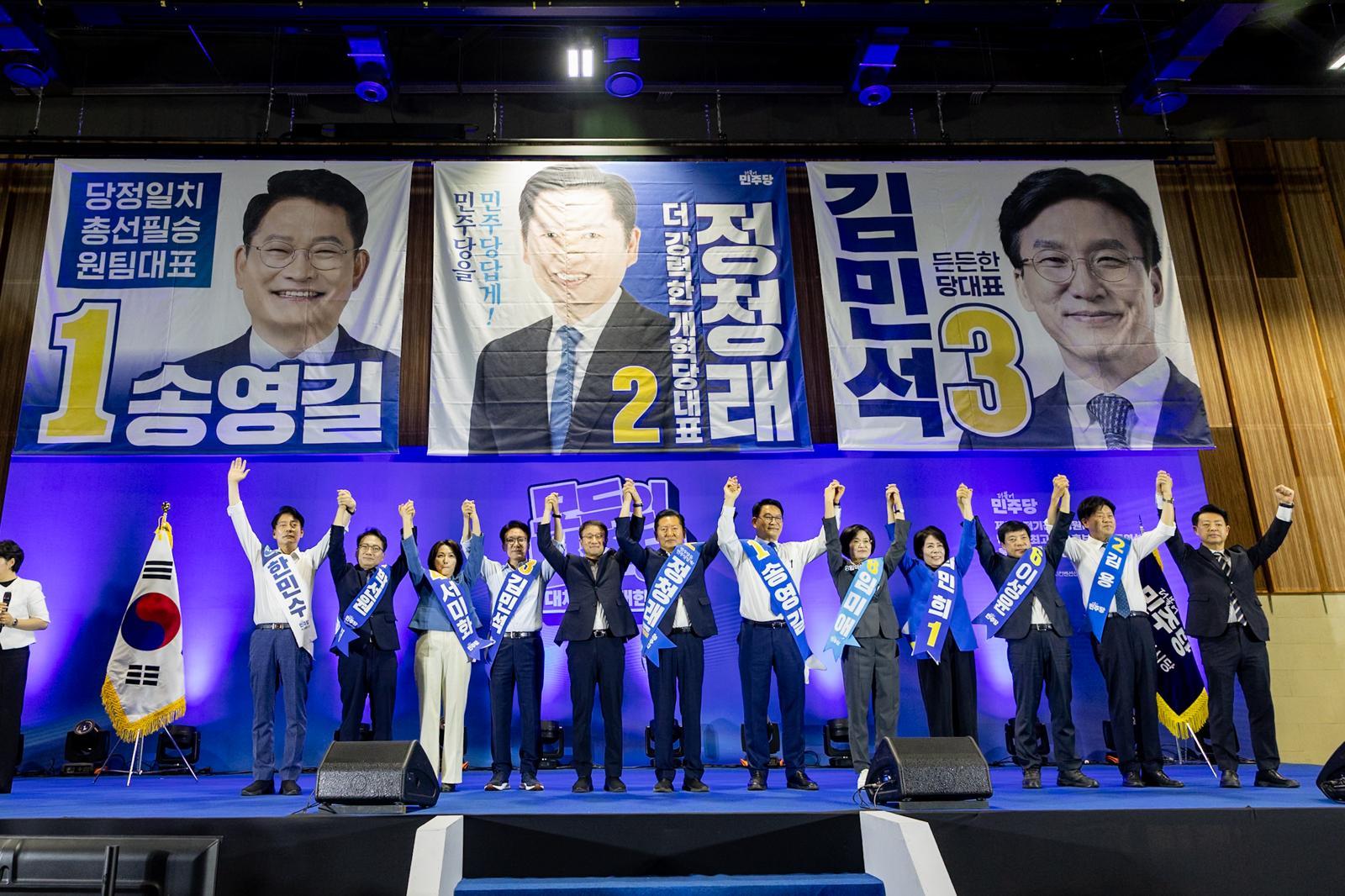
Internal Strife in South Korean Parties Tests 'Korean-Style Two-Party System'
Translated from Korean, summarized and contextualized by DistantNews.
At a glance
Opinion
Sources not specified
Context piece
- South Korea's two major political parties, the Democratic Party and the People Power Party, are experiencing severe internal conflicts and factional strife.
- The Democratic Party's leadership race is marked by personal attacks and accusations between factions, while the People Power Party faces disciplinary actions against its members, leading to further internal division.
- These internal battles, fueled by the growing influence of hardline party members, highlight the limitations of South Korea's 'Korean-style' two-party system, which prioritizes power struggles over policy.
South Korea's political landscape is currently defined by escalating internal conflicts within its two dominant parties, the Democratic Party and the People Power Party. This infighting, characterized by harsh personal attacks and factional disputes, suggests a system struggling to maintain internal cohesion.
The Democratic Party's upcoming August 17 convention is a focal point of this turmoil. Leadership candidates and supreme council nominees are deeply divided into pro-Lee (Jae-myung) and pro-Chung (Sae-kyun) factions, engaging in what the article describes as "extreme clashes." For instance, former representative Chung Jin-suk has repeatedly labeled Kim Min-seok, a former Prime Minister, a "traitor" by referencing his departure from the party 24 years ago. Kim, in turn, accuses Chung of being anti-Lee by not criticizing author Yoo Si-min, who predicted the failure of the Lee Jae-myung administration. Supreme council candidates are reportedly resorting to insults like "bat" and "Ilbe" (a far-right online community) in their heated exchanges.
Meanwhile, the People Power Party is embroiled in its own crisis. The initiation of disciplinary proceedings by the party's ethics committee against pro-Chung faction lawmakers, including one who made a "돌려차기" (spinning kick) remark, has ignited further conflict. Pro-Chung members are calling the actions "tyrannical," escalating the internal strife. The situation is further complicated by allegations that the committee chairman, appointed by interim leader Jang Dong-hyuk, leaked disciplinary records. Two ethics committee members resigned on the day of the report in protest.
These internal divisions are exacerbated by the increasing influence of hardline party members. Debates about party leadership and the future are devolving into "all-out wars" that fuel hatred between factions, driven by the aggressive demands of these core supporters. This phenomenon is intrinsically linked to South Korea's de facto two-party system, where parties like the Democrats and People Power Party monopolize parliamentary seats. Politicians flock to these major parties seeking nominations, which are heavily influenced by party leaders. This dynamic leads to a focus on power struggles detached from real-life concerns, consuming valuable time and energy.
The article argues that this "Korean-style two-party system," which has reached its limits, necessitates a search for substantial alternatives. The current system, characterized by internal strife and a focus on power over policy, appears to be failing to serve the public interest effectively.
DistantNews Editorial
Originally published by Dong-A Ilbo in Korean. Translated, summarized, and contextualized by our editorial team with added local perspective. Read our editorial standards.
More Stories


From Our Blog

What Gets Lost (and Found) When News Is Translated

The Critical Role of Diaspora Media in Global News

What Travellers Should Know About Countries with Restricted Press

A Digital Nomad's Guide to Following Local News

How the Same Story Looks Different in Different Countries
