


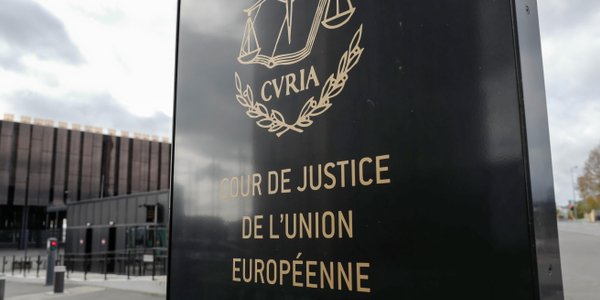
Invalid Loan, Mandatory Policies - What Banks Must Return to Consumers. ECJ Opinion
Translated from Polish, summarized and contextualized by DistantNews.
TLDR
- The EU Court of Justice's Advocate General has issued an opinion on whether banks must refund consumers for insurance policies linked to invalid Swiss franc mortgage contracts.
- The court is considering a case where a Polish consumer seeks reimbursement for various insurance costs after her mortgage agreement was deemed unfair.
- The Advocate General suggested banks should refund costs for policies protecting the bank's interest but not necessarily those protecting the consumer's risk.
A significant legal opinion from the European Union's Court of Justice (ECJ) could reshape how Polish banks handle claims from consumers whose Swiss franc-denominated mortgages have been declared invalid. The Advocate General's stance, while not a final ruling, offers a strong indication of how the court might interpret EU directives concerning unfair contract terms, particularly regarding associated insurance costs.
This case, originating from a Polish district court, centers on a consumer who was required by her bank to purchase multiple insurance policies as part of her mortgage agreement. When the contract was later found to be unfair and thus void, she sought a refund for all associated insurance expenses. The core question is whether EU law compels banks to reimburse consumers for these costs, especially when the policies were a condition of the loan.
The Advocate General's opinion distinguishes between insurance policies that primarily protect the bank (like those for low initial equity or bridging loans) and those that protect the consumer's interests (like life or property insurance). The reasoning suggests that costs for the former, being intrinsically tied to the now-invalid loan agreement, should be refunded. However, for the latter, the court must consider proportionality, ensuring that such refunds do not unduly burden banks or create an imbalance favoring consumers, potentially impacting financial market stability.
This development is closely watched in Poland, where a significant number of consumers hold mortgages indexed to foreign currencies, particularly the Swiss franc. The potential for widespread refunds of insurance costs, alongside other potential reimbursements related to invalid contracts, could have substantial financial implications for the banking sector. The final ECJ ruling will be crucial in clarifying these rights and obligations for both consumers and financial institutions across the EU, but especially in countries like Poland with a high prevalence of such mortgages.
DistantNews Editorial
Originally published by Rzeczpospolita in Polish. Translated, summarized, and contextualized by our editorial team with added local perspective. Read our editorial standards.
More Stories


From Our Blog

What Gets Lost (and Found) When News Is Translated

The Critical Role of Diaspora Media in Global News

What Travellers Should Know About Countries with Restricted Press

A Digital Nomad's Guide to Following Local News

How the Same Story Looks Different in Different Countries
