


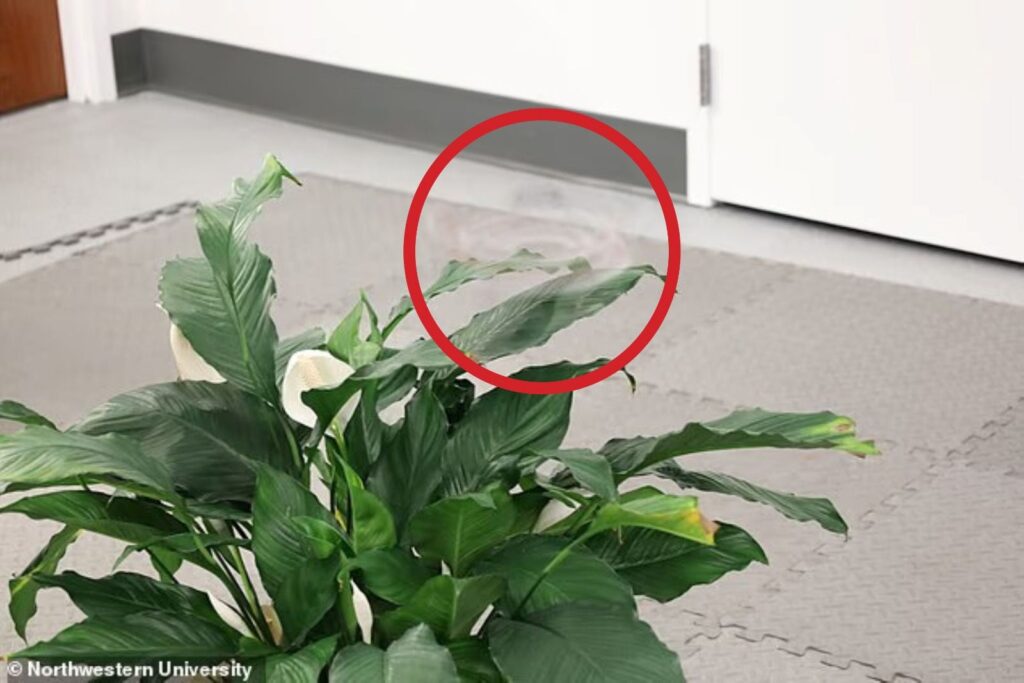
Invisible Drone Developed by Northwestern University Researchers
Translated from Malay, summarized and contextualized by DistantNews.
At a glance
News
Sources not specified
New plan
- Researchers at Northwestern University have developed a new drone, the Phantom Twist, that spins so rapidly it is nearly invisible to the human eye.
- The drone rotates up to 25 times per second, making it 10 times harder to see than conventional quadcopters and potentially revolutionizing modern warfare.
- Beyond military applications, the technology could be used for wildlife monitoring, environmental surveys, and infrastructure inspection.
Researchers at Northwestern University have engineered a groundbreaking drone, dubbed the Phantom Twist, capable of near-invisibility. This innovation stems from its remarkable ability to spin at an astonishing 25 rotations per second, a speed that renders it exceptionally difficult for the human eye to track. The drone is reportedly 10 times harder to see than traditional quadcopters.
Michael Rubenstein, the lead researcher, described the drone's appearance as a "faint shadow" that can blend seamlessly with its surroundings. The development process involved extensive computer simulations, generating approximately 20,000 different configurations. Artificial intelligence was then employed to test various component arrangements, ultimately shortlisting the most effective designs through an automated process.
faint shadow
The Phantom Twist distinguishes itself from conventional drones by utilizing a single motor and propeller that spins in one direction, unlike the four-rotor system of quadcopters where only the propellers move. "On a regular quadcopter drone, only the propellers spin while the drone's body remains stationary, making it still easy to see. For our drone, the entire structure also rotates, so no part remains static," Rubenstein explained.
While the drone's potential to transform modern warfare is significant, its creators also envision broader applications. Researchers hope the technology can be deployed for non-intrusive wildlife monitoring, comprehensive environmental surveys, and detailed infrastructure inspections, all while minimizing visual disturbance.
On a regular quadcopter drone, only the propellers spin while the drone's body remains stationary, making it still easy to see. For our drone, the entire structure also rotates, so no part remains static.
DistantNews Editorial
Originally published by Utusan Malaysia in Malay. Translated, summarized, and contextualized by our editorial team with added local perspective. Read our editorial standards.
More Stories



From Our Blog

What Gets Lost (and Found) When News Is Translated

The Critical Role of Diaspora Media in Global News

What Travellers Should Know About Countries with Restricted Press

A Digital Nomad's Guide to Following Local News

How the Same Story Looks Different in Different Countries
