


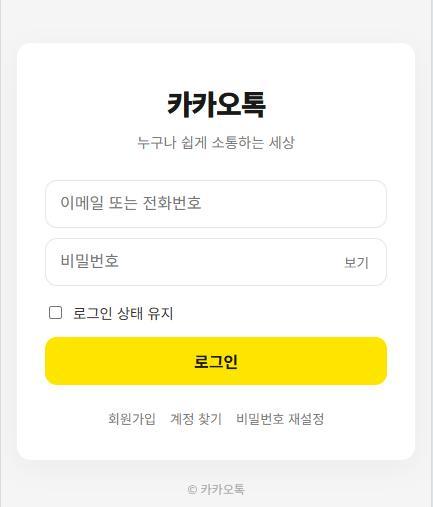
iPhone hacking code disguised as KakaoTalk 'emergency'
Translated from Korean and summarized by DistantNews. Read the original for the full story.
At a glance
News
Sources not specified
Ongoing story
- A new phishing site impersonating KakaoTalk's login screen is targeting iPhones, exploiting iOS vulnerabilities.
- Users are at risk of hacking simply by accessing a linked site, even without entering credentials.
- The malicious code targets specific iOS versions (18.4.0 to 18.7.2), with newer versions being safe.
iPhone users are facing a new wave of sophisticated phishing attacks that exploit a vulnerability in the iOS operating system. Security firm Nuri Lab reported the discovery of a malicious code disguised as a KakaoTalk login page. This fake page closely mimics the legitimate KakaoTalk login interface, but its true purpose is to compromise user devices.
The danger lies in the ease of infection. Users are at risk of hacking simply by visiting the linked phishing site, even if they do not enter any login information. The attack is designed to communicate with a hacker's server in the background without the user's knowledge. This sophisticated method bypasses traditional security measures that rely on user input.
Researchers have identified that the malicious code specifically targets certain versions of the iPhone's operating system, namely iOS 18.4.0 through 18.7.2. However, the attack is configured to cease its activity on versions 18.7.3 and later, indicating that updating to the latest iOS version is a crucial protective measure. The attackers are leveraging multiple security weaknesses rather than a single exploit to enhance their chances of success.
About this summary
Originally published by Dong-A Ilbo in Korean. Translated, summarized, and contextualized automatically by DistantNews, with a note on how the source frames the story. Not individually reviewed before publishing. How this works.
More Stories



From Our Blog

What Gets Lost (and Found) When News Is Translated

The Critical Role of Diaspora Media in Global News

What Travellers Should Know About Countries with Restricted Press

A Digital Nomad's Guide to Following Local News

How the Same Story Looks Different in Different Countries
