

Iran announces Strait of Hormuz closure in response to alleged Israeli attacks
Translated from Spanish, summarized and contextualized by DistantNews.
At a glance
News
Named sources
Ongoing story
- Iran's military command announced the closure of the Strait of Hormuz.
- The move is a response to alleged Israeli attacks in southern Lebanon and a violation of a U.S. agreement.
- Iran also dispatched a delegation to Switzerland to discuss the implementation of a peace agreement with the United States.
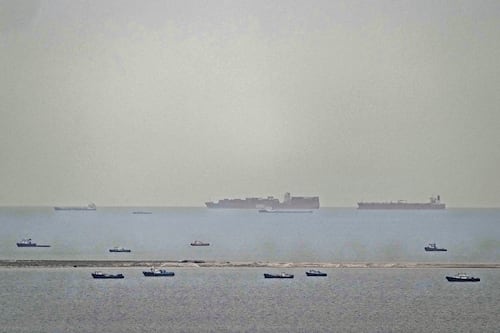
Tehran, Iran's central military command announced the closure of the Strait of Hormuz, citing it as a response to alleged Israeli attacks in southern Lebanon and a violation of an agreement with the United States. The announcement, broadcast on state television, declared the strait would be closed to shipping.
The statement from the Jatam al Anbiya Central Headquarters, the main command of the Iranian army, asserted that this action is the "first step" in response to the "enemy's failure to fulfill its promise." It further warned that "if the aggression continues, new measures will be planned to force the enemy to fulfill its obligations."
This development occurs amid reports of a ceasefire between Israel and Hezbollah in Lebanon, and a potential strain on a pact between the U.S. and Iran. The Iranian statement specifically referenced the "clear violation by the United States of the first clause of the memorandum of understanding to end the war" and "continuous and persistent violations of the ceasefire by the Zionist regime in southern Lebanon."
Meanwhile, Iran's Foreign Ministry announced that a negotiating delegation has departed for Switzerland. The delegation is expected to discuss the implementation of an agreement signed between Iran and the United States aimed at ending the war in the Middle East. A Foreign Ministry spokesperson stated that the "other party must take the necessary measures as soon as possible; otherwise, the entire understanding will be in danger."
DistantNews Editorial
Originally published by El Universal in Spanish. Translated, summarized, and contextualized by our editorial team with added local perspective. Read our editorial standards.
More Stories

From Our Blog

What Press Freedom Means for the News You Read

What Gets Lost (and Found) When News Is Translated

The Critical Role of Diaspora Media in Global News

What Travellers Should Know About Countries with Restricted Press

A Digital Nomad's Guide to Following Local News
