

Iran claims US strikes on nuclear power plant; Tehran's attacks against Washington allies in West Asia continue
Summarized and contextualized by DistantNews.
At a glance
News
Sources not specified
Ongoing story
- Iran claims the US conducted strikes on its nuclear power plant infrastructure and military assets on Sunday, escalating regional tensions.
- The International Atomic Energy Agency is investigating reports of an overnight attack on the under-construction Darkhovin nuclear power plant, noting it poses no radiological risk.
- Iran's Revolutionary Guard Corps (IRGC) also reported intercepting a US drone and alleged US involvement in incidents involving ships in the Strait of Hormuz.
The conflict between the United States and Iran intensified Sunday with reported military operations across West Asia. Iran alleged that the U.S. launched strikes targeting its nuclear power plant infrastructure and military assets, while Tehran retaliated with drone attacks against U.S. allies.
The IAEA is looking into reports of an overnight attack on the construction site of a planned nuclear power plant in Darkhovin, Iran. The facility is in the very early stages of construction and contained no nuclear material when last visited by the IAEA.
The International Atomic Energy Agency (IAEA) confirmed it is investigating reports of an overnight attack on the construction site of a planned nuclear power plant in Darkhovin, located in Iran's southwestern Khuzestan province. The agency stated that the facility was in its very early stages of construction and contained no nuclear material during its last visit. The IAEA also noted that the reported attack is not believed to pose any radiological risk.
A few minutes ago, an area outside the city limits and on the outskirts of Abadan was attacked with missiles by the terrorist enemy of America. He added that the attack 'did not result in any casualties.'
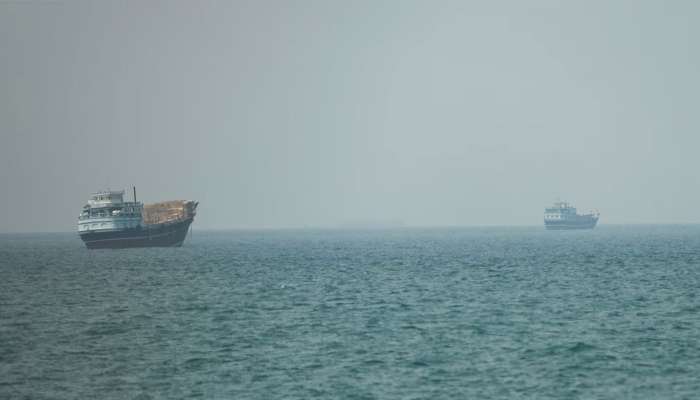
Iranian authorities also reported a missile strike on the outskirts of Abadan in Khuzestan province. Valiullah Hayati, Deputy Security and Police Officer of the Khuzestan Governorate, attributed the attack to "the terrorist enemy of America" but stated it caused no casualties. The Islamic Revolutionary Guard Corps (IRGC) Navy claimed four ships attempted to transit the Strait of Hormuz using an unsafe route after disabling their navigation systems, alleging U.S. support for this action. The IRGC asserted its complete control over the strait, warning that vessels using unauthorized routes would face accidents.
The Strait of Hormuz remains under its 'complete control' and reiterated that 'not a single drop of oil, gas, or chemical fertiliser' would pass through the waterway without coordination and permission, warning that vessels choosing unsafe routes would 'surely encounter an accident.'
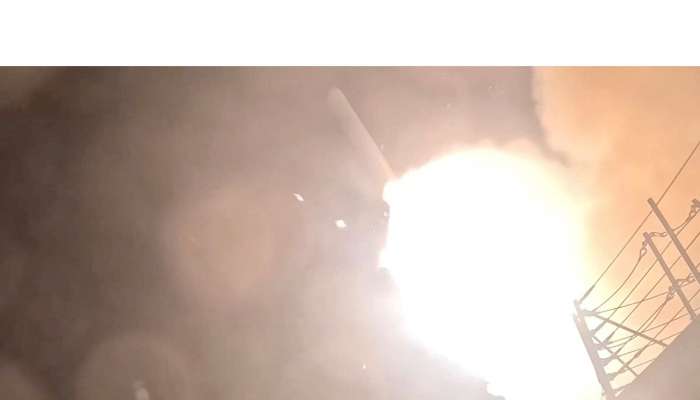
Further escalating the situation, Iran claimed the IRGC intercepted and destroyed a U.S. MQ-9 drone over Ahvaz. The semi-official Tasnim News Agency reported additional U.S. airstrikes on Qeshm Island, with explosions heard and emergency teams deployed. The U.S. Central Command (CENTCOM) confirmed conducting "another round of strikes against Iran" under President Trump's direction, targeting coastal surveillance networks, air defense systems, maritime assets, and missile and drone storage facilities to degrade Iranian military capabilities. CENTCOM also stated that U.S. forces struck IRGC personnel involved in attacks on American troops in Jordan.
CENTCOM said it had completed 'another round of strikes against Iran' under the direction of President Trump. According to CENTCOM, the strikes targeted Iranian coastal surveillance networks, air defence systems, maritime assets and missile and drone storage facilities to further degrade 'Iranian military capabilities.'
DistantNews Editorial
Originally published by Times of Oman. Summarized and contextualized by our editorial team with added local perspective. Read our editorial standards.
More Stories


From Our Blog

What Gets Lost (and Found) When News Is Translated

The Critical Role of Diaspora Media in Global News

What Travellers Should Know About Countries with Restricted Press

A Digital Nomad's Guide to Following Local News

How the Same Story Looks Different in Different Countries
