


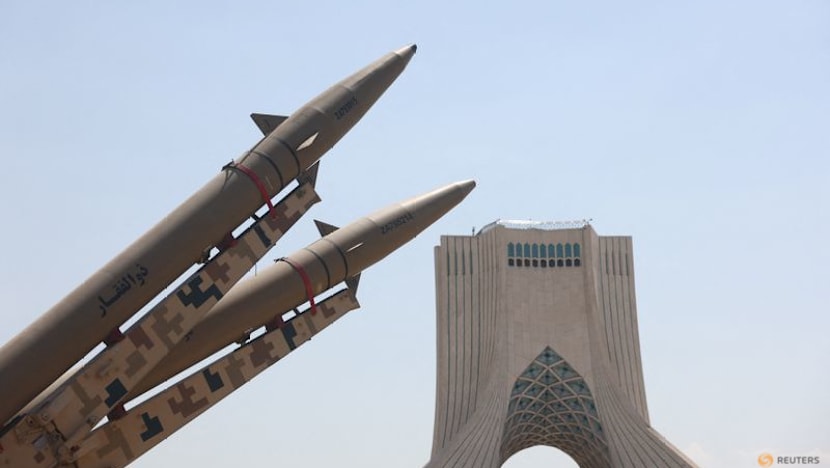
Iran condemns US plans to announce new sanctions
Summarized and contextualized by DistantNews.
At a glance
News
Named sources
Ongoing story
- Iran condemned U.S. plans to announce new sanctions, calling them an "assertion of extraterritorial sovereignty" and baseless under international law.
- The sanctions could further strain Iran's economy and impact key trading partners like China, which imports over 80% of Iran's oil.
- Iran's Supreme National Security Council warned of targeting the interests of countries aiding the U.S., while oil shipments in the Strait of Hormuz remain largely halted.
Iran has strongly denounced the United States' intention to announce new sanctions, characterizing the move as an "assertion of extraterritorial sovereignty over every independent member state of the United Nations." Iran's Foreign Ministry spokesperson, Esmaeil Baghaei, stated that such secondary sanctions lack any foundation in international law.
The impending U.S. sanctions are expected to place additional pressure on Iran's already strained economy and could significantly affect its major trading partners, particularly China. Data from analytics firm Kpler indicates that China imports more than 80% of Iran's shipped oil. U.S. Treasury Secretary Scott Bessent is scheduled to hold a press conference regarding what he has threatened will be "the toughest sanctions in history" on Iran.
Such secondary sanctions find no foundation in international law.
In response to the potential U.S. actions, the secretary of Iran's Supreme National Security Council, Mohsen Rezaei, warned that Tehran would target the interests of countries that assist the United States. "We are telling all nearby countries not to join the U.S. economic war, otherwise we will consider them as enemies," Rezaei stated on state television.
Meanwhile, the Strait of Hormuz has seen oil shipments virtually halted. Ship-tracking data showed only four commodity ships transiting the strait on Thursday, with no large crude carriers or liquefied natural gas tankers. This blockade follows U.S. airstrikes against Iran and a lack of progress in peace talks. While Iran has granted passage to some Iraqi oil tankers following requests from Baghdad, the U.S. military previously facilitated the movement of approximately 8 million barrels of oil per day through the strait, a figure significantly reduced from over 20 million barrels per day before the conflict.
We are telling all nearby countries not to join the U.S. economic war, otherwise we will consider them as enemies.
DistantNews Editorial
Originally published by CNA. Summarized and contextualized by our editorial team with added local perspective. Read our editorial standards.
More Stories


From Our Blog

What Gets Lost (and Found) When News Is Translated

The Critical Role of Diaspora Media in Global News

What Travellers Should Know About Countries with Restricted Press

A Digital Nomad's Guide to Following Local News

How the Same Story Looks Different in Different Countries
