


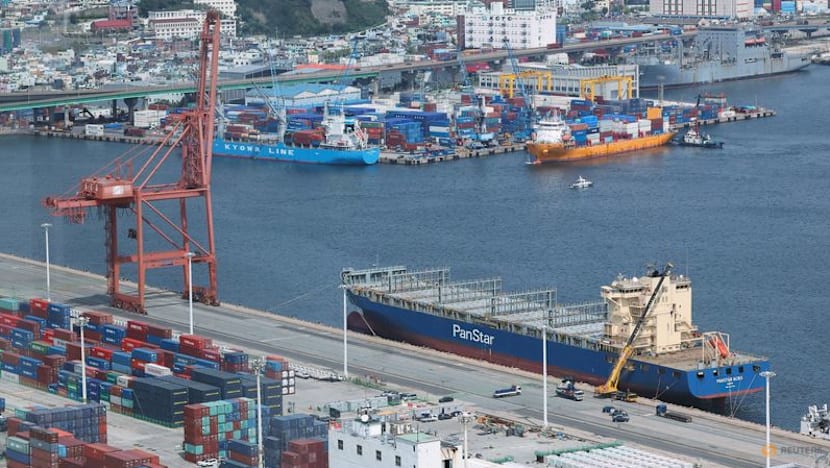
South Korea launches Arctic route test voyage amid Western concerns
Translated from English, summarized and contextualized by DistantNews.
At a glance
News
Sources not specified
New plan
- A South Korean container ship has embarked on a commercial voyage through the Arctic's Northern Sea Route, aiming to test its viability.
- The journey, the first of its kind for South Korea, seeks to establish Busan as a global maritime hub and potentially open the route for regular trade by 2030.
- The voyage faces potential friction with Western allies concerned about isolating Russia, though Seoul has consulted Moscow on the journey's logistics.
A South Korean container ship, the PanStar Acro, has set sail on a pioneering commercial voyage through the Arctic's Northern Sea Route, marking the nation's first such venture. The journey aims to assess the route's viability and bolster the southeastern port of Busan's status as a global maritime hub. The ship will travel north along Russia's Kamchatka peninsula, cross the Bering Sea, and navigate the Northern Sea Route, with planned stops in Felixstowe, Britain, Rotterdam in the Netherlands, and Gdansk, Poland. The entire trip is expected to take between 40 and 45 days. President Lee Jae Myung has prioritized Arctic shipping for South Korea, a major player in global maritime trade, with officials envisioning the Arctic as a regular trade route by 2030. However, this initiative could create diplomatic challenges with Western nations seeking to isolate Russia due to its ongoing war in Ukraine. South Korea has engaged in consultations with Moscow regarding the voyage, including contingency plans for potential issues like ice entrapment. While official comments from South Korea's Oceans Ministry and Russia's Foreign Ministry were not immediately available, data indicates a growing trend in Arctic shipping. In the previous year, 88 vessels completed 103 transits via the route, an increase from prior years, primarily involving ships from Russia and China. Scientists note that melting Arctic ice facilitates passage, but increased shipping activity also contributes to global warming. The PanStar Acro is carrying 837 TEU of cargo, including auto parts and chemical products, on this government-backed voyage.
DistantNews Editorial
Originally published by CNA in English. Translated, summarized, and contextualized by our editorial team with added local perspective. Read our editorial standards.
More Stories


From Our Blog

What Gets Lost (and Found) When News Is Translated

The Critical Role of Diaspora Media in Global News

What Travellers Should Know About Countries with Restricted Press

A Digital Nomad's Guide to Following Local News

How the Same Story Looks Different in Different Countries
