


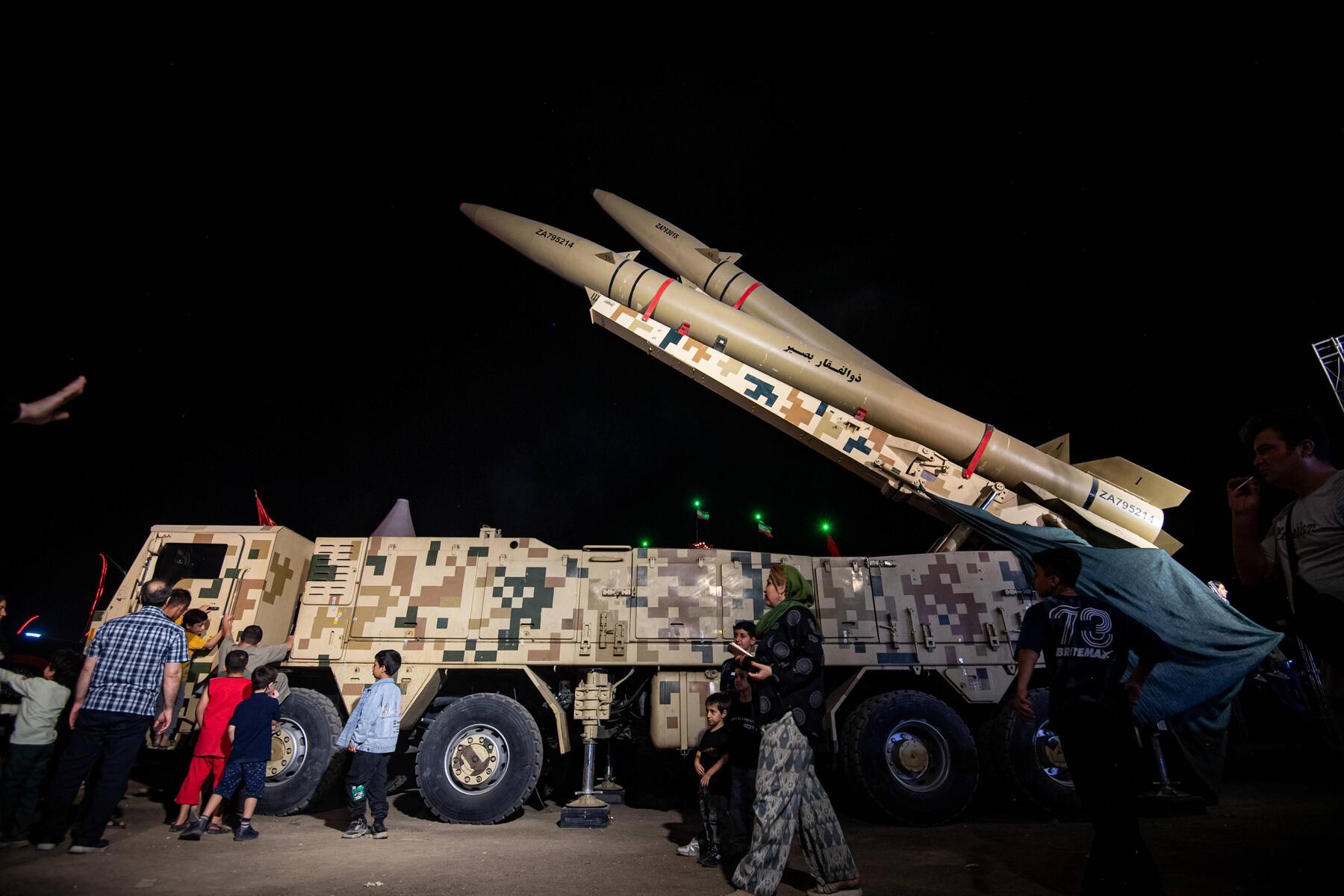
Iran exploits perceived U.S. weakness, launches regional offensive
Translated from German, summarized and contextualized by DistantNews.
At a glance
News
Sources not specified
Context piece
- Iran is escalating its actions, launching new missile attacks on Jordan and targeting ships in the Strait of Hormuz.
- Pro-Iranian militias in Iraq have also attacked Saudi Arabia, prompting retaliatory strikes from the U.S. and Saudi forces.
- Iran perceives recent U.S. military restraint as a sign of weakness, believing it can impose its will regionally without risking a major American response.
Iran is interpreting recent U.S. military restraint as a sign of weakness and has launched a new offensive, escalating regional tensions. The Iranian leadership has broken a recent ceasefire with new missile attacks on Jordan, assaults on ships in the Strait of Hormuz, and attacks by pro-Iranian militias in Iraq targeting Saudi Arabia. While the U.S. and Saudi Arabia retaliated on Wednesday, it may not be enough to deter Iran's assertive military and political factions.
This escalation follows U.S. President Donald Trump's decision to end a nearly two-week series of airstrikes against Iran due to dwindling weapon supplies. Initially, Iran had ceased its shelling of Arab states and engaged in new negotiations with Oman regarding the Strait of Hormuz, fostering hopes for a conflict resolution and leading to a drop in global oil prices.
However, a shift in perspective within the Iranian regime appears to have occurred, with the belief that Iran is militarily strong enough to impose its will in the region concerning the Hormuz Strait and other issues without provoking a large-scale American attack. "Iran is not concerned about any actions, not even the resumption of war, when it comes to sovereignty over the Strait of Hormuz," stated Deputy Foreign Minister Kazem Gharibabadi, according to the hardline newspaper Kayhan.
Iranian officials have warned adversaries that the Islamic Republic has expanded its military defense capabilities. Hossein Mohebbi, spokesperson for the Revolutionary Guards, told the Tasnim news agency that Iran, unlike the U.S., used the April ceasefire to enhance its forces' combat power, including faster missile production and improved weapon accuracy. Iran-expert Danny Citrinowicz from Israel's INSS institute suggests Tehran aims to dictate the pace of the conflict rather than merely react to Trump's decisions. He noted on X that Iran sees an opportunity to reshape the regional order in its favor, viewing current U.S. hesitation as "strategic weakness."
Iran is not concerned about any actions, not even the resumption of war, when it comes to sovereignty over the Strait of Hormuz.
DistantNews Editorial
Originally published by Die Presse in German. Translated, summarized, and contextualized by our editorial team with added local perspective. Read our editorial standards.
More Stories
From Our Blog

What Gets Lost (and Found) When News Is Translated

The Critical Role of Diaspora Media in Global News

What Travellers Should Know About Countries with Restricted Press

A Digital Nomad's Guide to Following Local News

How the Same Story Looks Different in Different Countries
