

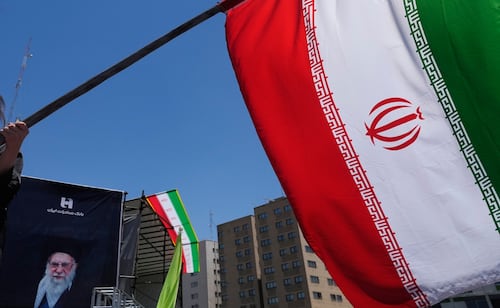
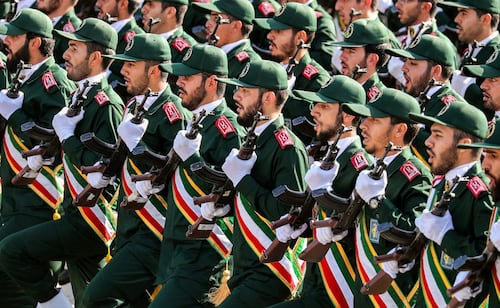
Iran names new Revolutionary Guard Navy chief amid Strait of Hormuz tensions with US
Translated from Spanish, summarized and contextualized by DistantNews.
At a glance
News
Named sources
New plan
- Iran has appointed Rear Adm. Alireza Tangsiri as the new commander of the Revolutionary Guard's Navy, a role he assumes amid heightened tensions with the U.S. over the Strait of Hormuz.
- Tangsiri, previously head of the Guard's Fifth Naval Region, replaces his predecessor who died in a U.S.-Israeli airstrike during a recent conflict.
- In his first statement, Tangsiri vowed "divine vengeance" against the U.S. and Israel and pledged to continue the path of the former commander, who was accused by Tel Aviv of orchestrating the closure of the Strait of Hormuz.
Iran has appointed Rear Adm. Alireza Tangsiri as the new commander of its elite Revolutionary Guard Navy, a move that comes amid escalating tensions with the United States over the strategic Strait of Hormuz. Tangsiri, who previously led the Guard's Fifth Naval Region encompassing key islands in the Persian Gulf, takes over the command following the death of his predecessor, Alireza Tangsiri, in a U.S.-Israeli airstrike during a recent conflict.
Tel Aviv had accused the former commander of being responsible for Tehran's threats to close the vital waterway during the war. In his inaugural address as the new naval commander, Tangsiri issued a stark warning, vowing that "divine vengeance" against the U.S. and Israel "is not far off." He further pledged that the naval forces and "guardians of the strategic Strait of Hormuz" would "firmly and with determination" continue the path laid out by his predecessor.
Divine vengeance against the United States and Israel is not far off.
This appointment and Tangsiri's rhetoric occur against a backdrop of renewed tensions between Tehran and Washington. Iran announced the reopening of maritime traffic through Hormuz as part of a memorandum of understanding signed with the U.S. to end the war. However, Iran maintains that vessels transiting the passage must do so with its permission and along routes established by Tehran. Recent weeks have seen a spike in confrontations, including Iranian attacks on several vessels and U.S. airstrikes on military targets along Iran's southern coast, intensifying the struggle for control over the crucial strait.
The naval forces and the guardians of the strategic Strait of Hormuz will continue firmly and with determination the path of Jamenei.
DistantNews Editorial
Originally published by El Universal in Spanish. Translated, summarized, and contextualized by our editorial team with added local perspective. Read our editorial standards.
More Stories

From Our Blog

What Press Freedom Means for the News You Read

What Gets Lost (and Found) When News Is Translated

The Critical Role of Diaspora Media in Global News

What Travellers Should Know About Countries with Restricted Press

A Digital Nomad's Guide to Following Local News
