

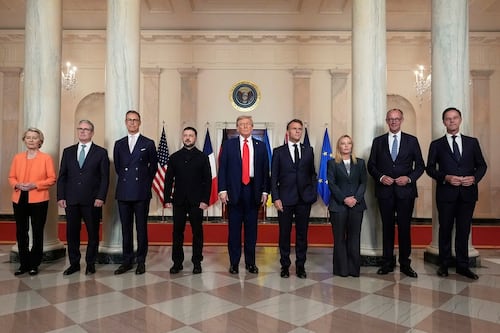
NATO summit in Turkey to focus on defense spending amid US-Europe tensions
Translated from Spanish, summarized and contextualized by DistantNews.
At a glance
News
Sources not specified
Context piece
- NATO's upcoming summit in Ankara, Turkey, will focus on increasing European defense spending and the war in Ukraine.
- The summit occurs amid significant tensions between the United States and European allies, particularly regarding defense contributions.
- European nations are increasing their defense investments, aiming to meet a commitment to spend 5% of GDP on defense by 2035.
The North Atlantic Treaty Organization (NATO) is set to transition to what is termed "NATO 3.0," a phase emphasizing greater European responsibility for defense spending. This shift, alongside the ongoing war in Ukraine, will be the central focus of the upcoming NATO summit in Ankara, Turkey, on July 7-8.
The summit is taking place against a backdrop of considerable tension between the United States and its European allies. U.S. President Donald Trump has repeatedly accused European members of over-reliance on American security guarantees and insufficient defense investment. His frustration has been evident in verbal attacks on allies and a decision to withdraw 5,000 U.S. troops from Germany.
Trump has expressed particular displeasure with European allies for not supporting U.S. actions, such as in the "war against Iran," and for not allowing the use of their military bases. He has singled out Italian Prime Minister Georgia Meloni and Spain for criticism. Trump stated he would attend the summit primarily out of "respect" for the host, Turkish President Recep Tayyip Erdoğan, whom he views as an exception among his "terrible" allies.
The concept of "NATO 3.0" translates into a concrete increase in European defense budgets. Following an agreement at last year's summit in The Hague, allies committed to dedicating 5% of their GDP to defense by 2035. In 2025, European nations collectively increased their defense investment by nearly 20%, adding approximately $139 billion (121.65 billion euros) to their spending. Despite this progress, Trump continues to argue that their investment remains inadequate.
NATO Secretary General Mark Rutte faces the challenge of de-escalating these tensions. During a recent visit to the White House, Rutte attempted to appease Trump, using visual aids to demonstrate European defense spending efforts.
The term was first used by U.S. Deputy Secretary of War Elbridge Colby, who argued that Europe must stop depending on Americans for security and take more responsibility for defending its territory.
DistantNews Editorial
Originally published by El Universal in Spanish. Translated, summarized, and contextualized by our editorial team with added local perspective. Read our editorial standards.
More Stories
From Our Blog

What Press Freedom Means for the News You Read

What Gets Lost (and Found) When News Is Translated

The Critical Role of Diaspora Media in Global News

What Travellers Should Know About Countries with Restricted Press

A Digital Nomad's Guide to Following Local News
