

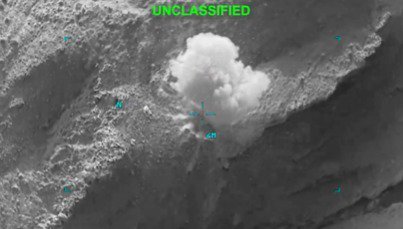

Iran preemptively attacks U.S. bases, shifting war agenda and potentially seizing initiative
Translated from Korean, summarized and contextualized by DistantNews.
At a glance
News
Sources not specified
Ongoing story
- Iran launched a preemptive missile attack on U.S. military bases in Jordan, marking a significant escalation in the ongoing conflict.
- This move shifts the conflict's agenda from nuclear issues to the Strait of Hormuz and positions Iran to potentially seize the initiative.
- The attack coincides with broader military actions by Iran-aligned groups across the Middle East, suggesting a coordinated regional offensive.
Iran has escalated the conflict with the United States by launching a preemptive missile strike on U.S. military bases in Jordan, a move that analysts suggest could shift the war's agenda and allow Iran to seize the initiative. This marks the first time Iran has initiated an attack on U.S. forces since the conflict began in late February.
The Iranian offensive on April 28th, targeting bases like the Muwaffaq Salti Air Base in Jordan, occurred amid a widening series of military clashes between pro-Iranian forces and regional nations. Earlier, pro-Iranian Iraqi militias launched successive attacks on Saudi Arabian oil facilities, prompting retaliatory strikes from Saudi Arabia and U.S. forces on April 28th. In Yemen, the Iran-backed Houthi rebels declared a blockade of the Bab-el-Mandeb Strait on April 20th and subsequently attacked a Saudi oil tanker. Further incidents included a suspected drone attack on an American oil tanker off the coast of Egypt on April 29th and an alleged drone attack by Hezbollah on Israeli forces in Lebanon on the same day.
These actions suggest a regional "uprising" by Iran and its allied militant groups, indicating Iran's strategic shift from defense to offense to gain control of the conflict. The U.S. had been pressuring Iran with its overwhelming military superiority, threatening greater damage. In response, Iran employed asymmetric tactics, including a barrage of low-cost drones and missiles, threats to blockade the Strait of Hormuz, and the use of proxy forces like Hezbollah and the Houthis. This strategy, described as "asymmetric escalation" and "horizontal escalation," aims to neutralize the U.S. advantage and gain leverage in setting the conflict's agenda. The opening of the Strait of Hormuz has become a more prominent issue than Iran's nuclear program, which was the U.S.'s initial justification for military action.
Trump likely thought he could control the escalation when he started the war. But Iran's response has broadened the battlefield, and as a result, the United States has had to defend a wider battlefield.
Despite U.S. retaliatory strikes over the past 13 days, concerns about weapon depletion and the effectiveness of the attacks led to their cessation. While Iran initially appeared to respond to the U.S. pause, pro-Iranian forces across the Middle East intensified their offensive operations. Iran's direct attack on U.S. bases signals a message: "We do not move according to your schedule; we set the next move," thereby seizing the initiative in the conflict.
Experts interpret this as Iran demonstrating the military adage that "the enemy always has a choice." Vali Nasr, a professor at Johns Hopkins University, noted in The New York Times that former President Trump likely believed he could control the conflict's escalation. However, Iran's response has broadened the battlefield, forcing the U.S. to defend a more extensive front. Even if the preemptive strike was an independent action by Iran's Revolutionary Guard Corps, not fully coordinated with Iranian negotiators, it underscores a situation beyond Trump's control. Nicholas Hoptom, former British Ambassador to Iran, described the past five months of conflict as a "wrong adventure that cannot be won by military means alone," adding that it is extremely difficult to achieve military victory when the U.S. president has not clearly decided whether he wants a diplomatic resolution or a military outcome.
The past five months of Iran war have been a wrong adventure that cannot be won by military means alone. It is extremely difficult to achieve military victory when the U.S. president has not clearly decided whether he wants a diplomatic resolution or a military outcome.
DistantNews Editorial
Originally published by Hankyoreh in Korean. Translated, summarized, and contextualized by our editorial team with added local perspective. Read our editorial standards.
More Stories


From Our Blog

What Gets Lost (and Found) When News Is Translated

The Critical Role of Diaspora Media in Global News

What Travellers Should Know About Countries with Restricted Press

A Digital Nomad's Guide to Following Local News

How the Same Story Looks Different in Different Countries
