


Iran President: Communication with new Supreme Leader difficult
Translated from Korean, summarized and contextualized by DistantNews.
At a glance
News
Named sources
New plan
- Iranian President Masoud Pezeshkian admitted communication with the new Supreme Leader is difficult following the previous leader's death.
- He recalled the previous leader's death during a U.S.-Israel airstrike and emphasized the new leader's presence provides strength.
- Pezeshkian also addressed internal political divisions regarding a past MOU with the U.S., asserting the Supreme Leader's decisions are based on professional opinions.
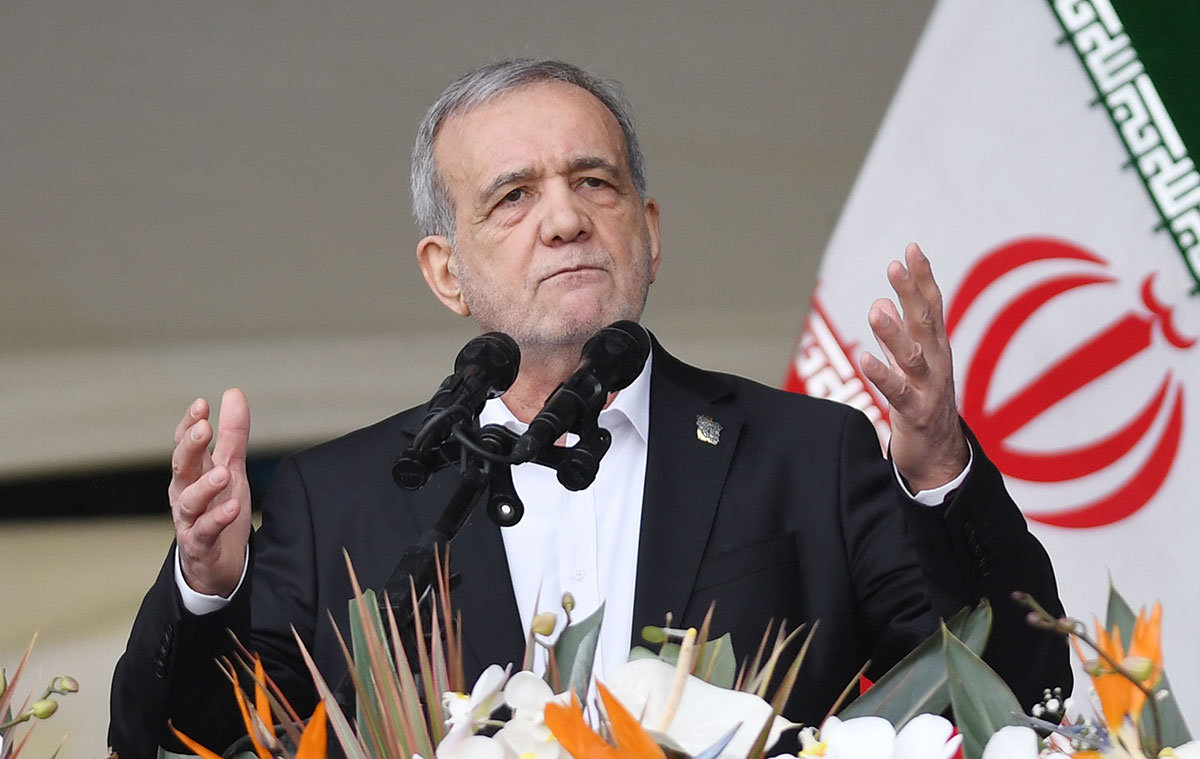
Iranian President Masoud Pezeshkian has acknowledged the challenges in communicating with the nation's new Supreme Leader, Ayatollah Seyed Mojtaba Khamenei, who reportedly sustained injuries during an earlier U.S.-Israel airstrike. In a televised address marking his second year in office, Pezeshkian recounted the circumstances surrounding the previous Supreme Leader's death, stating that adversaries believed missile attacks could dismantle the country.
Although communication with the Supreme Leader is very difficult now, the existence of the new leader is a great strength for us to continue on this path.
"The enemies calculated that they could destroy the country with missile attacks and destruction, but the support of the Supreme Leader did not allow this," Pezeshkian said. He described the previous leader's death as a "barbaric act" by enemies who mistakenly believed the nation would collapse. However, he affirmed that the country endured and elected a new leader.
Pezeshkian emphasized the significance of the new leader's presence, stating, "Although communication with the Supreme Leader is very difficult now, the existence of the new leader is a great strength for us to continue on this path." The new Supreme Leader, Ayatollah Mojtaba, has not appeared in public since his succession, citing security concerns, and was also absent from his father's recent funeral.
The enemies calculated that they could destroy the country with missile attacks and destruction, but the support of the Supreme Leader did not allow this.
Addressing internal political dynamics, Pezeshkian clarified remarks made by Mojtaba Khamenei regarding a past Memorandum of Understanding (MOU) with the U.S. Pezeshkian stated that while some factions sought to exploit divisions, the Supreme Leader's view was ultimately accepted. "The Supreme Leader had his own opinion and said, 'If more than three-quarters agree, I will accept it.' In fact, 12 out of 13 agreed, and the Supreme Leader accepted it," he explained, highlighting that decisions are made based on professional opinions, despite attempts by some to spread untruths.
The Supreme Leader had his own opinion and said, 'If more than three-quarters agree, I will accept it.' In fact, 12 out of 13 agreed, and the Supreme Leader accepted it.
DistantNews Editorial
Originally published by Hankyoreh in Korean. Translated, summarized, and contextualized by our editorial team with added local perspective. Read our editorial standards.
More Stories


From Our Blog

What Gets Lost (and Found) When News Is Translated

The Critical Role of Diaspora Media in Global News

What Travellers Should Know About Countries with Restricted Press

A Digital Nomad's Guide to Following Local News

How the Same Story Looks Different in Different Countries
