


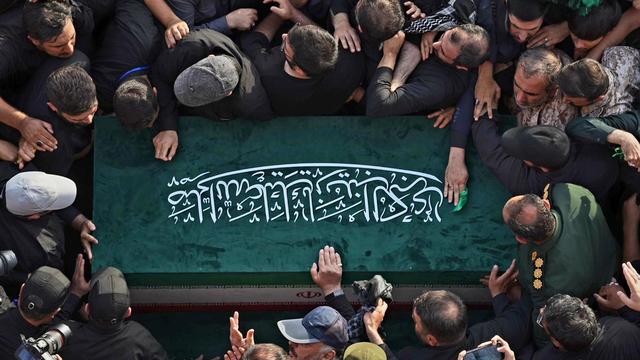
Iran's former supreme leader Khamenei buried after week of mourning
Translated from German, summarized and contextualized by DistantNews.
At a glance
News
Named sources
Outcome reported
- Iran's former supreme leader, Ayatollah Ali Khamenei, has been buried in his hometown of Mashhad after a week of mourning ceremonies.
- Khamenei was killed in an Israeli airstrike on February 28, leading to a war between the US and Israel against Iran, which ended with a ceasefire in early April.
- While millions reportedly participated in state-sanctioned mourning, many Iranians likely view the state mourning with indifference or opposition due to internal repression.
Ayatollah Ali Khamenei, Iran's former supreme leader, has been buried in the Imam Reza shrine in his hometown of Mashhad, northeastern Iran. The burial followed extensive mourning ceremonies that reportedly lasted for days and involved millions of people across the country, according to state media. Khamenei's death occurred on February 28, following an Israeli airstrike on his Tehran residence.
His assassination triggered a war lasting over five weeks, with the United States and Israel engaging Iran militarily until a ceasefire was agreed upon in early April. Despite the ceasefire and a framework agreement to end the conflict, sporadic mutual attacks have continued. Khamenei's son, Mojtaba, has been appointed as the new head of state, though he has not appeared publicly since the appointment.
Khamenei ruled Iran with absolute authority, holding the final say on all critical matters and serving as the highest religious authority. For decades, he was considered untouchable, revered by his supporters as a martyr who stood against a superior enemy. However, the state's internal policies of control and repression, which stifled dissent, likely mean that a significant portion of Iran's 86 million inhabitants view the official mourning with indifference or outright opposition. Demonstrators during recent protest waves have frequently chanted, "Death to the dictator."
Under Khamenei's leadership, the Revolutionary Guard Corps evolved into the nation's leading military force. His death has led to a reshuffling of the power structure, with representatives of the powerful Guard now occupying key political positions.
DistantNews Editorial
Originally published by Die Zeit in German. Translated, summarized, and contextualized by our editorial team with added local perspective. Read our editorial standards.
More Stories
From Our Blog

What Gets Lost (and Found) When News Is Translated

How the Same Story Looks Different in Different Countries

The Critical Role of Diaspora Media in Global News

What Travellers Should Know About Countries with Restricted Press

A Digital Nomad's Guide to Following Local News
