


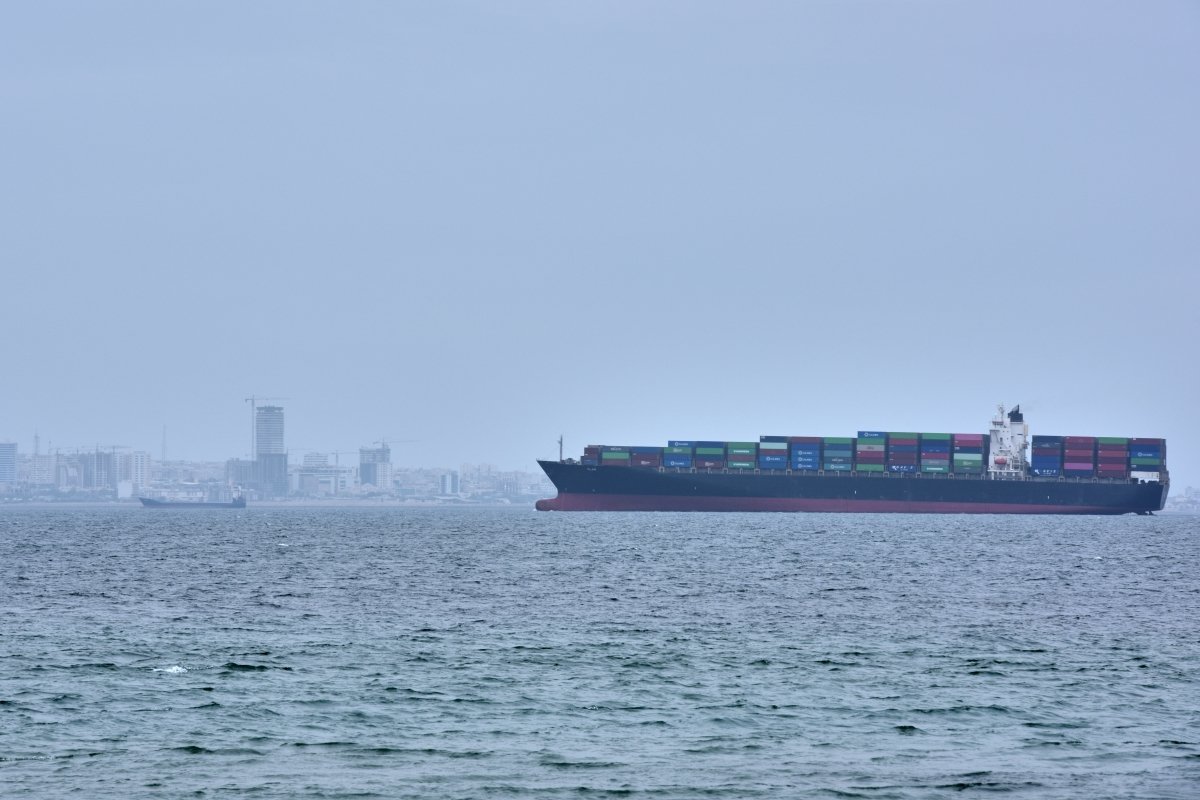
Iran's IRGC Boards Vessels in Strait of Hormuz, Escalating Tensions
Translated from Korean, summarized and contextualized by DistantNews.
TLDR
- Iran's Islamic Revolutionary Guard Corps (IRGC) has released footage of its forces boarding and searching two commercial vessels in the Strait of Hormuz, escalating tensions with the U.S.
- The IRGC claims the vessels, one Panamanian-flagged and one Liberian-flagged, were seized for violating Iranian maritime regulations, warning of further legal action against any infringements.
- This action follows President Trump's unilateral declaration to extend the Iran nuclear deal, with Iran asserting control over the strait and utilizing a
Iran's Islamic Revolutionary Guard Corps (IRGC) has demonstrated its continued naval prowess by releasing footage of its forces boarding and seizing two commercial vessels in the Strait of Hormuz. This bold move, occurring shortly after the U.S. unilaterally declared an extension of the Iran nuclear deal, serves as a powerful propaganda tool, showcasing Iran's control over this vital waterway.
We will take decisive legal action against any act that obstructs passage through the strait or violates safe navigation.
The IRGC's assertion that the vessels were apprehended for violating Iranian maritime laws underscores Tehran's determination to enforce its regulations within the strait. This action sends a clear message to the international community, particularly the United States, that Iran will not hesitate to take decisive legal and potentially military action against any perceived infringements on its declared enforcement of maritime passage.
Despite significant U.S. efforts to degrade Iran's naval capabilities, the IRGC has maintained a substantial portion of its naval strength, particularly its fleet of high-speed attack craft. These vessels, often referred to as a "mosquito fleet," employ asymmetric tactics, including swarm attacks, to threaten larger naval assets. Their speed, maneuverability in the confined waters of the Strait of Hormuz, and low cost make them a persistent and challenging threat to conventional naval forces.
More than 60% of the IRGC's naval power remains, including its high-speed attack craft.
From Iran's perspective, the Strait of Hormuz is a critical geopolitical lever. By demonstrating the ability to disrupt shipping, Tehran can exert pressure on global oil prices and, consequently, on the U.S. and the world economy. This strategy allows Iran to counter U.S. pressure and potentially gain leverage in negotiations, especially with upcoming U.S. elections in mind. The IRGC's actions are not merely military maneuvers; they are calculated moves designed to influence international markets and political dynamics, asserting Iran's strategic importance on the global stage.
The IRGC's naval blockade against Iran is an act of hostility.
DistantNews Editorial
Originally published by Dong-A Ilbo in Korean. Translated, summarized, and contextualized by our editorial team with added local perspective. Read our editorial standards.
More Stories



From Our Blog

What Gets Lost (and Found) When News Is Translated

The Critical Role of Diaspora Media in Global News

What Travellers Should Know About Countries with Restricted Press

A Digital Nomad's Guide to Following Local News

How the Same Story Looks Different in Different Countries
