

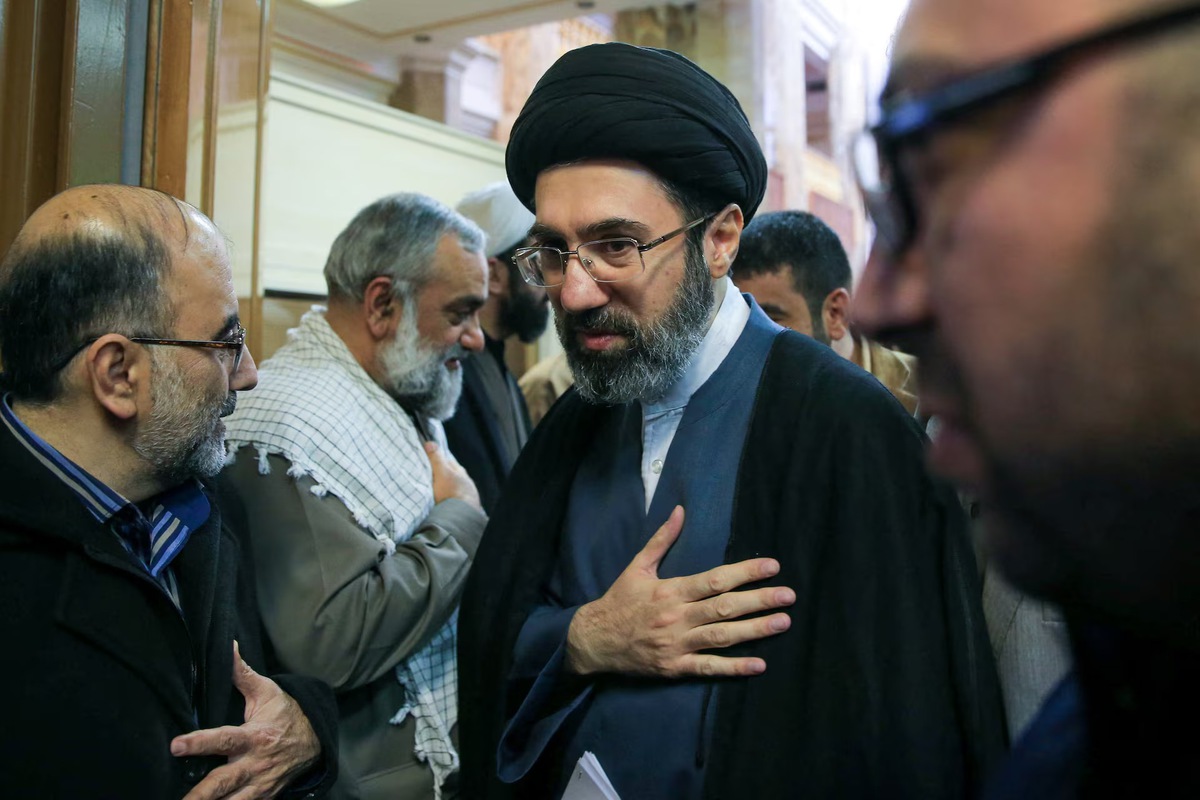
Iran's New Supreme Leader Communicates Via Handwritten Notes Amidst Severe Injuries
Translated from Vietnamese, summarized and contextualized by DistantNews.
TLDR
- Iran's new Supreme Leader, Mojtaba Khamenei, is reportedly severely injured but mentally sound following a US-Israel airstrike that killed his father.
- Due to his injuries and security concerns, Khamenei is communicating through written messages and has delegated decision-making to military commanders.
- The situation highlights a shift in power in Iran, with the military gaining influence over the clergy.
The New York Times reports on the precarious health and limited public presence of Iran's new Supreme Leader, Mojtaba Khamenei, who ascended to the role following the death of his father, Ali Khamenei, in a recent US-Israel airstrike. While the article suggests Khamenei is mentally sharp despite severe injuries, including burns and fractures requiring multiple surgeries, his physical condition prevents public appearances. He communicates solely through written messages, a method necessitated by his injuries and security concerns, as he fears being targeted by Israel.
The access to Mr. Mojtaba Khamenei at this time is extremely difficult and strictly limited.
This situation has led to a temporary transfer of decision-making power to military commanders. The article notes a broader trend in Iran: the military's influence is growing, while that of the clergy is diminishing. This shift is significant, as it potentially alters the traditional power dynamics within the Islamic Republic. The cautious approach taken by Khamenei, avoiding video or audio recordings to prevent appearing weak, underscores the sensitive political climate and the ongoing security threats.
He is mentally sound and alert, despite being severely injured.
From our perspective at Chosun Ilbo, this development is particularly noteworthy. While Western media might focus on the immediate security implications and the potential for internal power struggles, we see it as a reflection of Iran's resilience and its unique methods of governance under duress. The reliance on handwritten messages and a complex chain of trusted couriers, while seemingly archaic, demonstrates a strategic adaptation to extreme circumstances. It raises questions about the long-term stability of a leadership that operates largely in the shadows, and how this will impact regional dynamics, particularly concerning Iran's nuclear program and its relationship with global powers.
He has not recorded or videoed himself, as he does not want to appear weak or with a trembling voice in public.
DistantNews Editorial
Originally published by Tuổi Trẻ in Vietnamese. Translated, summarized, and contextualized by our editorial team with added local perspective. Read our editorial standards.
More Stories
From Our Blog

What Gets Lost (and Found) When News Is Translated

The Critical Role of Diaspora Media in Global News

What Travellers Should Know About Countries with Restricted Press

A Digital Nomad's Guide to Following Local News

How the Same Story Looks Different in Different Countries
