


Iran Slams New US Sanctions as 'Economic Warfare' Violating International Law
Translated from English, summarized and contextualized by DistantNews.
At a glance
News
Named sources
New plan
- Iran has condemned new US economic sanctions, labeling them arbitrary and a violation of international law and UN Charter principles.
- Tehran argues the sanctions constitute "economic warfare" and an assertion of "extraterritorial sovereignty" by the US.
- Iran's Foreign Ministry spokesperson stated that such secondary sanctions lack foundation in international law and undermine state sovereignty.
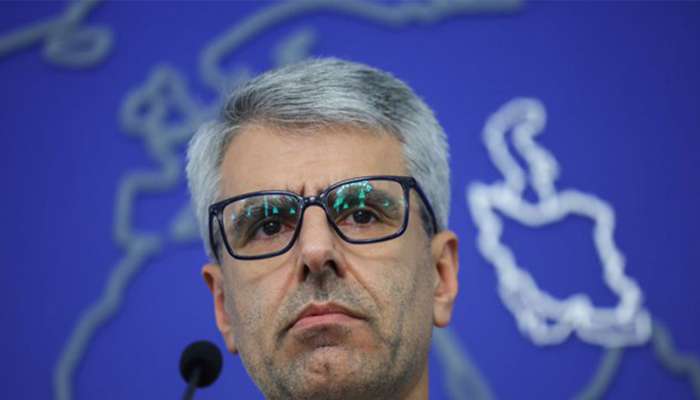
Iran has strongly criticized the latest round of economic sanctions imposed by the United States, denouncing them as arbitrary and lacking any basis in international law. The Iranian Ministry of Foreign Affairs, through its spokesperson Esmaeil Baqaei, asserted on Saturday that these measures violate the principle of sovereign equality fundamental to the UN Charter.
The United States' declaration of new economic sanctions on Iran is far more than continued unlawful 'economic warfare' against a single country. It is an assertion of extraterritorial sovereignty over every independent Member State of the United Nations.
Baqaei described the US actions as more than just "economic warfare" against a single nation. He argued that the sanctions represent an attempt by the US to impose "extraterritorial sovereignty" over all United Nations member states. He emphasized that no country possesses the legal authority to compel foreign banks, enterprises, or airports, which fall under the jurisdiction of their respective sovereign states, to cease lawful commerce with a third country.
Such secondary sanctions find no foundation in international law. They violate the principle of sovereign equality enshrined in Article 2(1) of the UN Charter and breach the customary prohibition on intervention affirmed by the International Court of Justice in the Nicaragua case.
The spokesperson further contended that these so-called secondary sanctions are not supported by international law. He cited the violation of Article 2(1) of the UN Charter concerning sovereign equality and the customary prohibition against intervention, as affirmed by the International Court of Justice in the Nicaragua case. Baqaei stated that using economic coercion to force a sovereign state to change its policies constitutes an internationally wrongful act.
When combined with a naval blockade amounting to military aggression, these demands reduce the sovereignty of all other States to something provisional, conditional, and revocable at the whim of another power.
His remarks come amid heightened tensions between the US and Iran. Earlier, former US President Trump had announced what he termed the "most crushing economic operation ever taken" against Iran, warning of severe consequences for any entity providing support to Tehran. The US President detailed that these measures would target Iran's economic lifelines, including oil smuggling networks and financial transfers, calling the campaign an "Economic D-Day" and urging allies to join in isolating Iran.
The end result would be the complete erosion of sovereignty as the foundational basis of the UN-based inter-State system, and a recipe for an abysmal return to full-scale classic colonialism.
DistantNews Editorial
Originally published by Times of Oman in English. Translated, summarized, and contextualized by our editorial team with added local perspective. Read our editorial standards.
More Stories

From Our Blog

What Gets Lost (and Found) When News Is Translated

The Critical Role of Diaspora Media in Global News

What Travellers Should Know About Countries with Restricted Press

A Digital Nomad's Guide to Following Local News

How the Same Story Looks Different in Different Countries
