


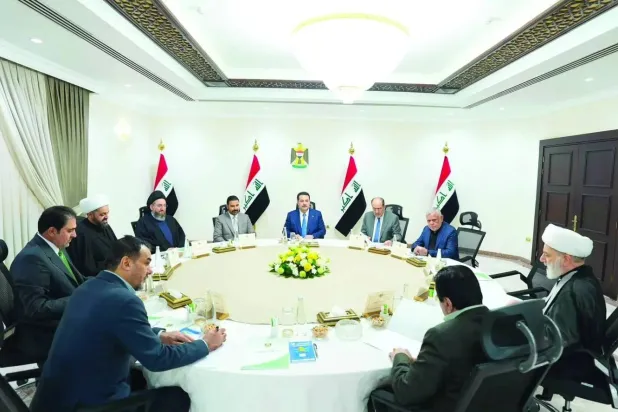
Iran urges Iraqi factions to contain arms dispute, avoid confrontation
Translated from English, summarized and contextualized by DistantNews.
At a glance
News
Named sources
Ongoing story
- Iran has urged Iraqi Coordination Framework leaders to manage disputes over armed factions' weapons and avoid confrontation.
- Baghdad has set a Sept. 30 deadline for placing all weapons under state control, coinciding with the end of the US-led coalition's military mission against ISIS.
- Tehran reportedly proposed negotiations with factions on weapon surrender terms rather than direct confrontation, with a senior Iranian official conveying these messages.
Iran is actively engaging with Iraqi political leaders to de-escalate tensions surrounding the future of armed factions and their weaponry. Tehran has urged leaders within Iraq's Coordination Framework to contain a growing dispute over the control of arms, advising them to avoid confrontation with groups that may resist disarmament after a Sept. 30 deadline set by Baghdad.
The Iraqi judiciary has stated it will take action against anyone found carrying weapons after the deadline. Local reports, citing informed sources, indicate that Iran has called for negotiations with the factions to discuss which weapons could be surrendered, the process of handover, and potential compensation for the groups. The aim is to establish committees to manage this process and prevent direct conflict with the Iraqi government or the United States.
This diplomatic push coincides with Prime Minister Ali al-Zaidi's government advancing its plan to bring all weapons under state authority. Baghdad has linked the end of September to the conclusion of the US-led international coalition's military operations against ISIS, signaling a transition to a new phase in bilateral security relations. National Security Adviser Qassem al-Araji confirmed the coalition's mission would end on Sept. 30, suggesting that dialogue with factions regarding weapons restrictions could commence afterward.
The proposed talks would cover which weapons could be surrendered, how they would be handed over, and what the factions might receive in return.
A senior Iranian official, identified as Mohsen Qomi, a representative of Iran's supreme leader, reportedly attended a recent Coordination Framework meeting. He conveyed messages on managing upcoming political and security developments and maintaining communication channels between the Framework and Tehran. Qomi also met with key Coordination Framework leaders, including Humam Hamoudi and Prime Minister al-Zaidi, discussing mutual interests and designating Hamoudi as a communication channel between Iran and Iraq.
Analysts suggest that while the Coordination Framework forces recognize the risks of confronting the U.S. over weapons, they are also hesitant to fully disarm quickly if it strengthens the central government and the prime minister's authority. Ghalib al-Daami, a media studies professor, noted that Shi'ite forces might be seeking a balance of power.
The move would organize political contacts with Tehran as pressure mounts on Iran-aligned armed factions.
DistantNews Editorial
Originally published by Asharq Al-Awsat in English. Translated, summarized, and contextualized by our editorial team with added local perspective. Read our editorial standards.
More Stories


From Our Blog

What Gets Lost (and Found) When News Is Translated

The Critical Role of Diaspora Media in Global News

What Travellers Should Know About Countries with Restricted Press

A Digital Nomad's Guide to Following Local News

How the Same Story Looks Different in Different Countries
