

Iran War Forces Families to Choose Between Children’s Education and Survival
Summarized and contextualized by DistantNews.
At a glance
News
Named sources
Context piece
- Soaring fuel prices, exacerbated by the Iran war, are forcing impoverished families in Cambodia to make difficult choices between children's education and basic survival.
- Children like 13-year-old Sou Sreynich, who started school late, are falling further behind as families struggle to afford transportation and basic necessities.
- The United Nations warns that the conflict's ripple effects could push millions more children into poverty and out of school globally, with a disproportionate impact on Africa and Asia.
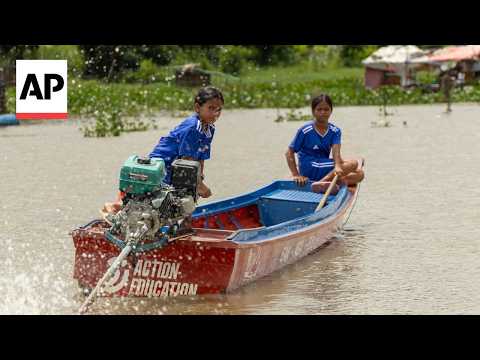
In Cambodia's Kampong Prahok village, on the vast Tonle Sap lake, 13-year-old Sou Sreynich dreams of becoming a teacher, but her education is already significantly delayed. She only entered a classroom at age 10, years behind her peers, a common reality for children on the lake where fear of boat capsizing influences parental decisions about schooling.
Now, the Iran war's impact on global fuel prices presents an additional, severe burden. While not causing outright school closures like the COVID-19 pandemic, the rising cost of gasoline makes it more expensive for children and teachers to travel to school. For families like Sreynich's, who rely on fishing and picking chili peppers for income, higher fuel prices mean they cannot afford to travel to deeper waters for more plentiful fish. This financial strain forces difficult choices.
I want to complete my studies.
When money is tight, Sreynich sometimes skips school to work with her parents, a decision she dreads. "I want to complete my studies," she said, highlighting the conflict between immediate survival needs and long-term educational aspirations. The war's economic fallout is pushing vulnerable children to the brink, forcing families to prioritize food, fuel, rent, and electricity over consistent schooling.
Sabrina Hervey of the Qatar-based Education Above All Foundation warns that the Iran war could force millions of children out of school or prevent them from enrolling in the first place. A recent United Nations Children's Fund report estimates that up to 23.4 million more children could be pushed into poverty by the end of the year due to the conflict's ripple effects, with Africa and Asia bearing the brunt. The situation is compounded by climate change impacts, such as unpredictable floods and droughts, making life on the lake even more precarious. Teachers at Sreynich's school note that 10 students have drowned over the years, underscoring the inherent dangers faced by these communities.
The Iran war is likely going to force millions of children out of school and could force millions of children to make the decision not to enroll in the first place.
DistantNews Editorial
Originally published by Arab Times. Summarized and contextualized by our editorial team with added local perspective. Read our editorial standards.
More Stories
From Our Blog

What Gets Lost (and Found) When News Is Translated

The Critical Role of Diaspora Media in Global News

What Travellers Should Know About Countries with Restricted Press

A Digital Nomad's Guide to Following Local News

How the Same Story Looks Different in Different Countries
