

Iran warns ships against deviating from marked route in Strait of Hormuz
Translated from Spanish, summarized and contextualized by DistantNews.
At a glance
News
Named sources
Ongoing story
- Iran warned ships against deviating from its designated route in the Strait of Hormuz, stating it would increase regional tensions.
- The warning follows reciprocal attacks between Iran and the United States, with Iran claiming missile and drone strikes on U.S. bases in Kuwait and Bahrain.
- Both nations accuse each other of violating a ceasefire, with Iran controlling a specific corridor in the Strait.
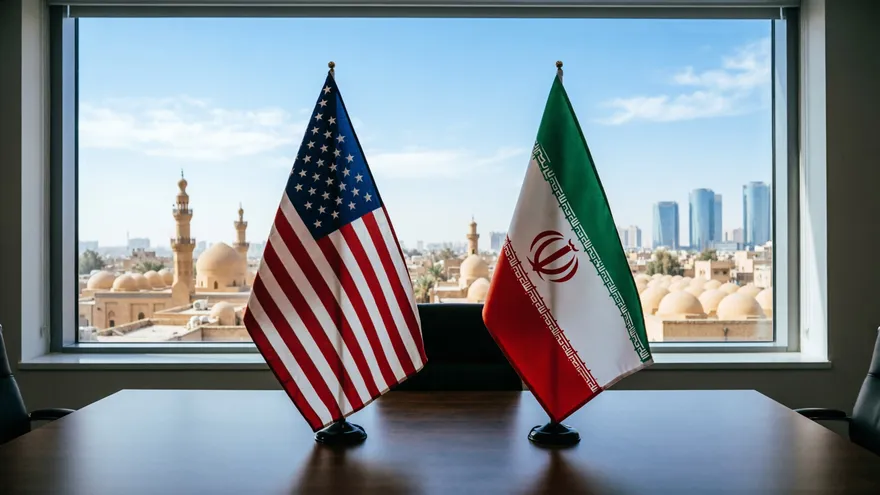
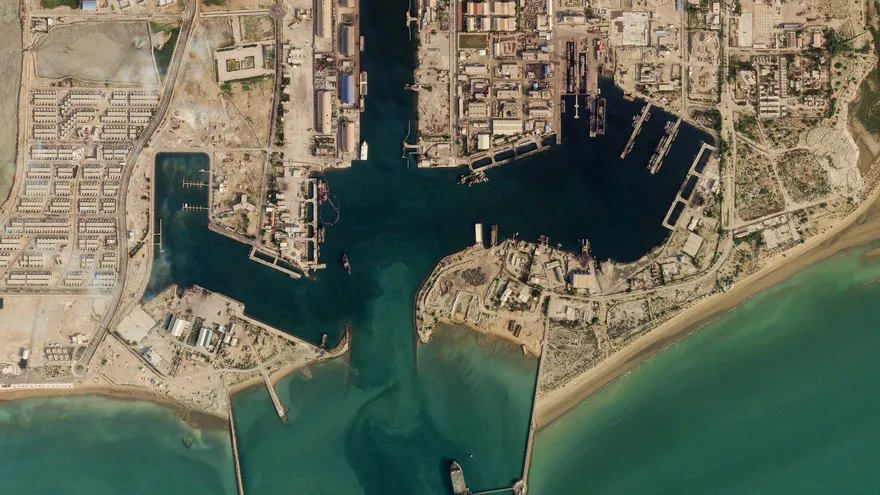
Iran issued a stern warning on Sunday, stating that any vessel attempting to deviate from its demarcated route in the Strait of Hormuz would escalate tensions in the Middle East. The region remains on edge due to an exchange of attacks between Tehran and Washington in this strategically vital maritime passage.
any vessel that attempts to deviate from the route demarcated by its country in the Strait of Hormuz 'will increase tensions' in the Middle East
The warning comes in the wake of Iran's reported missile and drone strikes on Kuwait and Bahrain, which Tehran claims were retaliation for U.S. attacks on its territory the previous day. These escalating actions threaten negotiations aimed at ending a protracted conflict. Both Iran and the U.S. accuse each other of violating a ceasefire agreement established in a memorandum of understanding signed on June 17, concerning the control of the Strait of Hormuz.
Iranian Foreign Minister Abbas Araghchi, speaking from Baghdad on Sunday, cautioned that "any attempt to take new or different measures than those already being implemented" by Iran "will only lead to more complicated situations and delays in the reopening of the Strait of Hormuz, and will increase tensions." He urged all parties to avoid interfering with the management of the strait and to adhere to the agreed memorandum. Araghchi also called for the establishment of a security framework involving Gulf countries.
any attempt to take new or different measures than those already being implemented by the Islamic Republic of Iran will only lead to more complicated situations and delays in the reopening of the Strait of Hormuz, and will increase tensions.
The Strait reopened on June 17, but Iran insists on the use of a specific corridor along its coast, threatening any ship that fails to comply. In response to a U.S. drone attack on a Panamanian-flagged oil tanker passing through the strait, the U.S. Air Force reportedly struck ten targets in Iran on Saturday, including air defense facilities and drone storage sites.
I urge all parties not to interfere in the management of the strait (...) and not to let the memorandum of understanding deviate from its course.
Iran's Revolutionary Guard Corps claimed on Sunday to have launched missiles and drones targeting "eight important U.S. military infrastructures" at Ali al Salem base in Kuwait and the Fifth Naval Fleet base in Salman Port, Bahrain. The Iranian Foreign Ministry condemned the attacks and affirmed Tehran's "determination to defend national sovereignty." Kuwait denounced Iran's "recurrence of cruel aggression," while Bahrain reported intercepting and destroying several projectiles in what it termed "treacherous Iranian attacks."
eight important U.S. military infrastructures in the Ali al Salem base in Kuwait, and the Fifth Naval Fleet base in Port Salman in Bahrain
DistantNews Editorial
Originally published by TVN Panamá in Spanish. Translated, summarized, and contextualized by our editorial team with added local perspective. Read our editorial standards.
More Stories


From Our Blog

What Gets Lost (and Found) When News Is Translated

The Critical Role of Diaspora Media in Global News

What Travellers Should Know About Countries with Restricted Press

A Digital Nomad's Guide to Following Local News

How the Same Story Looks Different in Different Countries
