


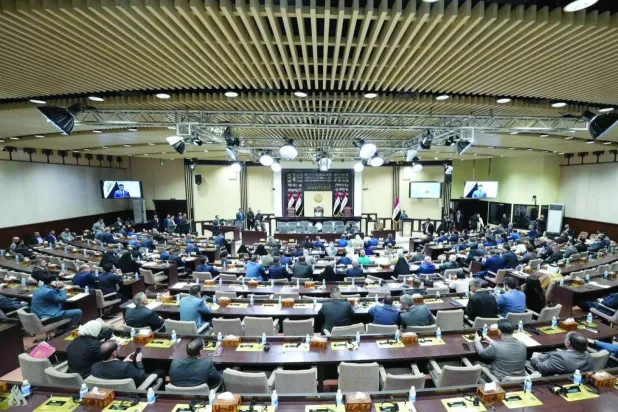
Iraq Row Erupts Over ‘Missing’ $140 Bn
Summarized and contextualized by DistantNews.
At a glance
News
Named sources
Context piece
- An Iraqi official has raised concerns about approximately $140 billion in missing public revenues over the previous government's term.
- The accusation comes amid ongoing corruption investigations in the oil and electricity ministries, involving alleged embezzlement of state funds.
- The Iraqi government faces financial and political pressure, including securing salaries and managing the impact of oil export disruptions.
A senior Iraqi official has sparked a dispute over the alleged disappearance of around $140 billion in public revenues during the previous government's tenure. This controversy unfolds as Iraq intensifies its corruption investigations, targeting high-ranking officials within the oil and electricity ministries.
The investigations focus on accusations of fake contracts and the embezzlement of tens of millions of dollars and billions of Iraqi dinars. These developments add to the mounting financial and political pressures on the Iraqi government, particularly as Prime Minister Ali al-Zaidi prepares for a visit to the United States in mid-July. The administration is also contending with efforts to consolidate state control over weapons, finalize government appointments, and address financial strains caused by reduced oil exports following the closure of the Strait of Hormuz.
Masoud Haider, a former undersecretary at the Finance Ministry and a member of the Kurdistan Democratic Party, made the allegations in a televised interview. He claimed that the state treasury received approximately 455 trillion dinars ($345 billion) over three years, while operating expenses and public sector salaries amounted to about $205 billion, leaving a significant gap.
baseless and not supported by any reports or official documents issued by the relevant oversight authorities.
Haider stated that spending on infrastructure projects could not account for the missing funds. He further accused the Finance Ministry of obstructing his access to crucial financial data due to his ethnic and party affiliation. He alleged that his attempts to address this with former Prime Minister Mohammed Shia al-Sudani were ignored.
Former Finance Minister Taif Sami vehemently denied Haider's accusations, labeling them as "baseless." She asserted that oil revenues are rigorously monitored and audited by multiple oversight bodies, including the Federal Integrity Commission, the Federal Board of Supreme Audit, and international systems. Sami maintained that the disappearance of such sums would be impossible without official records reflecting it. She also noted an increase in non-oil revenues due to reform measures.
the disappearance of the cited sums would be “impossible” without their appearing in official records and reports.
DistantNews Editorial
Originally published by Asharq Al-Awsat. Summarized and contextualized by our editorial team with added local perspective. Read our editorial standards.
More Stories


From Our Blog

What Gets Lost (and Found) When News Is Translated

The Critical Role of Diaspora Media in Global News

What Travellers Should Know About Countries with Restricted Press

A Digital Nomad's Guide to Following Local News

How the Same Story Looks Different in Different Countries
