


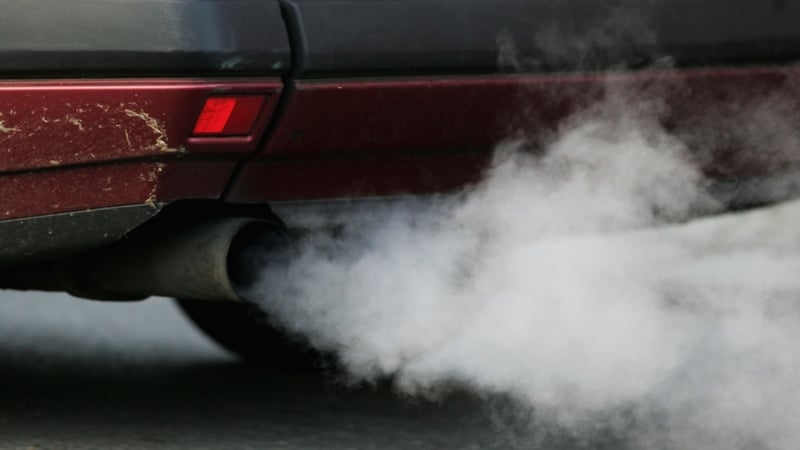
Ireland 'exposed' over fossil fuels use for transport
Summarized and contextualized by DistantNews.
At a glance
News
Named sources
Context piece
- Ireland's transport sector remains heavily reliant on fossil fuels, leaving it vulnerable to global energy market disruptions and price shocks, according to the Climate Change Advisory Council (CCAC).
- The CCAC recommends accelerated investment in public transport, active travel, electric vehicle infrastructure, and grid capacity to mitigate this exposure.
- While public transport usage saw an increase, overall journeys remained largely unchanged, indicating potential capacity issues during peak times.
Ireland's significant dependence on fossil fuels within its transport sector leaves the nation exposed to recurring fuel price shocks amid ongoing global energy market disruptions, the Climate Change Advisory Council (CCAC) has warned. The council's 2026 Annual Review of the transport sector highlights the need for substantial investment to reduce this vulnerability.
The CCAC advocates for accelerated development in public transportation, active travel initiatives, electric vehicle (EV) charging infrastructure, and enhanced grid capacity. It also suggests that temporary measures to address fuel price increases have not been sufficiently targeted. Instead, the council recommends providing support to individuals most affected by fuel costs and least able to absorb them.
Fossil fuel shocks are not one-off events and giving alternatives is the way to reduce exposure to shocks.
While the report notes a 6% rise in journeys across the Transport for Ireland network last year compared to 2024, with Local Link services seeing a 19% increase, total public transport journeys remained largely static. The CCAC suggests this could indicate that some services are operating at or near full capacity, particularly during peak hours.
That means sustained investment in public transport, a charging network people can rely on, and the grid capacity needed to support the switch to electric across cars, buses and commercial fleets.
To address this, the council calls for the expedited delivery of projects such as DART+ South West, Luas Finglas, and the National Transport Authority's Park and Ride Investment Programme to boost capacity. "Fossil fuel shocks are not one-off events," stated Alex White, CCAC Chairperson. "Giving alternatives is the way to reduce exposure to shocks. That means sustained investment in public transport, a charging network people can rely on, and the grid capacity needed to support the switch to electric across cars, buses and commercial fleets."
White emphasized that the transition must be equitable, with supports specifically directed towards those most vulnerable to transport fuel costs, particularly lower-income individuals and those reliant on cars due to a lack of practical alternatives. The CCAC also welcomed the government's pilot scrappage scheme for EVs, but stressed the need for measures to increase EV adoption among lower-income households, especially in areas with high car dependency and limited public transport access. Expanded EV charging infrastructure and real-time mapping of charging points are crucial to building public confidence in transitioning away from petrol and diesel vehicles.
This transition also has to be fair. Supports should be targeted at those most exposed to transport fuel costs, particularly people on lower incomes and those who are car-dependent because they do not have access to practical alternatives.
DistantNews Editorial
Originally published by RTÉ News. Summarized and contextualized by our editorial team with added local perspective. Read our editorial standards.
More Stories


From Our Blog

What Gets Lost (and Found) When News Is Translated

The Critical Role of Diaspora Media in Global News

What Travellers Should Know About Countries with Restricted Press

A Digital Nomad's Guide to Following Local News

How the Same Story Looks Different in Different Countries
