


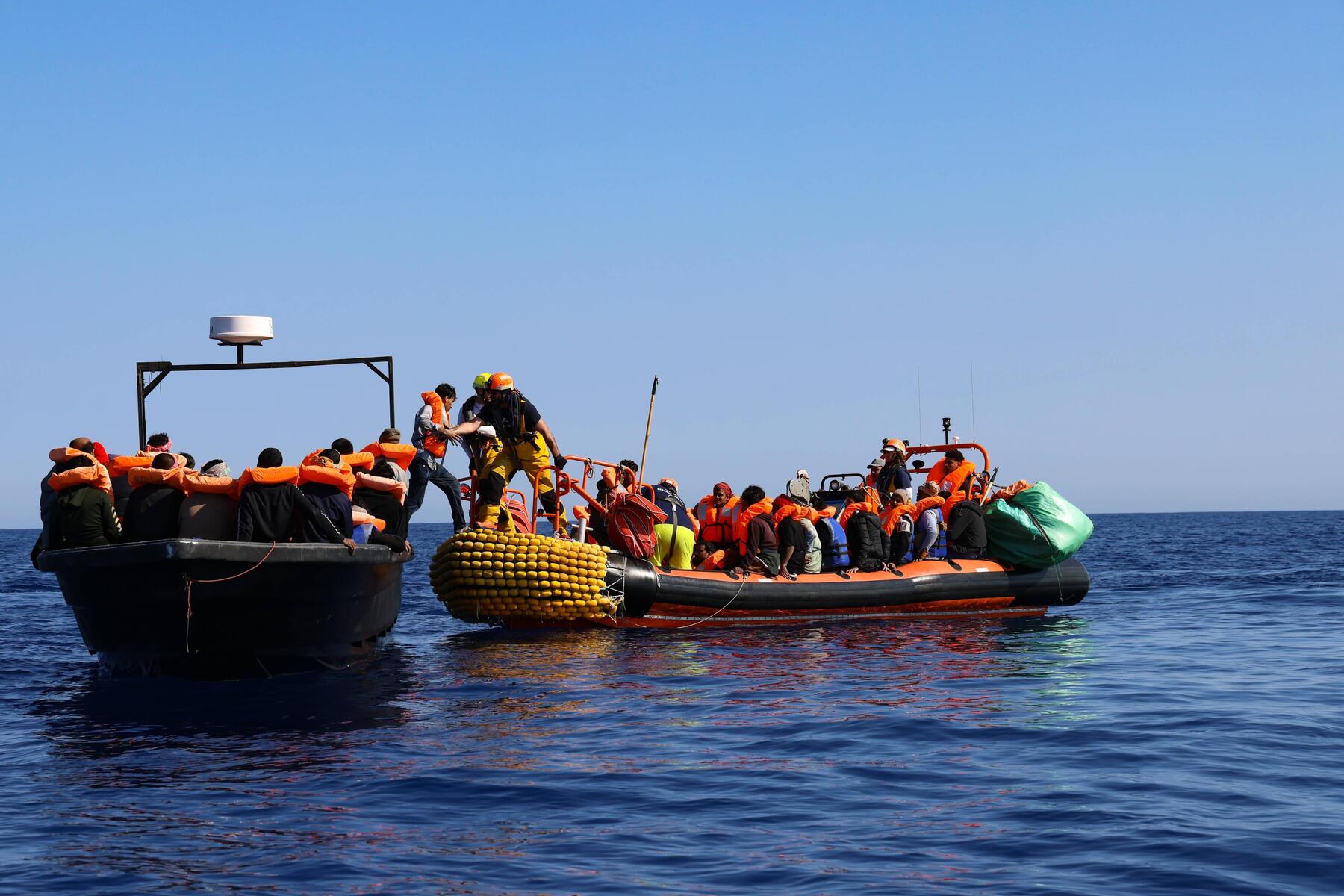
Irregular border crossings into EU fall significantly, Frontex reports
Translated from German, summarized and contextualized by DistantNews.
At a glance
News
Named sources
New plan
- The EU border agency Frontex reported a 37 percent decrease in irregular border crossings into the EU in the first seven months of the year compared to the previous year.
- The Mediterranean remains the primary route for migrants, with the Eastern and Central Mediterranean routes accounting for 60 percent of registered irregular entries.
- While crossings decreased on these main routes, there was a 37 percent increase on the Western Mediterranean route to Spain.
The European Union's border agency, Frontex, has recorded a significant drop in irregular border crossings into the bloc. In the first seven months of this year, the EU registered 61,000 unauthorized entries, marking a 37 percent decrease compared to the same period last year. The agency released these preliminary figures from its base in Warsaw.
Frontex acknowledged that these numbers are based on preliminary data and do not fully reflect the "exceptional events" that occurred at the EU's external border in the Spanish enclave of Ceuta. Spanish government figures indicated that at one point, approximately 80,000 people entered Ceuta at the end of July, while Morocco reported around 40,000 arrivals, with 83 fatalities during the incident. This event triggered discussions about the protection of the EU's external borders and Spain's responsibilities.
The Mediterranean Sea continues to be the main corridor for migrants attempting to reach Europe by boat. According to Frontex data, the routes across the Eastern Mediterranean (from Turkey to Greece) and the Central Mediterranean (from Libya and Tunisia to Italy and Malta) collectively accounted for 60 percent of all registered irregular entries. Both of these primary routes saw a notable decline in crossings during the reporting period.
However, the situation presented a contrasting trend on the migration route across the Western Mediterranean to Spain. Frontex reported a significant increase of 37 percent in irregular entries via this route. The data highlights the dynamic and shifting patterns of migration flows towards the European Union.
61,000 unauthorized entries meant a decrease of 37 percent compared to the previous year's period.
DistantNews Editorial
Originally published by Die Presse in German. Translated, summarized, and contextualized by our editorial team with added local perspective. Read our editorial standards.
More Stories



From Our Blog

What Gets Lost (and Found) When News Is Translated

The Critical Role of Diaspora Media in Global News

What Travellers Should Know About Countries with Restricted Press

A Digital Nomad's Guide to Following Local News

How the Same Story Looks Different in Different Countries
