

Is Bangladesh backtracking on post-Hasina reforms?
Summarized and contextualized by DistantNews.
At a glance
News
Named sources
Context piece
- Bangladesh faces fears of backsliding on post-Hasina reforms as the current government is accused of failing to deliver on promises.
- A 2018 protest over a job quota system reignited in 2024, leading to unrest and the interim government's reform roadmap, the 'July Charter'.
- Critics argue the current BNP government has not implemented key reform commitments, including those concerning human rights and anti-corruption bodies.
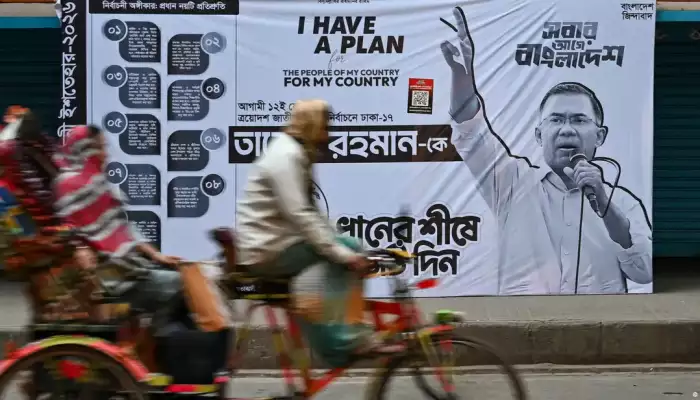
Two years after a student-led uprising ended Sheikh Hasina's nearly 16-year rule, many in Bangladesh fear the country is moving backward. Hasina, now in exile in India, is reportedly planning a return in December, while critics accuse the current government of failing to fulfill its promises, casting doubt on the nation's political future.
Mohammad Tanzimuddin Khan, a professor of international relations at Dhaka University, expressed disappointment, stating, "At the end of the day, we did not see the elimination of discrimination, the creation of an inclusive society, or the new political order that was promised." He added, "It seems we are forgetting the very reasons behind the uprising of last July, especially those who came to power."
At the end of the day, we did not see the elimination of discrimination, the creation of an inclusive society, or the new political order that was promised. It seems we are forgetting the very reasons behind the uprising of last July, especially those who came to power.
The protest movement initially began in 2018 over a controversial quota system for government jobs. In 2024, a court-backed decision to reinstate parts of this system sparked renewed demonstrations that escalated into a wider anti-government uprising. Following over 1,000 deaths during the unrest, then-Prime Minister Hasina fled to India in August 2024.
time-bound commitments
Bangladesh's interim government, led by Nobel Peace Prize winner Muhammad Yunus and supported by the military and key figures from the uprising, facilitated the signing of the "July Charter." This reform roadmap, approved by approximately 70% of voters in a February 2026 referendum, proposed prime ministerial term limits, an upper parliamentary house, stronger presidential powers, and enhanced judicial independence. The Bangladesh Nationalist Party (BNP) secured a significant majority in the general election held concurrently with the referendum.
However, critics, including Ali Riaz, who headed the interim government's Constitution Reform Commission, point to unfulfilled "time-bound commitments." Riaz lamented the failure to establish a constitutional reform council and implement reforms within the stipulated 180 working days, calling it "deeply regrettable."
deeply regrettable
The BNP government has refused to adopt 20 of the 133 ordinances introduced by the interim government, including measures related to the National Human Rights Commission, the Anti-Corruption Commission, enforced disappearances, and referendums. The BNP maintains that constitutional and institutional changes must follow parliamentary legislative procedures. The party and its allies have clashed with the opposition over the July Charter's proposals, particularly those concerning a constituent assembly for constitutional reforms. Home Minister Salahuddin Ahmed, who led the BNP's representatives in the National Consensus Commission, described the charter's implementation order as "a document" in Parliament in March.
a documen
DistantNews Editorial
Originally published by Times of Oman. Summarized and contextualized by our editorial team with added local perspective. Read our editorial standards.
More Stories


From Our Blog

What Gets Lost (and Found) When News Is Translated

The Critical Role of Diaspora Media in Global News

What Travellers Should Know About Countries with Restricted Press

A Digital Nomad's Guide to Following Local News

How the Same Story Looks Different in Different Countries
