

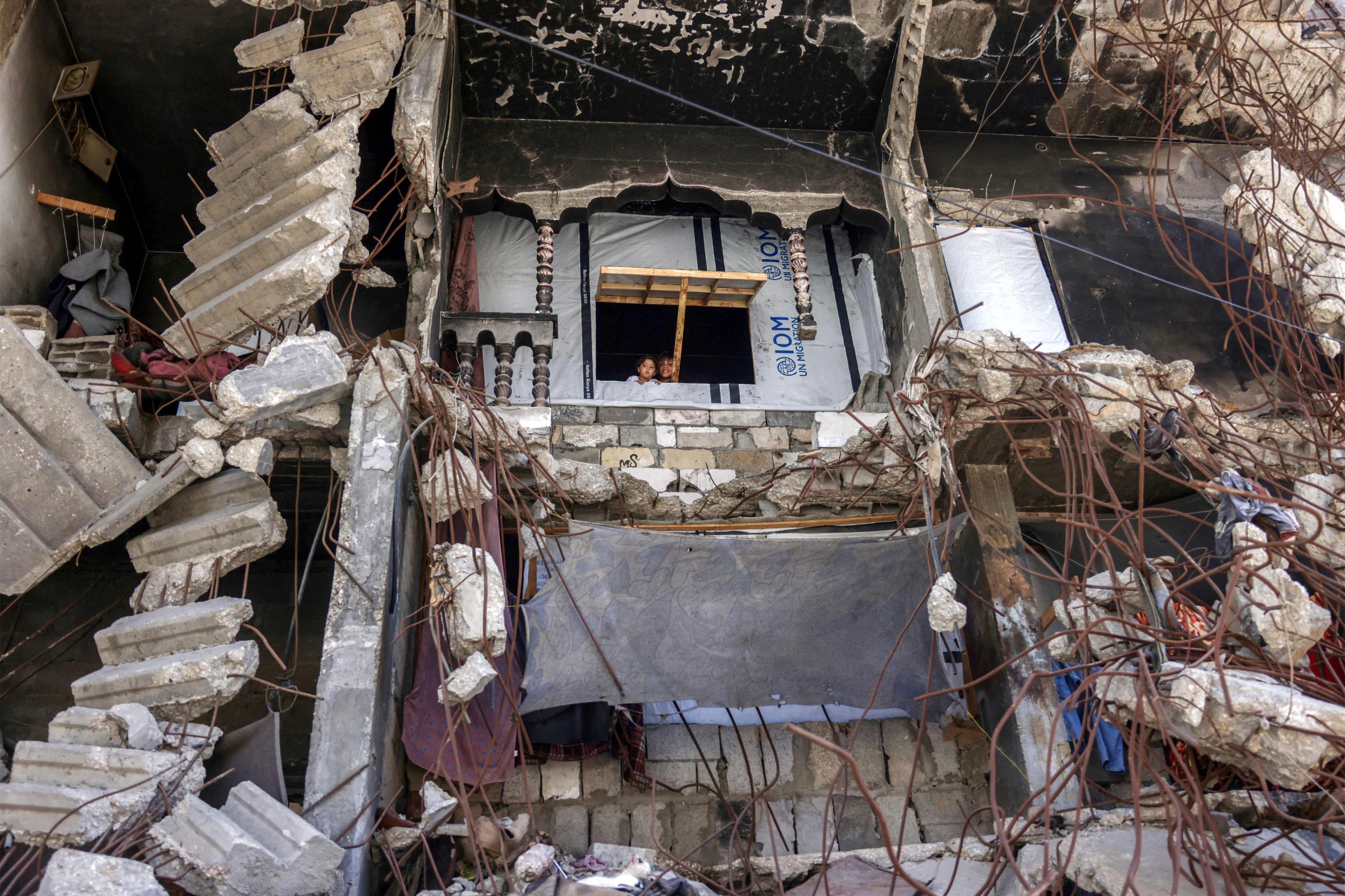

Is history repeating itself?
Translated from Turkish and summarized by DistantNews. Read the original for the full story.
At a glance
Opinion
Documents & data
Context piece
- The article argues that nuclear arsenals, geopolitical competition and economic pressures are increasing the risk of a new global war.
- It links today’s tensions to disputes over trade, technology, the dollar’s status, debt, population growth, artificial intelligence and widening inequality.
- Drawing on the Trojan War, it says struggles over power, resources and strategic trade routes have repeatedly driven major crises.
Who stands behind the armed conflicts now pushing the world toward the danger of another major war? The article asks whether states make these decisions themselves or whether economic and geopolitical interests beyond governments determine them.
It lists nuclear arsenals held by Russia, the United States, China, France, Britain, Pakistan, India, Israel and North Korea. It then asks what danger would remain even if Iran possessed, or could produce, a nuclear warhead. Can the world ignore the possibility that a single “crazy” leader could push it into war?
During the Cold War, the balance between the United States and the Soviet Union largely deterred a direct large-scale conflict. The article argues that this balance has now been replaced by an agreement over the division of the global economic pie. It warns that one country may soon control 70 percent of the world chip market and says the world has entered an era in which the powerful can use their strength as they wish.
The article points to a series of pressures feeding the fire: Trump’s tariff offensive, a weakening dollar, dangerously rising population, an artificial intelligence transformation that could make much of that population unnecessary, and rapidly widening income inequality. It says the United States, described as the world’s most indebted country, cannot accept losing the dollar’s role as the global currency. Falling dollar values and US debt dynamics have also reignited debate over the future of the reserve currency.
The author sees the danger as part of a much longer pattern. Human beings, the article says, have repeatedly been inclined to kill one another, creating the conditions for wars and, in the author’s formulation, four world wars. It turns to Troy as an example of how competition over power, trade and resources shaped the eastern Mediterranean and Anatolian world.
Drought, volcanic eruptions, earthquakes, economic deterioration, civil unrest and mass migration pushed that earlier world into crisis. The Dardanelles became strategically important for the trade in bronze, tin and wheat, much as the Strait of Hormuz is important today for global oil transfers. The article ends mid-discussion of the economic breakdown and its consequences.
About this summary
Originally published by Cumhuriyet in Turkish. Translated, summarized, and contextualized automatically by DistantNews, with a note on how the source frames the story. Not individually reviewed before publishing. How this works.
More Stories
From Our Blog

News in Translation: What Gets Lost, and How We Keep the Framing

Diaspora Media: How Communities Follow News From Home

Traveling Where the Press Is Not Free: How to Read the News There

The Digital Nomad's Guide to Local News

The Same Story, Different Countries: How Coverage Changes at the Border
