


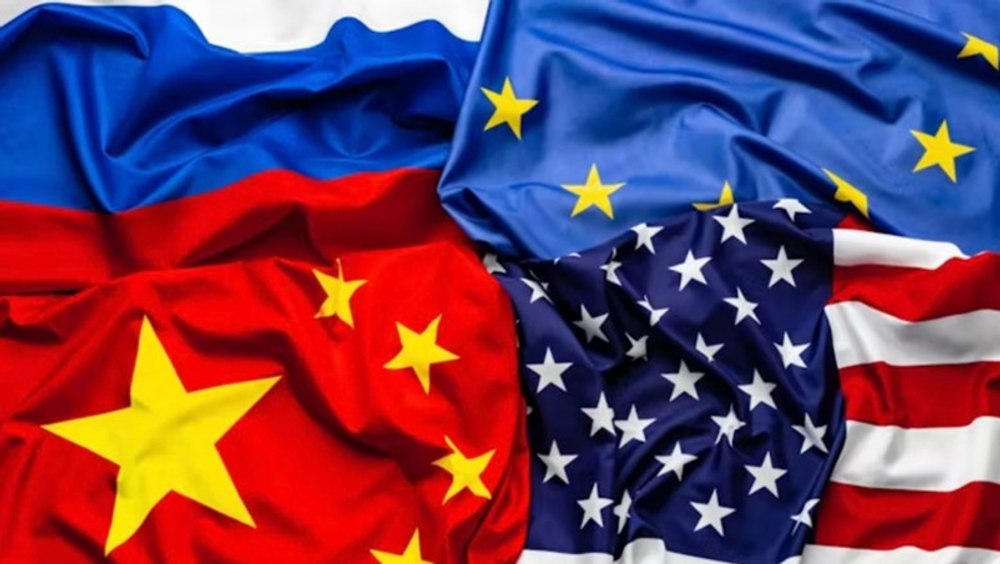
Is the China-EU Relationship an Extension of the Sino-American Rivalry?
Translated from Romanian, summarized and contextualized by DistantNews.
At a glance
Analysis
Sources not specified
Context piece
- An analysis explores the China-EU relationship as an extension of the Sino-American rivalry.
- The article examines Beijing's strategic logic and the perception of the U.S. role in China-EU ties.
- It questions European strategic autonomy and considers the impact of potential far-right political forces.
An analysis by Song Luzhen, a researcher at Fudan University's Institute of Chinese Studies, delves into the complex relationship between China and the European Union, framing it within the context of the broader Sino-American geopolitical competition. The study reconstructs how a Chinese expert interprets the dynamics, focusing on Beijing's strategic priorities and its perception of the United States' influence on China-EU relations. It probes why Europe holds significant importance for China and addresses the structural tensions arising from the concept of China being a "systemic rival." Sensitive issues such as Taiwan and de-risking policies are also examined.
The analysis moves beyond current news reporting, offering a deeper understanding of the forces shaping international relations. It touches upon pressing global topics, including transatlantic relations amid potential shifts in U.S. politics, Europe's positioning between major powers, and technological competition in areas like 5G and semiconductors, as well as energy security and supply chain resilience. The author's perspective is described as analytical and provocative, questioning European strategic autonomy and suggesting Europe occupies an intermediate position between global powers.
A key argument presented is that the evolving Sino-American relationship directly impacts China-EU dynamics. While U.S.-Europe security tensions have heightened, the direct confrontation between China and the U.S. has seen some attenuation. This shift, coupled with a potential American withdrawal from Asian affairs under a neo-Monroe doctrine, could isolate Europe further. Historically, as a U.S. ally, Europe followed Washington's lead in confronting China. However, current changes suggest a recalibration may be underway, potentially altering Europe's strategic calculus.
DistantNews Editorial
Originally published by Adevărul in Romanian. Translated, summarized, and contextualized by our editorial team with added local perspective. Read our editorial standards.
More Stories


From Our Blog

What Gets Lost (and Found) When News Is Translated

The Critical Role of Diaspora Media in Global News

What Travellers Should Know About Countries with Restricted Press

A Digital Nomad's Guide to Following Local News

How the Same Story Looks Different in Different Countries
