


Israel Is Tightening Its Grip on East Jerusalem with Evictions of Palestinians, Demolitions
Summarized and contextualized by DistantNews.
At a glance
News
Named sources
Context piece
- Hezbollah's "support war" in late 2023 shattered its long-held doctrine of deterrence against Israel, a miscalculation that proved costly in the new round of fighting in 2026.
- Israel employed patience and strategic calculation, using diplomatic efforts and a technological advantage to target Hezbollah commanders and operatives, narrowing the window for rocket launches to mere seconds.
- The conflict saw Israel eliminate key Hezbollah leadership, including the Radwan Force and the military commander, and launch a
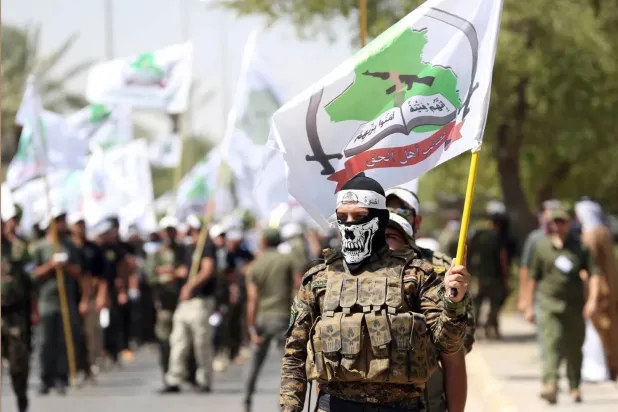
The "support war" waged by Lebanon’s Hezbollah in backing Hamas in late 2023 shattered the doctrine of “deterrence” that the Iranian-backed group had embraced for nearly two decades in its confrontation with Israel. This assumption proved entirely mistaken the following year, and the new round of fighting in 2026 offered both sides an opportunity to establish a new set of rules governing the conflict.
Israel did not rush into a direct war with Hezbollah after the group launched a wave of largely “performative” attacks. Instead, it quietly steered the confrontation in a different direction, displaying notable restraint and considerable strategic calculation. This approach was reflected in diplomatic efforts undertaken by Tel Aviv through Washington to persuade Hezbollah to separate the Lebanese front from the Palestinian one. In July 2024, then US envoy Amos Hochstein reportedly told Lebanese officials that he was prepared to deliver what would amount to a political victory for Hezbollah Secretary-General Hassan Nasrallah if the group halted its operations. Nasrallah immediately rejected the proposal, stating that the war in Gaza would first have to end.
the war in Gaza would first have to end. After that, other matters could be discussed.
This was not Hezbollah’s first strategic misjudgment. The shape of the new conflict unfolding in Lebanon’s border villages quickly revealed a clear Israeli technological and military advantage. A senior Hezbollah official later disclosed that in previous confrontations, fighters could launch a rocket, calmly gather their equipment, and leave the site before Israeli aircraft arrived. In the new conflict, however, the window between launch and retaliation had narrowed to between five and twenty seconds. As a result, the official said, fighters often dug into the ground and sought immediate cover after firing in the hope of surviving. Every launch effectively became a near-suicidal operation.
Subsequent developments underscored Israel’s superiority even more clearly. Israeli forces carried out a series of precise assassinations targeting Hezbollah military commanders, culminating in a strike that eliminated most of the leadership of the Radwan Force, the group’s elite unit. Israel then killed Hezbollah’s military commander and launched the “pager operation,” which put thousands of Hezbollah operatives out of action at the push of a button. This was followed by the assassination of a key commander in the Iranian Revolutionary Guard Corps.
fighters often dug into the ground and sought immediate cover after firing in the hope of surviving. Every launch effectively became a near-suicidal operation.
DistantNews Editorial
Originally published by Asharq Al-Awsat. Summarized and contextualized by our editorial team with added local perspective. Read our editorial standards.
More Stories


From Our Blog

What Gets Lost (and Found) When News Is Translated

The Critical Role of Diaspora Media in Global News

What Travellers Should Know About Countries with Restricted Press

A Digital Nomad's Guide to Following Local News

How the Same Story Looks Different in Different Countries
