


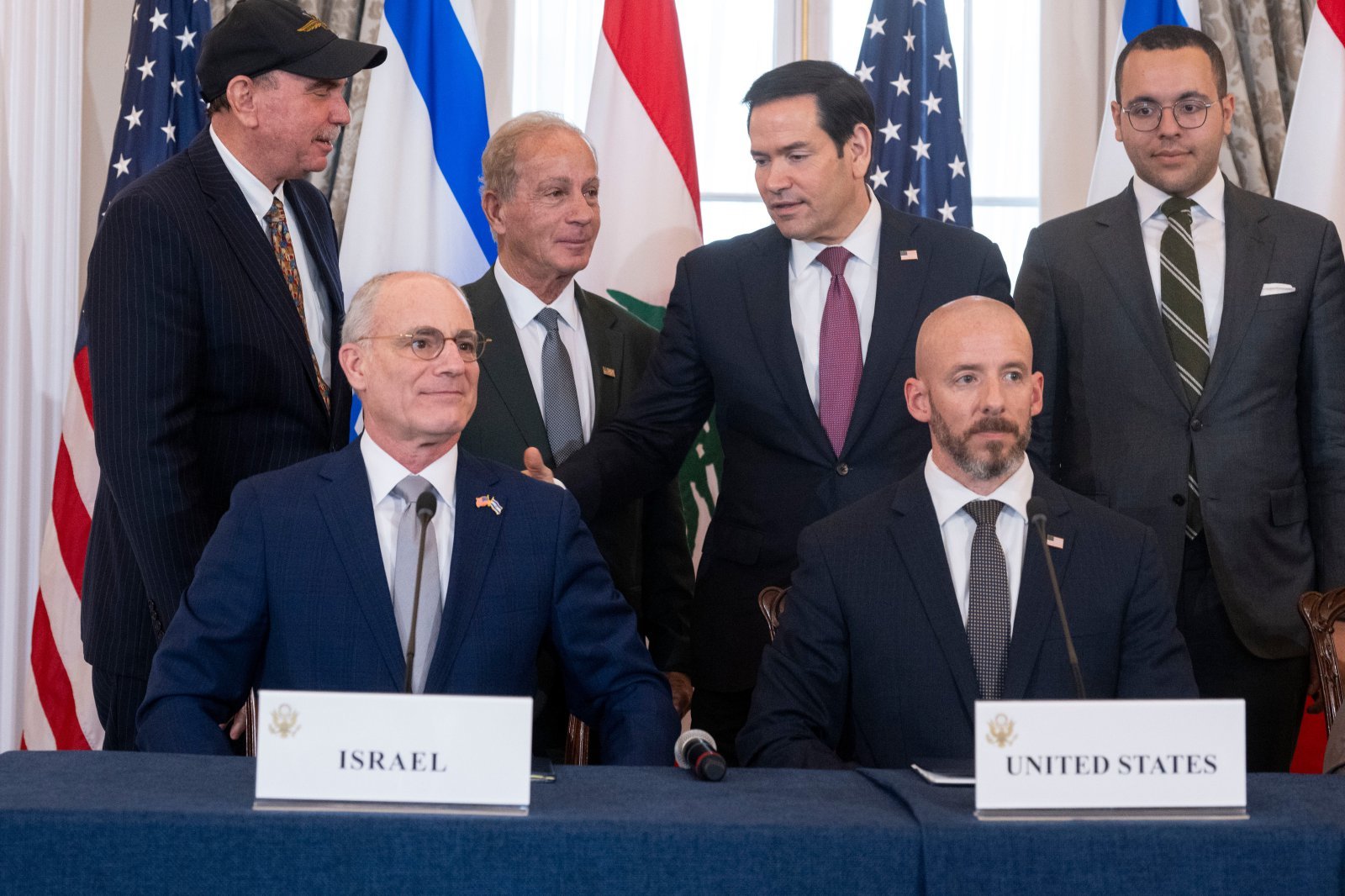
Israel, Lebanon sign US-brokered ceasefire framework agreement
Translated from Korean, summarized and contextualized by DistantNews.
At a glance
News
From a news agency
New plan
- Israel and Lebanon have signed a framework agreement for a ceasefire, brokered by the United States.
- The agreement includes provisions for Hezbollah to halt attacks and for Israel to withdraw from two areas in southern Lebanon.
- The U.S. State Department views this as a step towards a comprehensive peace and security agreement.
The United States has successfully brokered a framework agreement for a ceasefire between Israel and Lebanon, marking a significant diplomatic achievement after days of intense negotiations at the U.S. State Department. The agreement was signed on Wednesday by representatives from both nations.
Today is a happy day to announce a framework agreement between the sovereign government of Lebanon and the government of Israel. Under the mediation and support of the United States, we are beginning to lay the groundwork for lasting peace and security.
U.S. Secretary of State Marco Rubio expressed his pleasure at the signing, stating it lays the groundwork for sustained peace and security. The deal reportedly includes measures for Lebanon's armed group Hezbollah to cease attacks and for Israel to withdraw its forces from two specific locations in southern Lebanon. The U.S. State Department highlighted that the agreement outlines a clear process for Israel's return to its borders once Lebanon's sovereign government regains control and disarms non-state actors.
The agreement provides a clear and systematic procedure for Lebanon to restore its sovereignty, disarm Hezbollah, dismantle terrorist infrastructure, and for Israel to return to its borders once the threat to the Israeli people is removed.
Israeli Prime Minister Benjamin Netanyahu confirmed plans to withdraw troops from two areas near the Litani River in southern Lebanon, allowing the Lebanese army to assume territorial control. However, he emphasized that Israel would maintain security zones in areas within the range of Hezbollah's anti-tank missiles. The agreement also involves the creation of a third military coordination group, mediated by the U.S., to ensure implementation. Additionally, the U.S. pledged $100 million in humanitarian aid to Lebanon and $300 million in funding for the Lebanese army.
We are allowing the Lebanese army to begin preparations to control the territory, and we plan to withdraw from two areas in southern Lebanon near the Renati River.
This development follows intensive U.S. mediation efforts, driven by concerns that escalating conflict could jeopardize a potential ceasefire agreement between the U.S. and Iran. While the framework agreement aims to pave the way for a comprehensive peace treaty, the compliance of Hezbollah, which was not directly involved in the negotiations, remains uncertain. One Hezbollah lawmaker has suggested the agreement would not be implemented unless Lebanon enters a civil war.
The existing security zone, including the range of Hezbollah's anti-tank missiles, will be maintained.
DistantNews Editorial
Originally published by Dong-A Ilbo in Korean. Translated, summarized, and contextualized by our editorial team with added local perspective. Read our editorial standards.
More Stories


From Our Blog

What Gets Lost (and Found) When News Is Translated

The Critical Role of Diaspora Media in Global News

What Travellers Should Know About Countries with Restricted Press

A Digital Nomad's Guide to Following Local News

How the Same Story Looks Different in Different Countries
