


Israeli study unlocks 4,000 years of climate change and human adaptation
Summarized and contextualized by DistantNews.
At a glance
News
Named sources
New plan
- Ancient mud cores from Israel's Carmel Coast reveal how past communities adapted to climate change.
- A study co-led by the University of Haifa found that societies developed new strategies rather than collapsing or moving away during drought.
- Evidence suggests ancient peoples used managed irrigation for crops like barley, showing human adaptability over 4,000 years.
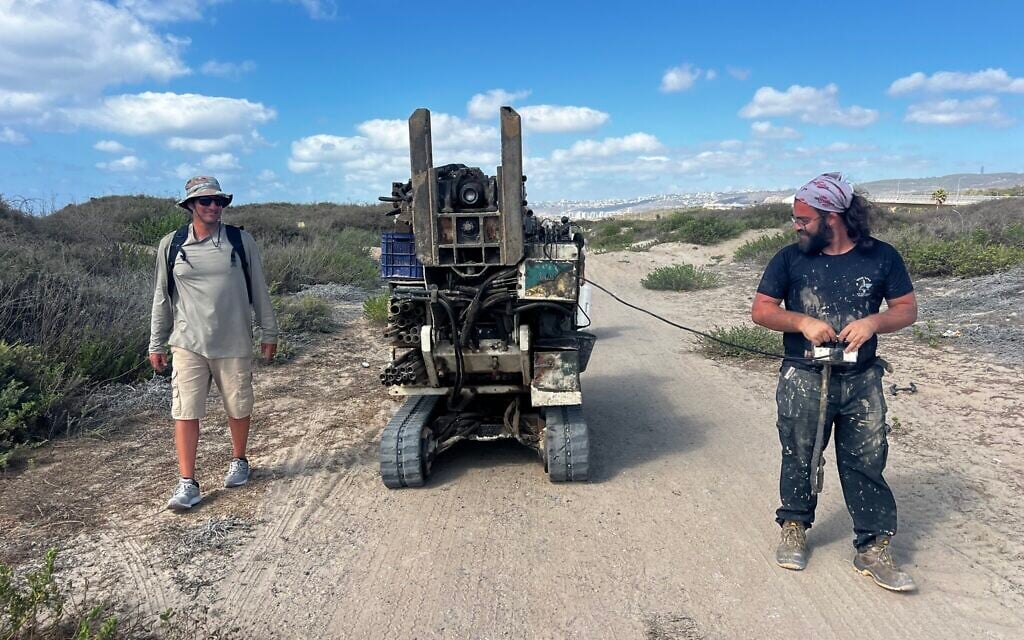
Ancient communities in the Levant adapted to severe drought and climate shifts by developing innovative strategies, rather than collapsing or migrating, according to a new study of mud cores from Israel's Carmel Coast. The research, co-led by the University of Haifa and UC San Diego, analyzed 4,000 years of environmental history.
People are problem solvers. They cope with environmental stress by developing new technologies and strategies.
"People are problem solvers," said Tom Levy, a senior author from UC San Diego. "They cope with environmental stress by developing new technologies and strategies." The findings, published in Quaternary Science Reviews, challenge the idea that climate change inevitably leads to societal collapse.
Instead of abandoning regions during drier periods, ancient societies in the southern Levant, including those in the semi-arid Beersheba valley during the Chalcolithic period, expanded and developed new survival methods. Gilad Shtienberg, the paper's first author, noted that these included early forms of floodwater farming and irrigation agriculture.
Ancient societies in the southern Levant did not simply collapse or abandon regions when climate conditions became drier. Instead, they adapted in creative ways.
Evidence from plant remains indicates that crops such as barley were cultivated using managed irrigation, not solely relying on rainfall. This adaptation allowed communities to thrive in harsher conditions, demonstrating a long history of human resilience and ingenuity in the face of environmental challenges.
Evidence from plant remains suggests that crops such as barley were cultivated under managed irrigation rather than relying solely on rainfall.
DistantNews Editorial
Originally published by Times of Israel. Summarized and contextualized by our editorial team with added local perspective. Read our editorial standards.
More Stories



From Our Blog

What Gets Lost (and Found) When News Is Translated

The Critical Role of Diaspora Media in Global News

What Travellers Should Know About Countries with Restricted Press

A Digital Nomad's Guide to Following Local News

How the Same Story Looks Different in Different Countries
