

Istanbul earthquake warning: Professor highlights overlooked critical danger
Translated from Turkish, summarized and contextualized by DistantNews.
At a glance
Analysis
Named sources
Context piece
- A geology professor warns about a critical overlooked danger, the Çınarcık Basin, in discussions about a potential Istanbul earthquake.
- Professor Osman Bektaş suggests that stress transfers between fault lines might be concentrating seismic energy in this specific basin.
- He argues that if his hypothesis is correct, the Çınarcık Basin could produce moderate earthquakes similar to the 1963 Islands earthquake, making it a priority for research.
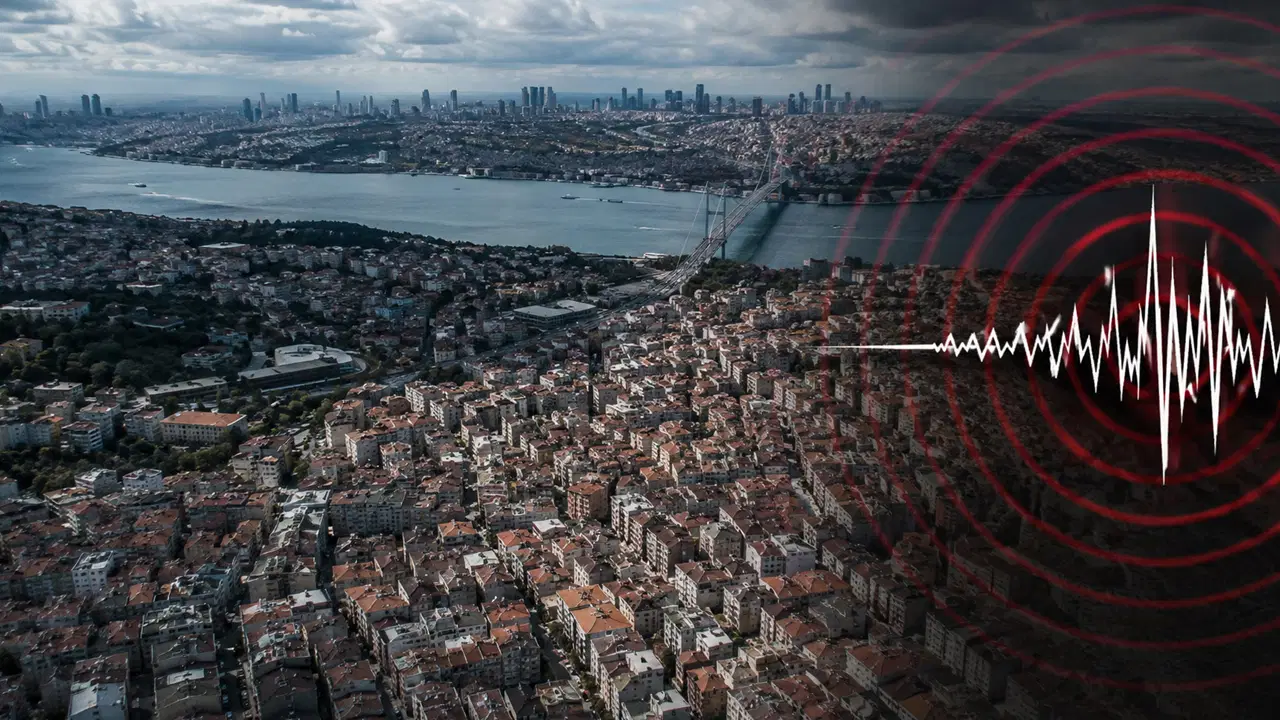
As discussions surrounding a potential major earthquake in Istanbul continue, a geology professor has highlighted a critical element he believes is being overlooked: the Çınarcık Basin.
Professor Osman Bektaş, a retired Geology Engineer from Karadeniz Technical University, published an analysis suggesting that seismic stress may be accumulating in the Çınarcık Basin. He posits that stress transfers from fault lines in the North Marmara region, active since 1912, and from the 1935 Marmara Island and 1999 İzmit earthquakes, could be concentrating seismic energy in this area.
Bektaş explained that according to fault mechanics, the Çınarcık Basin, situated between these stress transfer zones, is a structure highly sensitive to stress changes. He noted that aftershocks following the 1999 and 2025 earthquakes have been concentrated around the edges of the Çınarcık Basin, which he considers observational evidence supporting his stress model.
"If this hypothesis is correct," Bektaş stated, "the weak faults bordering the Çınarcık Basin could produce moderate-sized earthquakes similar to the 1963 Islands earthquake (M6+)." He urged that the Çınarcık Basin, south of Istanbul, should be a priority research area, not only for its main fault but also for the fault system that forms the basin. Bektaş emphasized that scientific debate should focus on measurable data obtained through sea-bottom geodesy, GPS, seismicity, and Coulomb stress models, rather than mere assumptions.
DistantNews Editorial
Originally published by Cumhuriyet in Turkish. Translated, summarized, and contextualized by our editorial team with added local perspective. Read our editorial standards.
More Stories


From Our Blog

What Gets Lost (and Found) When News Is Translated

The Critical Role of Diaspora Media in Global News

What Travellers Should Know About Countries with Restricted Press

A Digital Nomad's Guide to Following Local News

How the Same Story Looks Different in Different Countries
