


Italy's Beach Resorts Face Demolition as EU Directive Mandates Free Access
Translated from German, summarized and contextualized by DistantNews.
At a glance
News
From a news agency
Context piece
- Italy's popular beach resorts, known as "stabilimenti balneari," face demolition and stricter regulations due to a 20-year-old EU directive.
- The directive mandates free and open access to shorelines, challenging the long-standing tradition of charging for beach access.
- Many resorts, often family-run businesses, are being forced to dismantle facilities as authorities enforce the new rules, leading to frustration among owners and some tourists.
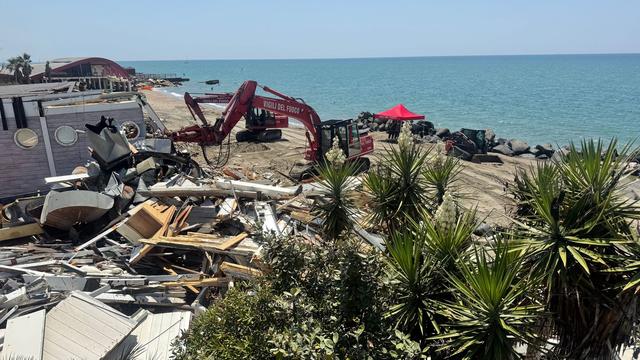
In Ostia, a popular seaside town near Rome, the familiar scene of crowded beaches packed with sunbathers is absent. Instead, demolition equipment is at work at "Shilling," a well-known beach establishment, dismantling facilities like restrooms. This drastic change reflects a significant shift occurring along Italy's 7,500-kilometer Mediterranean coastline.
For decades, Italy's thousands of privately operated beach resorts, known as "stabilimenti balneari," have been a fixture, renting out loungers and umbrellas. This tradition, deeply ingrained in Italian summer culture, is now under pressure from a 20-year-old European Union directive finally being enforced. The directive requires that beaches be freely accessible to everyone, challenging the model where payment is required for access.
While many of these resorts are family-run businesses, some have reportedly been involved with organized crime. The average daily rental for two loungers and an umbrella is around 40 euros, with costs rising in regions like Tuscany. However, the coastline itself is legally state property, and the concessions granted to these private operators are often leased for surprisingly low annual fees, averaging around 8,200 euros, while generating average annual revenues estimated at 260,000 euros or more.
This situation has sparked frustration. Tourists from abroad often complain about the fees, but even many Italians are finding it increasingly unaffordable. One Roman resident, Isabella Pedrelli, visiting Ostia with her children, stated, "A normal family can no longer afford this." In Naples, activists have occupied paid beach areas with their own towels and umbrellas. Furthermore, many establishments have erected fences and walls, physically blocking access to the sea, a practice now being rigorously combated by authorities in Ostia and elsewhere.
DistantNews Editorial
Originally published by Die Zeit in German. Translated, summarized, and contextualized by our editorial team with added local perspective. Read our editorial standards.
More Stories



From Our Blog

What Gets Lost (and Found) When News Is Translated

How the Same Story Looks Different in Different Countries

The Critical Role of Diaspora Media in Global News

What Travellers Should Know About Countries with Restricted Press

A Digital Nomad's Guide to Following Local News
