

JAAC protesters in AJK's Poonch district disperse on fears of major crackdown
Summarized and contextualized by DistantNews.
At a glance
News
Named sources
Outcome reported
- Protesters from the Joint Awami Action Committee (JAAC) in Pakistan's Azad Jammu and Kashmir (AJK) region dispersed after midnight Friday.
- The dispersal followed indications of a major crackdown by authorities against the demonstrators.
- The JAAC had been demanding the abolition of 12 assembly seats reserved for refugees from Indian-occupied Kashmir settled in Pakistan.
Activists from the proscribed Joint Awami Action Committee (JAAC) in Pakistan's Azad Jammu and Kashmir (AJK) region have dispersed from their protest sites near Rawalakot. Officials stated that the participants returned to their homes shortly after midnight on Friday, following warnings of a significant security operation.
The regional administration and the JAAC have been in dispute over several issues, most notably the committee's demand to eliminate 12 seats in the AJK Legislative Assembly designated for refugees from Indian-occupied Jammu and Kashmir who settled in mainland Pakistan after 1947. This demand has been a central point of contention.
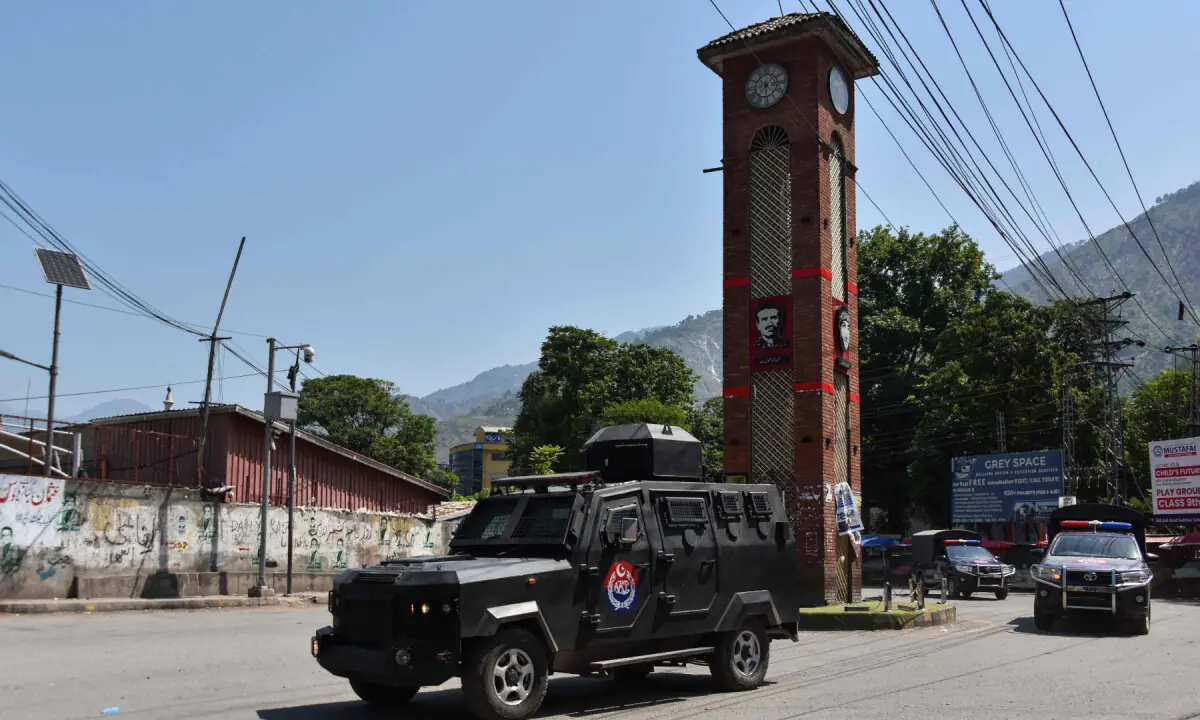
Poonch Divisional Commissioner Sardar Waheed Khan reported that all three protest sites were empty. He indicated that the administration had prepared a large contingent of security forces, including Rangers, Federal Constabulary, and police, for a "decisive action." A flag march involving armored vehicles was also conducted.
Khan claimed that backchannel negotiations, facilitated by local leaders, urged JAAC core member Umar Nazir Kashmiri to surrender for his safety and that of other protesters. Kashmiri reportedly offered to end the sit-ins and surrender if the notification proscribing JAAC was withdrawn. However, apprehension grew among protesters after the flag march, leading to their dispersal by midnight.
There is not a single participant at any of the three sit-in sites on the outskirts of Rawalakot. All have unconditionally surrendered before the state and have returned, rather fled, back to their respective areas.
DistantNews Editorial
Originally published by Dawn. Summarized and contextualized by our editorial team with added local perspective. Read our editorial standards.
More Stories
From Our Blog

What Gets Lost (and Found) When News Is Translated

The Critical Role of Diaspora Media in Global News

What Travellers Should Know About Countries with Restricted Press

A Digital Nomad's Guide to Following Local News

How the Same Story Looks Different in Different Countries
