

Jacek Czaputowicz: Poland’s G20 paradox, a gift from Trump and a cold shoulder from Europe
Translated from Polish and summarized by DistantNews. Read the original for the full story.
At a glance
Analysis
Sources not specified
Context piece
- Poland’s invitation to a G20 summit offers diplomatic visibility but does not establish a lasting place in the group.
- The article argues that the invitation reflected a specific U.S. political arrangement under Donald Trump, rather than Poland’s independent institutional weight.
- Poland’s exclusion from several European formats, opposition from Russia and China, and competition from other countries could complicate any bid for permanent G20 membership.
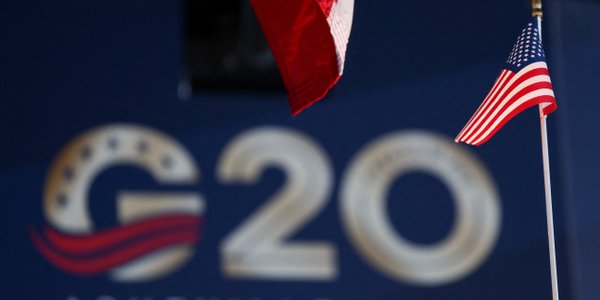
Poland has been invited to the G20, but the invitation exposes a paradox rather than confirming a permanent rise in global influence. Washington suggests that Warsaw can speak as an important global player, while Europe often leaves Poland outside the rooms where major decisions are made.
The invitation can easily be presented as a historic success, but the article urges a colder reading. It describes the opportunity as a useful gift from Donald Trump, including in his political dealings with other countries, rather than proof that Poland has secured a lasting promotion. Poland should use the opening, the argument goes, without assuming that a trillion-dollar economy alone determines its place.
Spain, whose economy is almost twice the size of Poland’s, was excluded this time. Andrzej Domański’s speech in Asheville, focused on Poland’s economic growth, sounded strong, but Trump set the boundaries of the event. Poland did not enter the G20 through its own institutional weight. It was admitted within a specific dispute and political arrangement.
That creates an uncomfortable contrast with Poland’s position in Europe. The country was not invited into Mario Draghi’s Rhine Group, and in security formats such as E3, discussions on Ukraine and defense initiatives, it is often treated as a recipient of decisions rather than a co-author. The article also questions whether Central European experience, which does not always carry decisive weight inside the European Union, can by itself secure influence globally.
Other countries are seeking a seat as well, particularly the Global South. South Africa was expected to represent that voice in the G20, but after Trump challenged its participation, Poland could serve as a convenient counterpoint: a U.S. ally, an example of successful transformation and an opposite to Pretoria. French Finance Minister Roland Lescure therefore argued that a South African delegation should also have been present in Asheville. Poland’s presence, in this reading, also occupies a seat associated with another country.
Russia’s participation added another layer of ambiguity. Finance Minister Anton Siluanov attended the G20 meeting in person for the first time since 2022. Poland protested, and Domański spoke of a lack of trust in Moscow, but the United States had begun normalizing Russia’s presence. A one-time invitation is not permanent membership. Germany, France and Italy may resist Poland’s entry into global formats if they still oppose its inclusion in key European ones, while Russia and China could also object. Poland’s prospects may depend on Trump’s pressure and the future host schedule, including Britain and South Korea, which the article presents as potentially more receptive to U.S. expectations and to Poland.
About this summary
Originally published by Rzeczpospolita in Polish. Translated, summarized, and contextualized automatically by DistantNews, with a note on how the source frames the story. Not individually reviewed before publishing. How this works.
More Stories
From Our Blog

What Gets Lost (and Found) When News Is Translated

The Critical Role of Diaspora Media in Global News

What Travellers Should Know About Countries with Restricted Press

A Digital Nomad's Guide to Following Local News

How the Same Story Looks Different in Different Countries
