


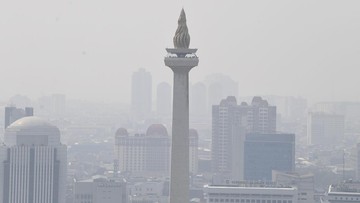
Jakarta air pollution persists due to surrounding coal-fired industries, governor admits
Translated from Indonesian, summarized and contextualized by DistantNews.
At a glance
News
Named sources
Context piece
- Jakarta Governor Anies Baswedan acknowledges that air pollution in the capital will persist as long as surrounding industrial areas and power plants use coal.
- He stated that coordinating with buffer regions is crucial, as industries and coal-fired power plants in these areas significantly contribute to Jakarta's pollution.
- Baswedan urged the central government to collaborate on regulating these emission sources to effectively tackle the air quality issue.
Jakarta Governor Anies Baswedan admits that efforts to combat the city's severe air pollution face significant hurdles as long as coal-fired industries and power plants operate in its surrounding areas. He emphasized that true resolution hinges on effective coordination across the Jakarta metropolitan region.
"The main issue is how to coordinate this Jakarta agglomeration, especially with areas that still permit their industries to use coal as fuel," Baswedan stated in South Jakarta on Thursday. He believes that prohibiting coal use in these industries and power plants would yield a much larger impact in reducing Jakarta's pollution levels, citing the Suralaya coal-fired power plant in Banten as an example.
The main issue is how to coordinate this Jakarta agglomeration, especially with areas that still permit their industries to use coal as fuel.
The governor highlighted that the provincial government has been actively implementing measures to improve air quality within the capital. These include promoting electric vehicles and enhancing public transportation, encouraging a shift from private to public transit. However, Baswedan cautioned that these internal efforts might not be fully effective if industries in suburban areas continue to rely on coal-fired power generation, which he identified as a primary source of emissions.
So, whatever the government does within Jakarta, like creating electric cars, improving transportation, encouraging people to switch from private to public transport, I don't think it will fully solve the problem if in the suburban areas or regions surrounding Jakarta, industries are still allowed to use coal-fired power plants, because that is one of the main sources.
"So, whatever the government does within Jakarta, like creating electric cars, improving transportation, encouraging people to switch from private to public transport, I don't think it will fully solve the problem if in the suburban areas or regions surrounding Jakarta, industries are still allowed to use coal-fired power plants, because that is one of the main sources," he explained.
Looking ahead, Baswedan expressed his hope for greater involvement from the central government. He is calling for collaborative efforts to regulate these significant emission sources. "Therefore, as the Governor of Jakarta, I hope there will also be coordination with the central government so that those contributing to high emissions can be regulated together," he said.
Therefore, as the Governor of Jakarta, I hope there will also be coordination with the central government so that those contributing to high emissions can be regulated together.
DistantNews Editorial
Originally published by CNN Indonesia in Indonesian. Translated, summarized, and contextualized by our editorial team with added local perspective. Read our editorial standards.
More Stories


From Our Blog

What Gets Lost (and Found) When News Is Translated

The Critical Role of Diaspora Media in Global News

What Travellers Should Know About Countries with Restricted Press

A Digital Nomad's Guide to Following Local News

How the Same Story Looks Different in Different Countries
