


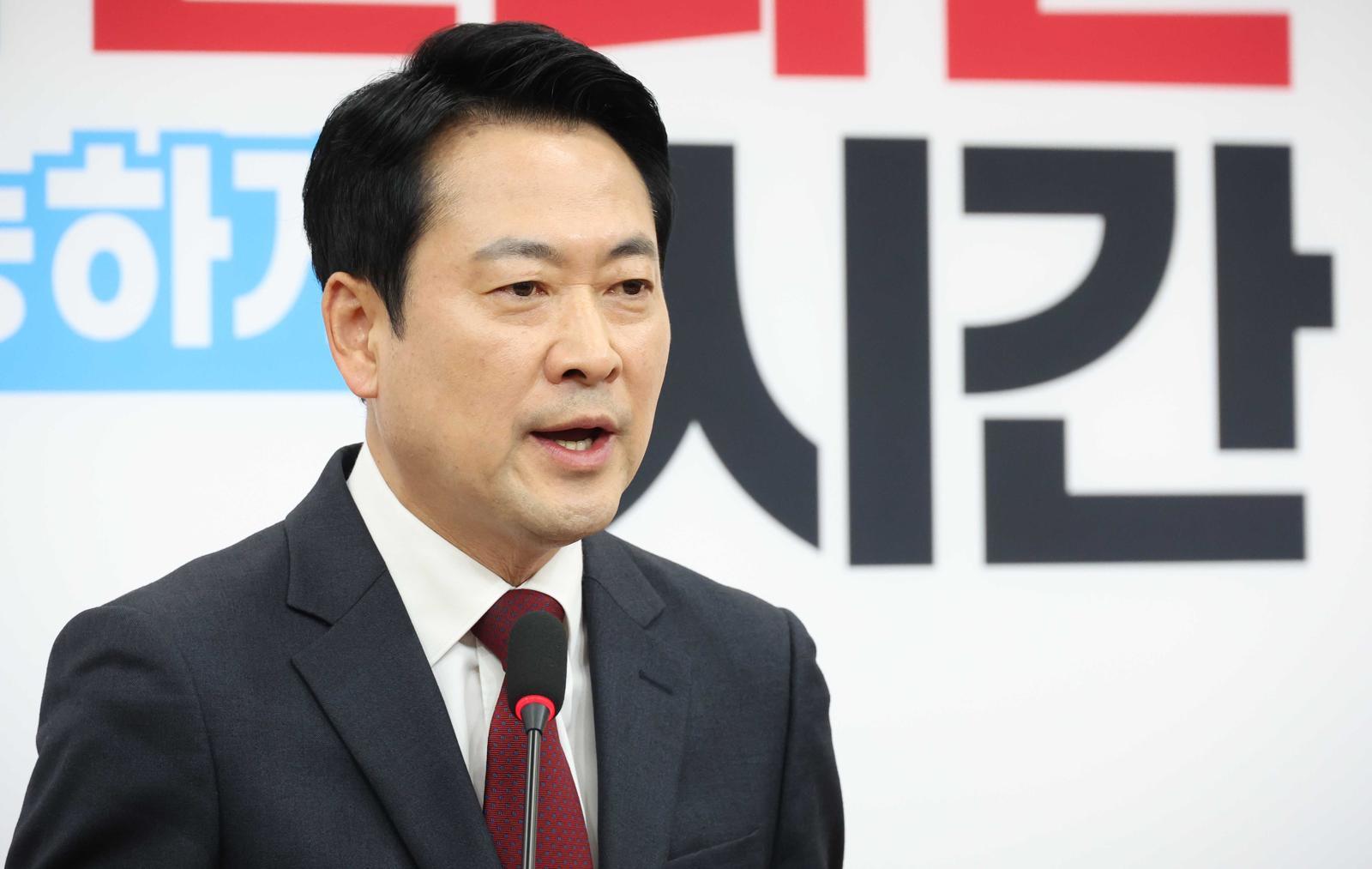
Jang Dong-hyuk Returns From US Trip, Faces Criticism for 'Self-Praise' and 'Unfortunate Schedule'
Translated from Korean, summarized and contextualized by DistantNews.
TLDR
- People's Power Party leader Jang Dong-hyuk returned from an 8-day trip to the US, claiming to have built a hotline with key Republican figures to strengthen the Korea-US alliance.
- However, criticism emerged within and outside the party, with some calling it a 'trip for nothing' and accusing Jang of self-praise.
- Former PPP leader Han Dong-hoon criticized the trip's timing and lack of concrete achievements, calling it an 'unfortunate schedule'.
The recent return of People's Power Party (PPP) leader Jang Dong-hyuk from his US trip has ignited a debate within the South Korean political landscape. Jang, upon his arrival, declared the trip a success, asserting that he had established a crucial hotline with influential figures in the US Republican Party. He framed this as a vital step in reinforcing the bilateral alliance, particularly in light of what he described as the current administration's problematic approach to US diplomacy.
I built a substantial hotline with key figures in the US Republican Party, creating a foundation of trust to support the shaky Korea-US alliance.
However, Jang's triumphant narrative has been met with significant skepticism and outright criticism. Within the PPP itself, voices have been raised questioning the tangible outcomes of his visit, with some labeling it a 'trip for nothing' and accusing the party leader of excessive self-congratulation. This internal dissent suggests a lack of consensus regarding the trip's strategic value and execution.
It was an unfortunate schedule. I think it was very regrettable.
Adding to the criticism is former PPP leader Han Dong-hoon, a prominent figure in the party. Han directly challenged the timing and substance of Jang's visit, deeming it an 'unfortunate schedule' and expressing disappointment over the lack of demonstrable achievements. His remarks underscore a perceived disconnect between the party leadership's self-assessment and the broader political assessment of the trip's effectiveness, especially with local elections on the horizon.
We met many people in the US government, Congress, and various circles, listened to their opinions, and faithfully conveyed our position.
Jang's defense of his trip, emphasizing the need for the opposition party to actively engage in foreign policy matters when the government falters, highlights the partisan dynamics at play. His refusal to disclose specific meeting details, citing diplomatic protocol, further fuels the controversy. This incident reveals the deep divisions within the PPP and the intense scrutiny faced by its leadership, particularly concerning their foreign policy engagements and their impact on domestic political standing.
It is inappropriate to disclose who I met and their positions, as we held briefings and discussions on the condition of non-disclosure.
DistantNews Editorial
Originally published by Dong-A Ilbo in Korean. Translated, summarized, and contextualized by our editorial team with added local perspective. Read our editorial standards.
More Stories


From Our Blog

What Gets Lost (and Found) When News Is Translated

The Critical Role of Diaspora Media in Global News

What Travellers Should Know About Countries with Restricted Press

A Digital Nomad's Guide to Following Local News

How the Same Story Looks Different in Different Countries
