

Jang Dong-hyuk's 'Lawmaker Evaluation' move flips priorities
Translated from Korean, summarized and contextualized by DistantNews.
At a glance
Analysis
Sources not specified
New plan
- The People Power Party (PPP) in South Korea has launched a task force to evaluate its elected officials, including lawmakers and provincial governors.
- Party leader Jang Dong-hyuk emphasized that party members' opinions should significantly influence the evaluation process.
- Critics question the fairness of the evaluation criteria, particularly Jang's focus on 'party loyalty' and his past actions following election losses.
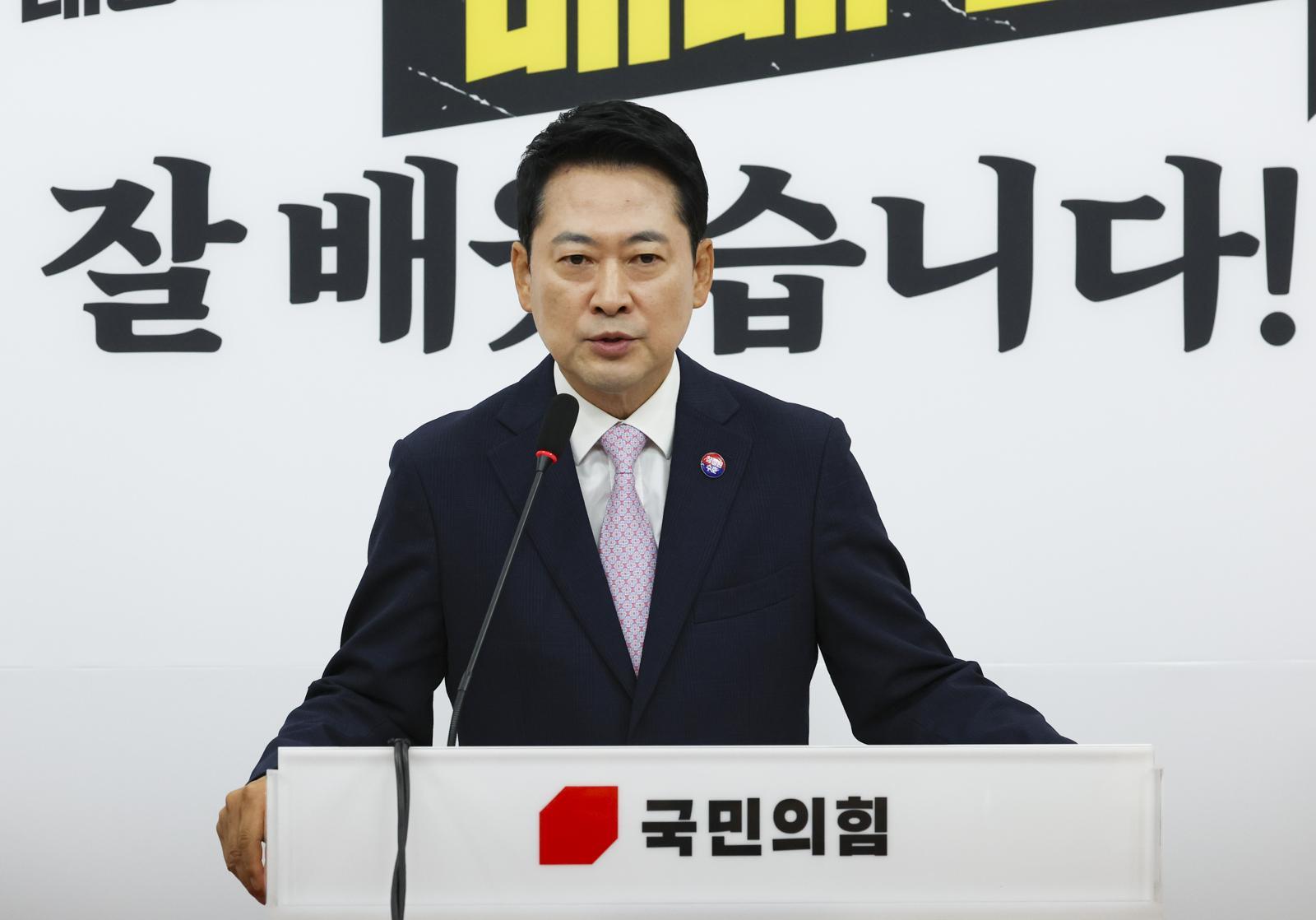
South Korea's People Power Party (PPP) has initiated a new task force aimed at establishing evaluation criteria for its elected officials, including members of the National Assembly and provincial governors. The move, announced by party leader Jang Dong-hyuk, signals a push to formalize assessments of party representatives.
Jang stressed the importance of incorporating party members' input into the evaluation process. However, he dismissed the idea of conducting candidate nominations solely through public primaries, arguing it would not effectively filter out individuals who focus on media appearances or self-promotion rather than legislative work. This stance suggests a potential emphasis on internal party loyalty as a key metric.
Any party member's opinion must be significantly included in the evaluation of public officials.
The establishment of the task force has drawn skepticism, with some viewing it as an attempt by Jang to consolidate his influence ahead of the 2028 general elections. Critics point to Jang's leadership following the June local election defeats, during which he was perceived as evading responsibility. His subsequent actions, including attending a protest instead of a party meeting and advocating against the removal of ballot boxes, have fueled concerns about his commitment to parliamentary duties and fairness.
Further complicating the evaluation's perceived legitimacy is Jang's reliance on a faction of hardline party members who refuse to distance themselves from former President Yoon Suk-yeol and some of whom advocate for claims of election fraud. Using 'party loyalty,' as defined by this group, as a primary evaluation standard for elected officials chosen by the public risks alienating voters and fostering an environment where dissent is suppressed, potentially leading to the party's further marginalization.
We cannot filter out those who do not work in the National Assembly and only focus on the media or their own politics.
DistantNews Editorial
Originally published by Dong-A Ilbo in Korean. Translated, summarized, and contextualized by our editorial team with added local perspective. Read our editorial standards.
More Stories


From Our Blog

What Gets Lost (and Found) When News Is Translated

The Critical Role of Diaspora Media in Global News

What Travellers Should Know About Countries with Restricted Press

A Digital Nomad's Guide to Following Local News

How the Same Story Looks Different in Different Countries
