


Japan Quake Survivors Battle Thirst, Heat as Death Toll Rises to 25
Summarized and contextualized by DistantNews.
At a glance
News
Named sources
Ongoing story
- The death toll from a 7.1-magnitude earthquake in Japan's Kumamoto prefecture has risen to 25, with survivors battling thirst and heat.
- Many households in Yatsushiro city remain without water or power two days after the quake, exacerbating difficulties in the summer heat.
- Authorities are concerned about heatstroke risks as temperatures approach 40 degrees Celsius, while rescue and relief efforts continue.
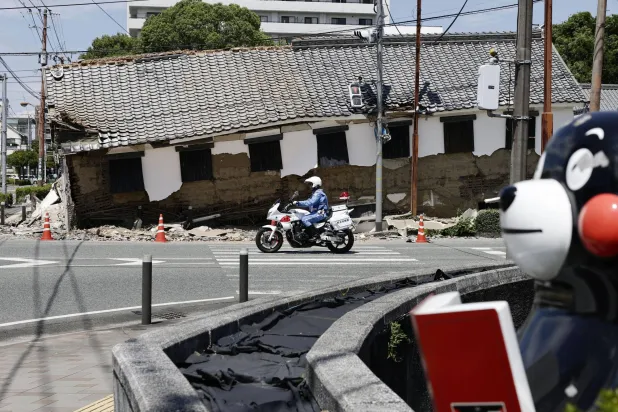
Survivors of a powerful 7.1-magnitude earthquake that struck southern Japan are facing critical shortages of water and electricity amid sweltering summer heat, as the death toll climbed to at least 25.
Because of the summer heat, the lack of water is especially difficult.
The quake, which toppled houses and fractured streets in the city of Yatsushiro, has left many of its approximately 58,000 households without running water or power. Local officials like Akio Matsushita are uncertain about the timeline for repairing the damaged water mains, noting the particular hardship the lack of water presents in temperatures around 35 degrees Celsius (95 degrees Fahrenheit).
The Kumamoto prefectural government confirmed the death toll, with a significant number of fatalities occurring at Nippon Paper Industries' paper mill and a shopping mall where a possible gas explosion was reported. Investigations are underway to determine if nine other deaths in the prefecture are linked to the earthquake. Among the victims was a Vietnamese factory worker, whose wife shared a poignant account of their last video call.
It will require painstaking work, and there is currently no timetable.
As rescue and relief operations proceed, officials are warning of the increased risk of heatstroke, with temperatures forecast to reach nearly 40 degrees Celsius over the weekend. Japan's Self-Defense Forces are deploying air-conditioning units to evacuation centers, and water tanks have been distributed to community centers and schools, with residents limited to 5 liters per person. Efforts are ongoing to clear rubble and provide essential support to those affected.
Every time we video-called, my son never wanted to look at his dad but that night, for some reason, he stayed glued to the screen, wanting to be with his dad. It was after 11 p.m. when I finally told him, 'Let's hang up so dad can get some sleep. He has to work tomorrow.' I never imagined that would be our last call.
DistantNews Editorial
Originally published by Asharq Al-Awsat. Summarized and contextualized by our editorial team with added local perspective. Read our editorial standards.
More Stories


From Our Blog

What Gets Lost (and Found) When News Is Translated

The Critical Role of Diaspora Media in Global News

What Travellers Should Know About Countries with Restricted Press

A Digital Nomad's Guide to Following Local News

How the Same Story Looks Different in Different Countries
