


Japan rescuers battle 'cruel heat' after major earthquake
Translated from English, summarized and contextualized by DistantNews.
At a glance
News
Sources not specified
Ongoing story
- Rescue workers and thousands of displaced residents face grueling recovery efforts amid sweltering heat following a major earthquake in southwestern Japan.
- The 7.1-magnitude earthquake has killed 36 people, with rescue operations hampered by aftershocks and temperatures nearing 38 degrees Celsius.
- Officials warn that the intense summer heat poses a
In the sweltering heat of southwestern Japan, emergency workers and thousands of displaced residents are engaged in a grueling recovery following a major earthquake. Four days after the 7.1-magnitude tremor struck Kumamoto, the death toll has risen to 36.
We don’t know if that’s everyone, so we’re still going non-stop.
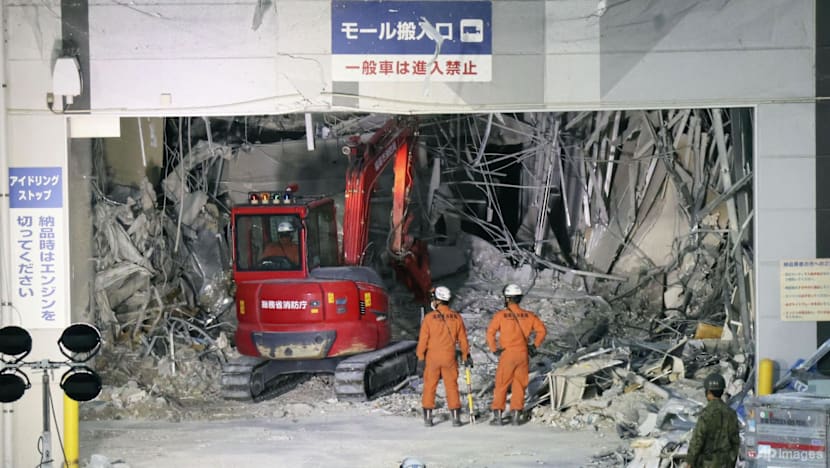
Rescue teams navigate aftershocks and temperatures nearing 38 degrees Celsius (100.4 degrees Fahrenheit) to reach any survivors trapped in collapsed buildings. More than 9,000 people are sheltering in evacuation centers. At the mangled Aeon shopping mall, hundreds of rescue workers toiled in rotating shifts, hoisting concrete slabs and twisted metal in a desperate search. Seven people died when the mall's second floor collapsed, while five were pulled out alive.
"We don’t know if that’s everyone, so we’re still going non-stop," said Takeshi Ueda, a Kumamoto police official. He described the heat trapped inside the gutted building as "brutally tough" for workers in heavy gear and masks, adding that the "steel framework held up by threads" made operations dangerous.
steel framework held up by threads
Relief efforts in the coming weeks are critical. A powerful earthquake in the region in 2016 initially caused around 50 direct casualties, but the total death toll eventually surpassed 270 as evacuees succumbed to secondary health complications. This time, the main challenge is battling the heat, as the quake struck during Japan's blistering summer months. Dozens in Kumamoto have been hospitalized with suspected heatstroke.
Operating under those conditions is gruelling.
"This summer’s intense heat represents a situation that can truly be described as a double disaster," said Minoru Kihara, Japan’s chief cabinet secretary, promising national government support for air-conditioning equipment. South of Kumamoto City, roads are cracked and buckled, and rows of old wooden homes lie flattened in towns like Yatsushiro, near the epicenter.
This summer’s intense heat represents a situation that can truly be described as a double disaster.
DistantNews Editorial
Originally published by The Straits Times in English. Translated, summarized, and contextualized by our editorial team with added local perspective. Read our editorial standards.
More Stories
From Our Blog

What Gets Lost (and Found) When News Is Translated

The Critical Role of Diaspora Media in Global News

What Travellers Should Know About Countries with Restricted Press

A Digital Nomad's Guide to Following Local News

How the Same Story Looks Different in Different Countries
