


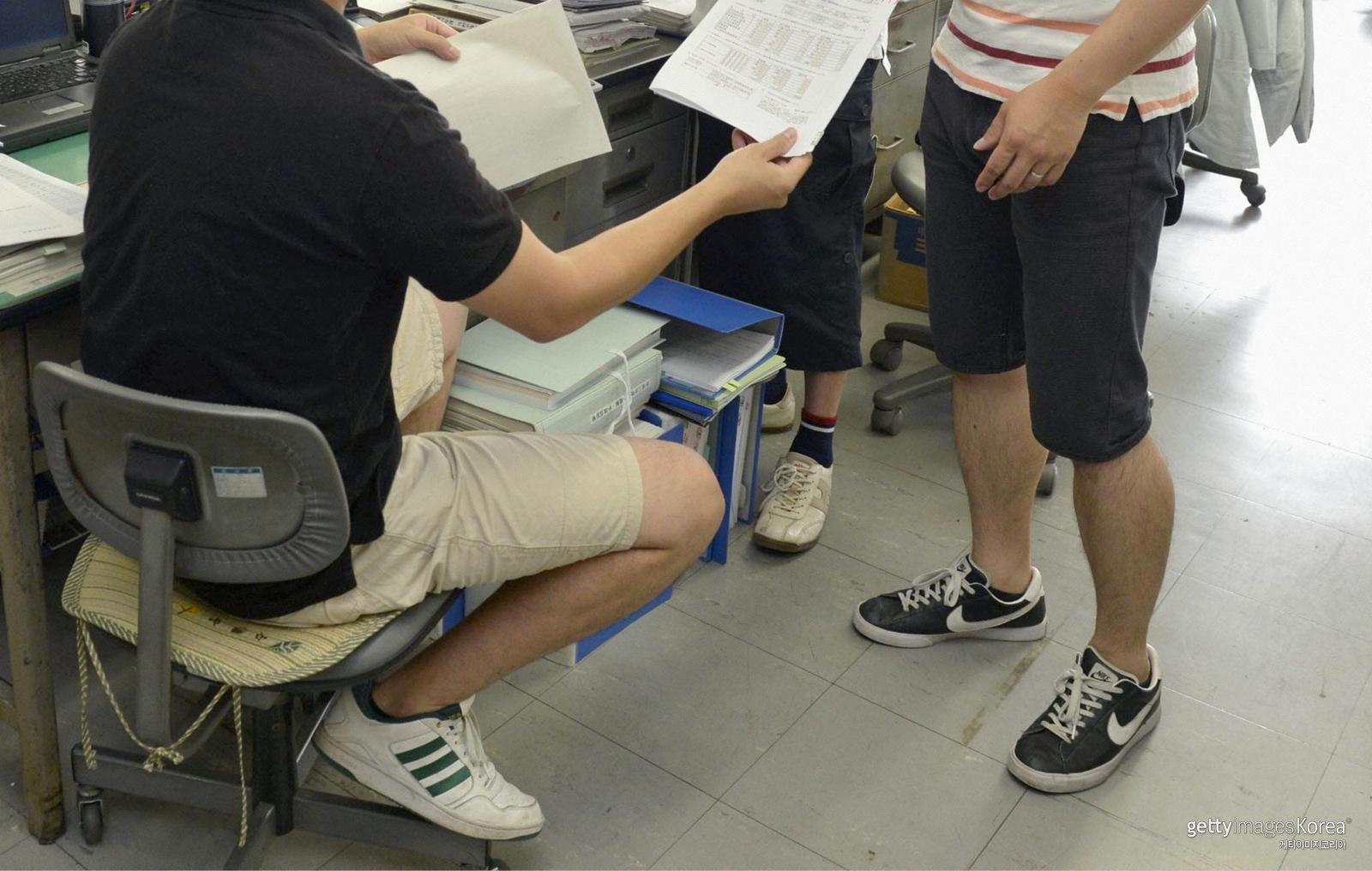
Japan's 'Cool Biz' Policy Sparks Debate Over Shorts, Leg Hair Harassment
Translated from Korean, summarized and contextualized by DistantNews.
At a glance
News
Named sources
Context piece
- Japan is implementing a "Cool Biz" policy allowing casual office attire, including shorts, to combat extreme heat and save energy.
- The policy has sparked controversy, with some employees complaining about male colleagues' leg hair and concerns over gendered expectations regarding hosiery.
- A new term, "sunehara" (leg hair harassment), has emerged to describe discomfort caused by visible leg hair in the workplace.
Tokyo, Japan – As Japan grapples with temperatures nearing 40 degrees Celsius (104 Fahrenheit), the government has introduced a "Cool Biz" policy encouraging casual office wear, including shorts, to mitigate the heat and reduce energy consumption.
However, the relaxed dress code has ignited a debate in Japanese workplaces. Complaints have surfaced regarding the visibility of male colleagues' leg hair, leading to the coining of a new term, "sunehara," which combines the Japanese word for shin hair ('sunege') with "harassment." This reflects discomfort some employees, particularly women, feel when exposed to bare legs in the office.
Many women feel uncomfortable seeing the bare legs of their male colleagues.
The policy, implemented by the Tokyo Metropolitan Government in April, allows office workers to wear casual attire like t-shirts, sneakers, and shorts. Tokyo Governor Yuriko Koike directed the relaxation of dress codes to address energy conservation and heatwave preparedness.
Despite the policy's aim to provide more options, a survey by laser hair removal company Gorilla Clinic found that 53.5% of respondents opposed wearing shorts in the office during summer. Both male and female respondents cited concerns about body shape and body hair as primary reasons for their opposition, with female respondents expressing particular discomfort with seeing men's bare legs.
We are not trying to dictate what people should wear during the heatwave, but rather to give people more options. As long as work attire does not cause discomfort to others, there should be no problem.
Further complicating the issue are accusations of gender discrimination. In traditional Japanese workplace culture, women are often implicitly expected to wear stockings even when wearing shorts, leading to a perceived disparity in dress code expectations between genders. A Tokyo Metropolitan Government official clarified that the policy intends to offer choices, not mandate specific attire, stating that as long as work clothing does not cause discomfort to others, it should not be an issue.
Nevertheless, negative perceptions surrounding shorts in the office persist. Dr. Akifumi Funatsu, director of Gorilla Clinic, noted an increase in male clients seeking leg hair removal, suggesting that grooming leg hair has become a social etiquette for wearing shorts in Japan.
Grooming leg hair has become a social etiquette when wearing shorts.
DistantNews Editorial
Originally published by Dong-A Ilbo in Korean. Translated, summarized, and contextualized by our editorial team with added local perspective. Read our editorial standards.
More Stories


From Our Blog

What Gets Lost (and Found) When News Is Translated

The Critical Role of Diaspora Media in Global News

What Travellers Should Know About Countries with Restricted Press

A Digital Nomad's Guide to Following Local News

How the Same Story Looks Different in Different Countries
