


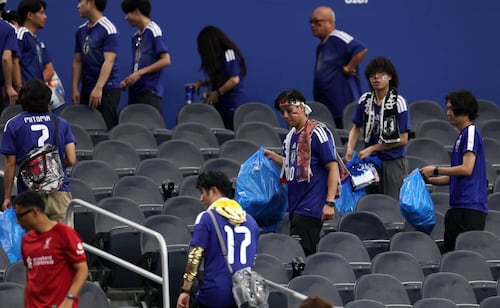
Japanese Fans Request 10,000 Trash Bags to Clean Monterrey Stadium
Translated from Spanish, summarized and contextualized by DistantNews.
At a glance
News
Official statement
Context piece
- Japanese football fans in Monterrey requested 10,000 trash bags to clean the stadium after a World Cup match.
- Local authorities agreed to the request and will provide 20,000 bags, collaborating with fans for a post-game cleanup.
- The gesture reflects a deeply ingrained cultural practice in Japan, emphasizing respect for public spaces and community effort.
Japanese football fans attending a World Cup match in Monterrey have demonstrated a commitment to cleanliness by requesting 10,000 trash bags for a post-game stadium cleanup. This initiative, aimed at leaving the venue spotless, has been embraced by local authorities who will provide 20,000 bags and work alongside the fans.
The fans' proactive approach to tidiness is rooted in Japanese culture, as explained by coach Hajime Moriyasu. He highlighted that cleaning up is a natural and proud practice for Japanese people, emphasizing a collective responsibility to maintain public spaces. Moriyasu acknowledged that while some might view this as taking away work from others, it's a deeply ingrained habit that fosters mutual support and community spirit.
This act of civic responsibility underscores the values the Japanese team and its supporters bring to the tournament, extending beyond the sport itself. Their dedication to preserving the environment and showing respect for the host city's facilities sets a positive example, reflecting a cultural ethos that prioritizes collective well-being and meticulous care.
It is part of our culture and we are proud of it. We Japanese know we have to do it. We believe in not littering, and we all organize to clean up. Other nations may have different views, but we believe in working together and supporting each other. It is something we do in Japan. Some people think what our fans do is wrong because it takes away work, but it is how we have grown up.
DistantNews Editorial
Originally published by El Universal in Spanish. Translated, summarized, and contextualized by our editorial team with added local perspective. Read our editorial standards.
More Stories
From Our Blog

What Press Freedom Means for the News You Read

What Gets Lost (and Found) When News Is Translated

The Critical Role of Diaspora Media in Global News

What Travellers Should Know About Countries with Restricted Press

A Digital Nomad's Guide to Following Local News
