


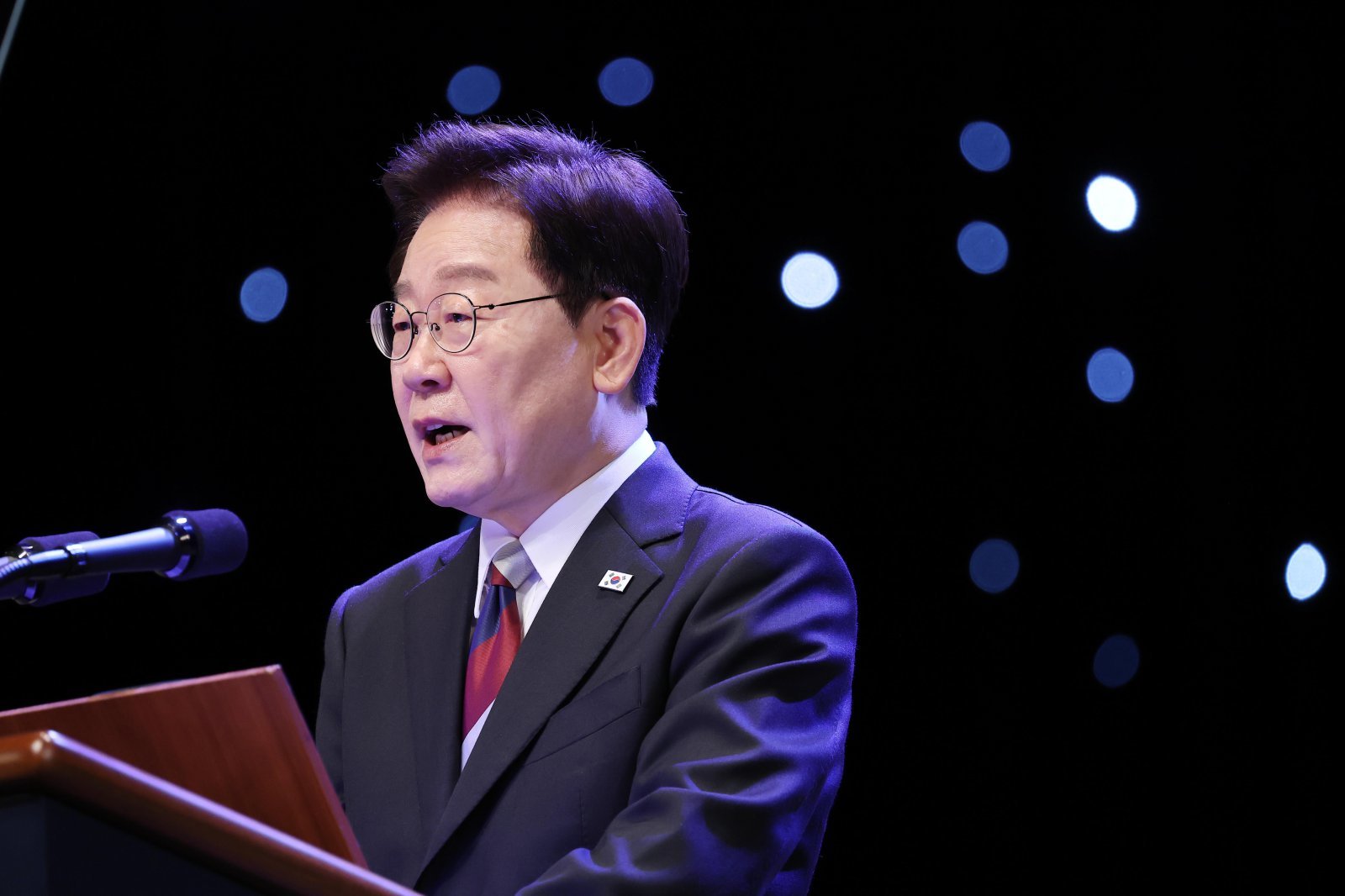
Japanese Media Sees Future-Oriented Intent in President Lee's Liberation Day Speech
Translated from Korean and summarized by DistantNews. Read the original for the full story.
At a glance
News
From a news agency
Context piece
- Japanese media analyzed South Korean President Lee Jae-myung's Liberation Day speech, interpreting it as a desire for future-oriented relations with Japan.
- The analysis noted Lee's avoidance of specific historical issues, suggesting a focus on improving bilateral ties.
- While expressing a willingness for future cooperation, the speech also urged Japan to address historical grievances.
Japanese media outlets interpreted South Korean President Lee Jae-myung's Liberation Day speech as a signal of his intention to foster future-oriented relations with Japan. The Yomiuri Shimbun reported on August 16, 2026, that Lee expressed a desire to continue "future-oriented Japan-Korea (Korea-Japan) relations." The newspaper observed that, similar to the previous year, Lee did not delve into specific historical issues, suggesting a stance that values the improved bilateral relationship.
At a time when Korea-Japan cooperation is more important than ever, the light of the new Korea-Japan relationship we will build must be a warm comfort to those who are enduring pain while bearing the wounds of history.
During his speech at the 81st Liberation Day ceremony in Seoul on August 15, President Lee stated, "At a time when Korea-Japan cooperation is more important than ever, the light of the new Korea-Japan relationship we will build must be a warm comfort to those who are enduring pain while bearing the wounds of history." He expressed hope for opening "a new 60 years of peace and prosperity as 'close and not distant neighbors, but close and very close neighbors'" based on deeper trust.
The Yomiuri Shimbun interpreted Lee's remarks as a call for Japan's response regarding historical issues, while avoiding direct mention. The newspaper noted that Lee, who had taken a strong stance against Japan before his presidency, has shown a "Japan-focused" attitude since taking office.
We can open a new 60 years of peace and prosperity as 'close and not distant neighbors, but close and very close neighbors' based on deeper trust.
Jiji Press also interpreted Lee's speech as an expression of his intent to "develop future-oriented relations with Japan." However, the agency also reported that Lee "demanded Japan's 'sincerity' regarding historical issues." While avoiding specific current affairs, the communication added that it appeared to be "urging the Japanese government's response to historical issues."
He expressed his intention to continue future-oriented Japan-Korea (Korea-Japan) relations.
Jiji Press further commented that securing "understanding from Korean public opinion is essential" for pursuing South Korea's accession to the CPTPP and the conclusion of a mutual logistics support agreement (ACSA) between Korea and Japan. The agency suggested that President Lee seems to recognize the need for Japan to change its stance to satisfy public opinion.
He also urged Japan's 'sincerity' regarding historical issues.
About this summary
Originally published by Dong-A Ilbo in Korean. Translated, summarized, and contextualized automatically by DistantNews, with a note on how the source frames the story. Not individually reviewed before publishing. How this works.
More Stories


From Our Blog

What Gets Lost (and Found) When News Is Translated

The Critical Role of Diaspora Media in Global News

What Travellers Should Know About Countries with Restricted Press

A Digital Nomad's Guide to Following Local News

How the Same Story Looks Different in Different Countries
