

JD Vance: Iran deal is 'performance-based,' no money without compliance
Translated from French, summarized and contextualized by DistantNews.
At a glance
News
Sources not specified
New plan
- U.S. Vice President JD Vance detailed an agreement with Iran, emphasizing that no funds will be released without Iran fulfilling its commitments.
- Vance stressed a performance-based approach, with strict conditions including ending enrichment and accepting robust controls.
- He clarified that any financial openings, such as the potential release of frozen assets, are contingent on Iran's verifiable compliance with nuclear program restrictions.
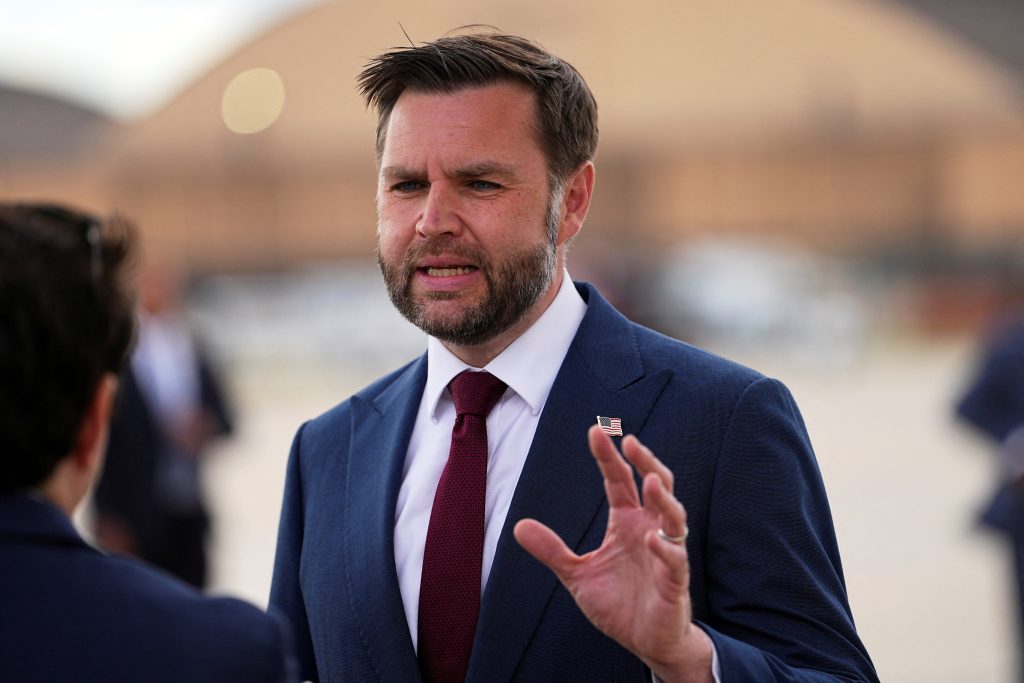
U.S. Vice President JD Vance has outlined a stringent, performance-based agreement with Iran concerning its nuclear program, asserting that financial concessions are directly tied to Tehran's verifiable compliance.
Speaking to CBS News, Vance insisted that Iran will not receive immediate funds. Any financial engagement remains suspended until Iran fully executes its obligations. He described the agreement as operating on a reversed verification and sanctions mechanism, where Tehran cannot benefit from economic relief without proving its adherence to the terms. "It's based on performance," Vance stated, adding that Tehran "doesn't get a dime" until it meets its commitments.
Vance also indicated that Gulf nations might be invited to participate in Iran's reconstruction, but only if Tehran definitively abandons its weapons-capable nuclear program. "We are completely open to the Gulf countries investing in Iran's reconstruction, but only if Iran ends its nuclear program, its stock of enriched materials, and if it is truly willing to implement a regime of inspections and controls that gives the American people assurance that it will never possess nuclear weapons," he declared.
Addressing the possibility of releasing $24 billion in frozen assets upon reaching certain thresholds, Vance dismissed the idea of automatic disbursement. He stated that no such provision exists in the discussed text. Instead, the White House is considering a gradual lifting of some sanctions as part of a broader agreement. "What we have said is that we are prepared to discuss the unfreezing of assets, but the most important thing is to lift sanctions against their economy as long as they respect their commitments regarding the nuclear program," he affirmed. Vance also sought to dispel any notion of an immediate transfer of funds, stating, "We have already signed the agreement digitally yesterday, no money has been released, and that will not change."
Vance aimed to differentiate this new framework from the 2015 Joint Comprehensive Plan of Action (JCPOA). The JCPOA, signed by Iran and several world powers, sought to limit Iran's nuclear activities in exchange for sanctions relief. Vance's statements suggest a departure from that approach, emphasizing stricter conditions and a more cautious, performance-driven financial strategy.
DistantNews Editorial
Originally published by El Watan in French. Translated, summarized, and contextualized by our editorial team with added local perspective. Read our editorial standards.
More Stories

From Our Blog

What Gets Lost (and Found) When News Is Translated

The Critical Role of Diaspora Media in Global News

What Travellers Should Know About Countries with Restricted Press

A Digital Nomad's Guide to Following Local News

How the Same Story Looks Different in Different Countries
