


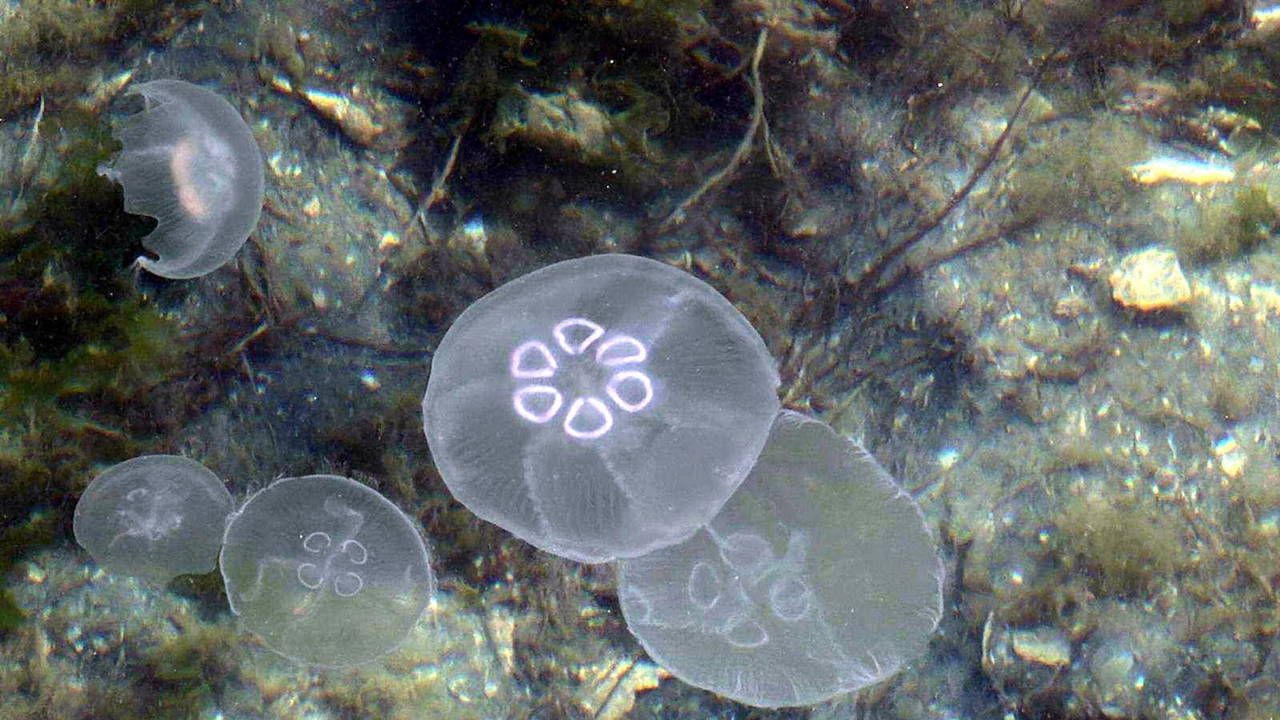
Jellyfish swarm Marmara Sea, experts warn of climate change and overfishing impact
Translated from Turkish, summarized and contextualized by DistantNews.
At a glance
News
Named sources
Context piece
- The Marmara Sea is experiencing a significant increase in jellyfish populations, particularly the brown (compass jellyfish) and white (moon jellyfish) species.
- Experts attribute the rise to factors including rising sea temperatures due to climate change, nutrient pollution from domestic and industrial waste, and a decrease in predatory fish populations due to overfishing.
- The jellyfish blooms pose a threat to tourism and human health, causing skin irritation and allergic reactions upon contact, while also disrupting the marine ecosystem.
The Marmara Sea is facing a growing jellyfish infestation, with populations of brown and white jellyfish surging in recent years. These blooms are increasingly visible along the coasts of Tekirdağ, Istanbul, Çanakkale, and Balıkesir, causing distress to beachgoers and tourists.
Dr. Çetin Yağcılar, a marine biologist at Namık Kemal University, explained that jellyfish likely first arrived in the Marmara Sea 10-15 years ago via ballast water from ships. He noted that the brown and white jellyfish have found a suitable environment and their numbers have rapidly increased over the past three years. Key drivers for this proliferation include rising sea temperatures linked to climate change, an influx of nutrient salts like nitrogen and phosphate from domestic and industrial waste, and a decline in carnivorous fish species that prey on jellyfish due to overfishing.
"This situation disrupts the natural balance in the ecosystem, leading to the proliferation and dominance of jellyfish," Dr. Yağcılar stated. He specifically highlighted the impact of overfishing species like mackerel, which reduces their natural predators and facilitates the uncontrolled growth of jellyfish. The scientist warned that contact with these jellyfish can cause burning, redness, itching, and allergic reactions on the skin, advising immediate washing with seawater and seeking medical attention.
To combat the escalating jellyfish problem, Dr. Yağcılar emphasized the need for preventative measures. While acknowledging that rising sea temperatures are beyond immediate control due to global climate change, he stressed the importance of reducing the fishing of carnivorous fish species like mackerel. Allowing these fish to reach their reproductive age at least once could help control jellyfish populations, as they are a food source for these predators. He also pointed to the Marmara Sea's status as a semi-enclosed sea as a factor contributing to the issue.
İnsan sağlığı açısından denizanalarıyla temas, ciltte yanma, kızarıklık, kaşıntı ve bazı kişilerde alerjik reaksiyonlara sebep olabilmektedir. İlk müdahale olarak temas edilen bölgenin deniz suyu ile yıkanması ve ardından en yakın sağlık kuruluşuna başvurulması gerekmektedir.
DistantNews Editorial
Originally published by Cumhuriyet in Turkish. Translated, summarized, and contextualized by our editorial team with added local perspective. Read our editorial standards.
More Stories

From Our Blog

What Gets Lost (and Found) When News Is Translated

The Critical Role of Diaspora Media in Global News

What Travellers Should Know About Countries with Restricted Press

A Digital Nomad's Guide to Following Local News

How the Same Story Looks Different in Different Countries
