


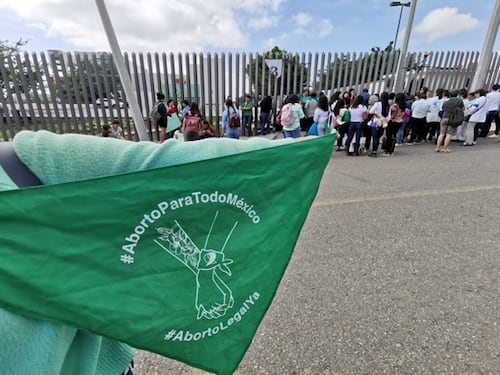
Judiciary Demands Morelos Congress Decriminalize Abortion; Legislature Continues to Ignore Ruling
Translated from Spanish, summarized and contextualized by DistantNews.
At a glance
News
Sources not specified
Under investigation
- A federal court has formally demanded that the Morelos Congress decriminalize abortion, intensifying pressure on legislators who have refused to comply with a prior ruling.
- The state legislature cited internal obstacles for its inability to enact the required reforms, maintaining the criminalization of pregnancy termination.
- This legal battle continues as civil groups push for guaranteed access to healthcare services in line with federal court decisions, while anti-abortion activists lobby against decriminalization.
A federal court has escalated its demands on the Morelos Congress to decriminalize abortion, issuing a formal requirement for compliance after legislators repeatedly ignored a prior ruling. The state's legislative body notified the court of its "impossibility" to follow the order, citing internal hurdles.
The Federal Judicial Power intensified pressure against the Congress of Morelos and, given the legislators' refusal to decriminalize abortion, a federal court issued a formal requirement under articles 192, 193 and 194 of the Law of Amparo to compel compliance with the sentence.
Despite the legislature's justification, the federal court rejected it, insisting on reforms to the Penal Code. These reforms are mandated by rulings dating back to October 2024, which declared the absolute criminalization of abortion unconstitutional. The Supreme Court of Justice of the Nation (SCJN) further affirmed in 2025 that criminalizing abortion violates the Constitution, yet the Morelos Congress persists in its non-compliance.
The Legislative Branch formally notified the court of its impossibility to comply with the order issued on June 10, under the argument of facing internal obstacles to proceed with the required reform.
Meanwhile, the "40 Días por la Vida" movement is actively lobbying local deputies to reject any decriminalization initiatives. The movement's coordinator, Josefina Martínez, urged legislators to disregard what she termed "external pressure" from the court, asserting that the SCJN lacks the authority to influence state legislative agendas, despite the binding nature of its rulings on human rights and constitutionality.
The federal justice rejected the Congress's justification, and the judge maintains the order to reform the Penal Code, following sentences issued since October 2024 that declared the absolute criminalization in the entity unconstitutional.
Civil collectives continue to demand that access to healthcare services be guaranteed according to federal rulings. This ongoing legal and political standoff highlights the deep divisions surrounding abortion rights in the state.
The Legislative Branch must ignore what it calls pressures from an 'external power' and maintained that the Court lacks the powers to influence the state legislative agenda, despite the fact that the highest court's criteria are binding on matters of human rights and constitutionality.
DistantNews Editorial
Originally published by El Universal in Spanish. Translated, summarized, and contextualized by our editorial team with added local perspective. Read our editorial standards.
More Stories

From Our Blog

What Press Freedom Means for the News You Read

What Gets Lost (and Found) When News Is Translated

The Critical Role of Diaspora Media in Global News

What Travellers Should Know About Countries with Restricted Press

A Digital Nomad's Guide to Following Local News
