


🇮🇩
Indonesia
Jusuf Kalla Clarifies UGM Lecture, Denies Religious Blasphemy Accusations
Translated from Indonesian, summarized and contextualized by DistantNews.
TLDR
- Former Indonesian Vice President Jusuf Kalla clarified his recent speech at Gadjah Mada University, denying accusations of religious blasphemy.
- Kalla stated the speech, delivered during Ramadan, focused on peace and explained various types of conflict, including those related to religion, using examples from Poso and Ambon.
- He asserted that his intention was to reconcile, not to insult, and explained that terms like 'syahid' (martyr for Islam) and 'martyr' (for Christianity) are similar in meaning when referring to dying for a cause, emphasizing he did not discuss religious dogma.
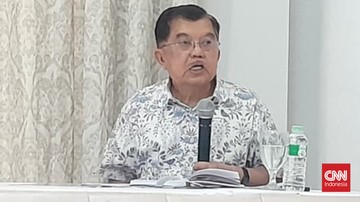
Former Indonesian Vice President Jusuf Kalla has firmly refuted claims that his recent lecture at Gadjah Mada University constituted religious blasphemy. Speaking from his residence in South Jakarta, Kalla provided a detailed clarification of his remarks, emphasizing that his address, delivered during the holy month of Ramadan, was centered on the theme of peace.
The event at UGM was a Ramadan lecture, like those held in mosques everywhere. I was invited and attended because the theme was peace. Peace. So specifically, the theme was about steps towards peace.
Kalla explained that his lecture aimed to dissect the nature of conflict, drawing upon examples from both global and Indonesian contexts, including the religiously charged conflicts in Poso and Ambon. He elaborated on how these conflicts were perceived by some as religious wars, leading to the notion of martyrdom for their respective faiths. Kalla pointed out that while the terms 'syahid' (Islamic martyrdom) and 'martyr' (Christian context) might differ in terminology, their essence – dying for a cause – is similar, a point he made while addressing an audience in a mosque.
Is it true that I blasphemed? I reconciled this, did I blaspheme? I risked my life with Hamid, entering the area you saw. Entering that area. No Minister, President Gus Dur, Mrs. Megawati could do it.
Crucially, Kalla stressed that his discourse did not delve into religious dogma or ideology. He argued that the violence witnessed in Poso and Ambon stemmed from a misinterpretation and violation of religious teachings by those involved, rather than from any inherent tenets of Islam or Christianity. His intervention, he maintained, was aimed at fostering reconciliation and understanding, a role he undertook when other authorities could not.
If syahid, all are the same, dying for defending religion. That is syahid. Martyr is also like that, defending, dying for defending religion. So it's just a term.
The clarification comes after the Indonesian Christian Youth Movement (GAMKI) and other organizations reported Kalla to the police, alleging his statements were offensive to Christian teachings and caused public unrest. Kalla's defense highlights the delicate balance of interfaith dialogue in Indonesia and the potential for misinterpretation, even when the speaker's intent is to promote peace and reconciliation.
I am not talking about religious dogma, I am not talking about religious ideology, no. About why they killed each other? Why did they kill each other? Is there Islam and Christianity [teaching this]? No. So they all violated religious teachings.
DistantNews Editorial
Originally published by CNN Indonesia in Indonesian. Translated, summarized, and contextualized by our editorial team with added local perspective. Read our editorial standards.
More Stories



From Our Blog

What Gets Lost (and Found) When News Is Translated

The Critical Role of Diaspora Media in Global News

What Travellers Should Know About Countries with Restricted Press

A Digital Nomad's Guide to Following Local News

How the Same Story Looks Different in Different Countries
