


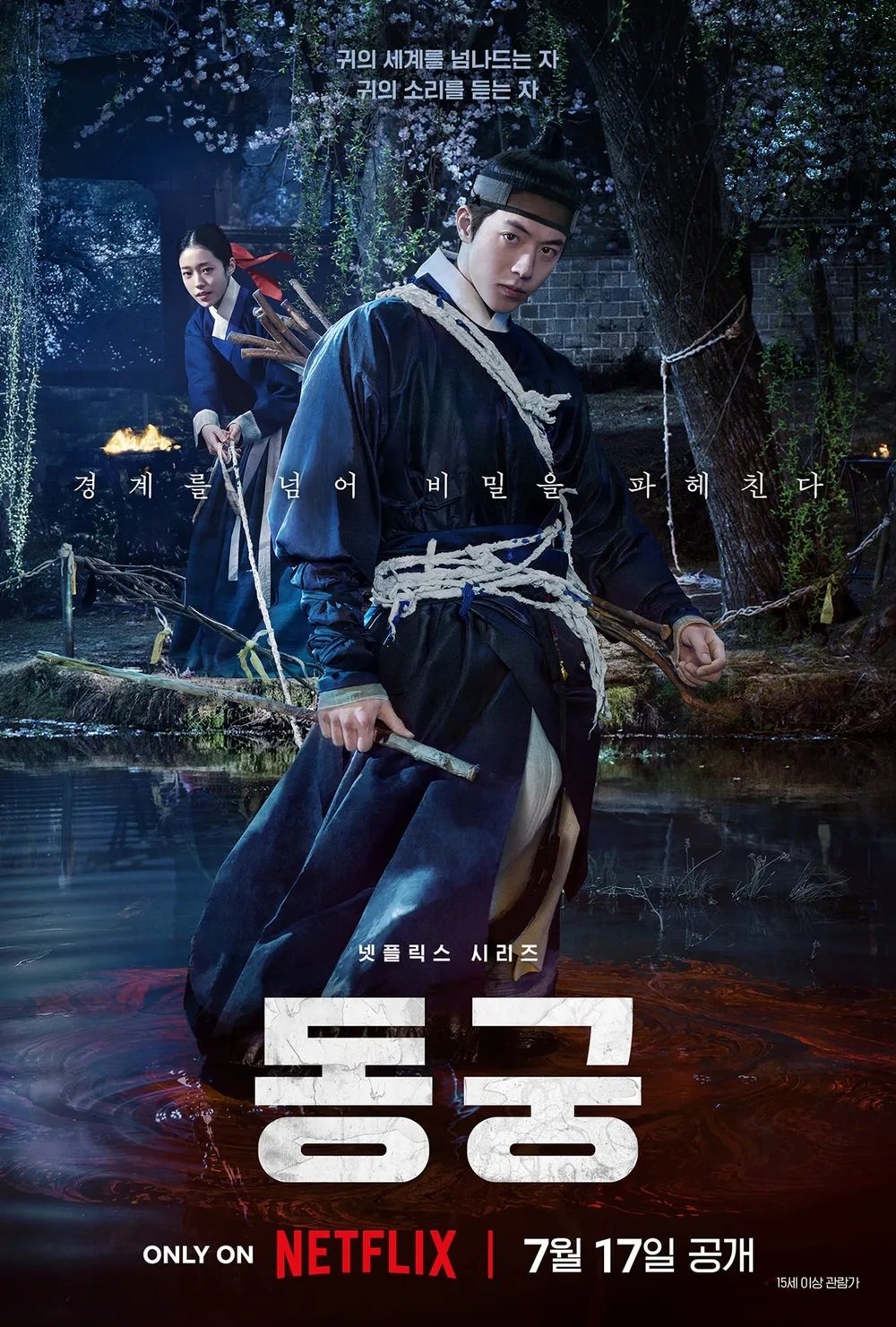
K-occult historical drama 'The Palace' aims to captivate global fans
Translated from Korean, summarized and contextualized by DistantNews.
At a glance
News
Named sources
Context piece
- "The Palace," a K-occult historical drama, is Netflix's latest attempt to replicate the success of "Kingdom."
- The series features a unique blend of Joseon-era palace intrigue and supernatural elements, with a creature called "Kkeom-sal-i" designed to be a new K-mascot.
- While drawing comparisons to Western titles like "Constantine" and "Stranger Things," "The Palace" has garnered positive international reception, ranking fourth globally on Netflix's TV show chart.
Netflix's new K-occult historical drama, "The Palace," aims to recapture the success of "Kingdom" by blending traditional Korean aesthetics with supernatural thrills. The series, released on the 17th, centers on the last royal heir, Prince Yeong-an, who becomes the target of a curse linked to a pond ghost from 30 years prior. To combat this, the King summons Gu-cheon, a man with the ability to traverse the world of ghosts, to investigate the curse plaguing the East Palace.
I expect that foreign viewers might find new enjoyment when the familiar, beautiful palace setting is flipped into the 'world of ghosts.'
The production emphasizes Korean cultural elements through its sets, costumes, and music, intended to offer a fresh experience for global viewers. A creature named "Kkeom-sal-i," inspired by folklore, is positioned as a potential new K-mascot. However, the series faces comparisons to existing works like the film "Constantine" and the show "Stranger Things" due to its themes of crossing between worlds and battling supernatural entities.
Despite these comparisons, "The Palace" appears to be resonating more strongly with international audiences. It ranked fourth globally in Netflix's TV show category on the 21st, according to FlixPatrol. Lead actor Nam Joo-hyuk, in his first role after military service, expressed his belief that foreign viewers would find the juxtaposition of the familiar, elegant palace setting with the "world of ghosts" to be a novel source of entertainment. He noted the visual intensity of the ghost realm, achieved through directorial choices like filming the same location in different seasons and building duplicate sets.
This action was far from dispatching ghosts. So, I tried to put less emphasis on the style of clothing or my appearance and show more defensive action.
Nam also discussed his preparation for the action sequences, which differ from typical ghost-fighting scenes. He focused on a more defensive style, adjusting his movements to accommodate the visual effects. He humorously recalled that filming an early sword fight scene, where his opponent was a CGI ghost, was challenging, especially as he was battling a cold, which he felt contributed to a more subdued portrayal of Gu-cheon's weakened state. However, some viewers have pointed to the monotonous expressions of Nam and co-star Noh Yoon-seo, as well as their dialogue delivery, as hindrances to immersion. In contrast, veteran actors Cho Seung-woo, playing the King, and Jang Young-nam, as the Queen Dowager, are credited with adding significant weight to the palace intrigue plotline.
Because the graphic work was completed according to my actions, I proceeded with the action by adding more imagination. Coincidentally, I had a cold at the time, so I think the powerless action of Gu-cheon was better realized.
DistantNews Editorial
Originally published by Dong-A Ilbo in Korean. Translated, summarized, and contextualized by our editorial team with added local perspective. Read our editorial standards.
More Stories


From Our Blog

What Gets Lost (and Found) When News Is Translated

The Critical Role of Diaspora Media in Global News

What Travellers Should Know About Countries with Restricted Press

A Digital Nomad's Guide to Following Local News

How the Same Story Looks Different in Different Countries
