


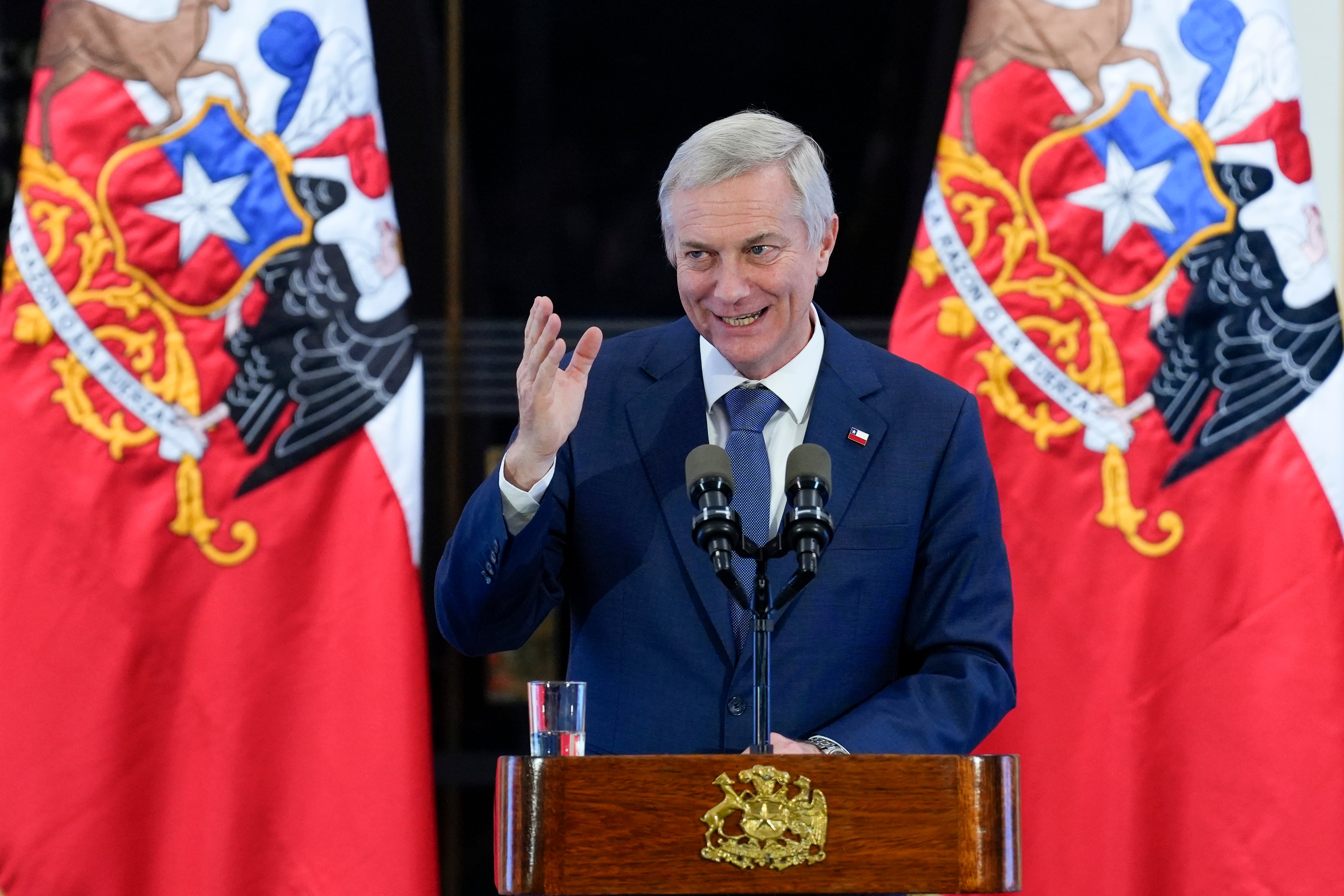
Kast defends Chile's historic fuel price hike: 'Today all countries are looking at what we did'
Translated from Spanish, summarized and contextualized by DistantNews.
At a glance
News
Sources not specified
Context piece
- Chilean President José Antonio Kast defended his government's decision to raise fuel prices shortly after taking office, stating that other countries are now looking at Chile's actions.
- The March fuel price hike significantly impacted citizens, contributing to a drop in Kast's approval ratings, with economic pessimism and job creation concerns cited as reasons for negative public perception.
- Kast acknowledged communication failures regarding the decision but maintained it was necessary due to inherited fiscal issues and the global conflict impacting oil prices.
Chilean President José Antonio Kast has publicly defended a controversial decision made early in his term: a significant increase in fuel prices. The move, implemented in March shortly after he took office, has been one of the most unpopular actions of his presidency, impacting citizens' finances. Kast stated at a Republican Party convention that "today all countries are looking at what we did," suggesting Chile's approach is being observed internationally.
Today all countries are looking at what we did.
"Someone has to make the decision, and I made the decision. Faced with popularity or responsibility, I will act with responsibility," the right-wing leader asserted. He attributed the necessity of the fuel price hike to a difficult situation caused by the war in Iran, which affected crude oil transport. The increase saw the price of 93-octane gasoline rise by 370 pesos per liter and diesel by 580 pesos, pushing gasoline prices above 1,500 pesos per liter in the Metropolitan Region and making diesel nearly as expensive.
Someone has to make the decision, and I made the decision. Faced with popularity or responsibility, I will act with responsibility.
Analysts consider the fuel price shock a turning point in public opinion regarding Kast's government. Since late March, presidential disapproval has consistently outweighed approval, reversing the initial trend. Recent polls show Kast's approval rating at 37% with 60% disapproval, according to Cadem, and 35% approval with 53% disapproval, according to Criteria. Both surveys point to economic pessimism and concerns about job creation as key factors in the negative assessment.
We faced a difficult situation due to the war [in Iran]. And we had to pass the fuel price increase on to citizens.
This is not the first time Kast has acknowledged the political cost of not subsidizing fuel prices. In his June 1 address to Congress, he admitted the measure "hit hard" and cited communication shortcomings. However, he also argued that subsequent developments in the Middle East conflict and the inherited fiscal crisis confirmed the decision's correctness. Kast's defense comes as fuel prices have been falling for nearly a month.
I recognize that we have not always managed to explain in time, nor with the closeness required, the basis for some decisions.
DistantNews Editorial
Originally published by El País in Spanish. Translated, summarized, and contextualized by our editorial team with added local perspective. Read our editorial standards.
More Stories


From Our Blog

What Gets Lost (and Found) When News Is Translated

The Critical Role of Diaspora Media in Global News

What Travellers Should Know About Countries with Restricted Press

A Digital Nomad's Guide to Following Local News

How the Same Story Looks Different in Different Countries
