


Kataja Basket Halves Seagulls' Lead in Korisliiga Semifinals with Dominant Game 3 Victory
Translated from Finnish, summarized and contextualized by DistantNews.
TLDR
- Joensuun Kataja Basket defeated Helsinki Seagulls 92-72, narrowing the Seagulls' lead in their men's Korisliiga semifinal series to 2-1.
- Kataja's De'Vion Harmon scored 30 points, with significant support from Henri Kantonen, to overcome the Seagulls' previous defensive efforts.
- The Seagulls recorded their lowest playoff score of the season, struggling offensively against Kataja's defense and losing the rebound battle significantly.
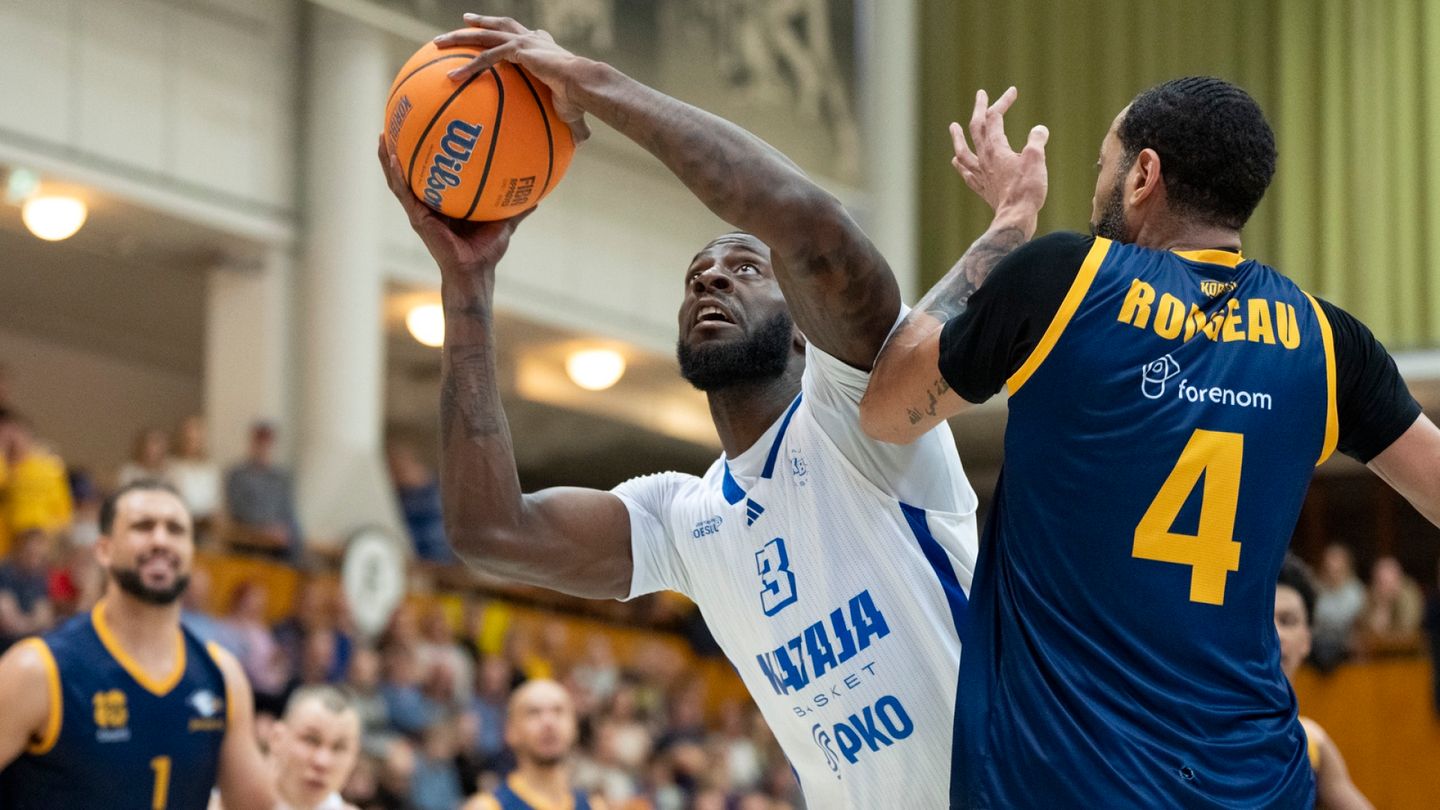
In a crucial Game 3 of the men's Korisliiga semifinals, Joensuun Kataja Basket staged a strong comeback, decisively beating the Helsinki Seagulls 92-72. This victory halves the Seagulls' series lead to 2-1, injecting renewed tension into what many anticipated would be a more straightforward path to the finals for the Helsinki team.
The game plan for Kataja clearly focused on neutralizing the Seagulls' star player, De'Vion Harmon, a strategy that had proven effective in the previous two games. However, in Game 3, Kataja found an unexpected offensive spark in Henri Kantonen. Kantonen delivered a stellar first half, pouring in 20 points, which not only kept his team competitive but also preserved Harmon's energy for the second half. Harmon capitalized on this, unleashing a scoring barrage in the third quarter to finish with a game-high 30 points, a performance that ultimately proved too much for the Seagulls to contain.
For the Helsinki Seagulls, this game marked a significant offensive struggle. Their 72-point total represents the lowest scoring output of their playoff run thus far. While they had successfully slowed down Harmon in the earlier games, Kataja's adaptive defense, particularly from players like Thomas Tumba, disrupted the Seagulls' offensive rhythm. The team's struggles were compounded by a significant disadvantage in rebounding, where Kataja dominated 46-29. This lack of control on the boards, coupled with what analysts described as "static" offensive play from the Seagulls, made it difficult to generate quality scoring opportunities.
Nothing changed from game two. We had good energy for 30 minutes, then we fell apart. This was a big game, a must-win. We knew it, and probably all of Finland knew it.
"This was Kataja's credit. They started strong and made tough shots throughout the game," commented Seagulls guard Kahron Ross. He acknowledged the need for improvement in areas such as offensive rebounding, turnovers, and creating better shot selections. The team's inability to consistently secure rebounds, a factor that seemed less problematic in earlier rounds, became a glaring weakness against Kataja's physicality and offensive pressure.
As the series progresses, the Seagulls will need to address these offensive and rebounding deficiencies to avoid further momentum shifts. Kataja, buoyed by this convincing win, will look to carry this energy into Game 4, aiming to level the series on their home court. The unexpected resilience shown by Kataja serves as a reminder of the unpredictable nature of playoff basketball, where a single game can dramatically alter the narrative.
This was Kataja's credit. They started strong and made tough shots throughout the game. We need to be better in offensive rebounds, turnovers, and creating quality shot opportunities.
DistantNews Editorial
Originally published by Helsingin Sanomat in Finnish. Translated, summarized, and contextualized by our editorial team with added local perspective. Read our editorial standards.
More Stories

From Our Blog

What Gets Lost (and Found) When News Is Translated

The Critical Role of Diaspora Media in Global News

What Travellers Should Know About Countries with Restricted Press

A Digital Nomad's Guide to Following Local News

How the Same Story Looks Different in Different Countries
